





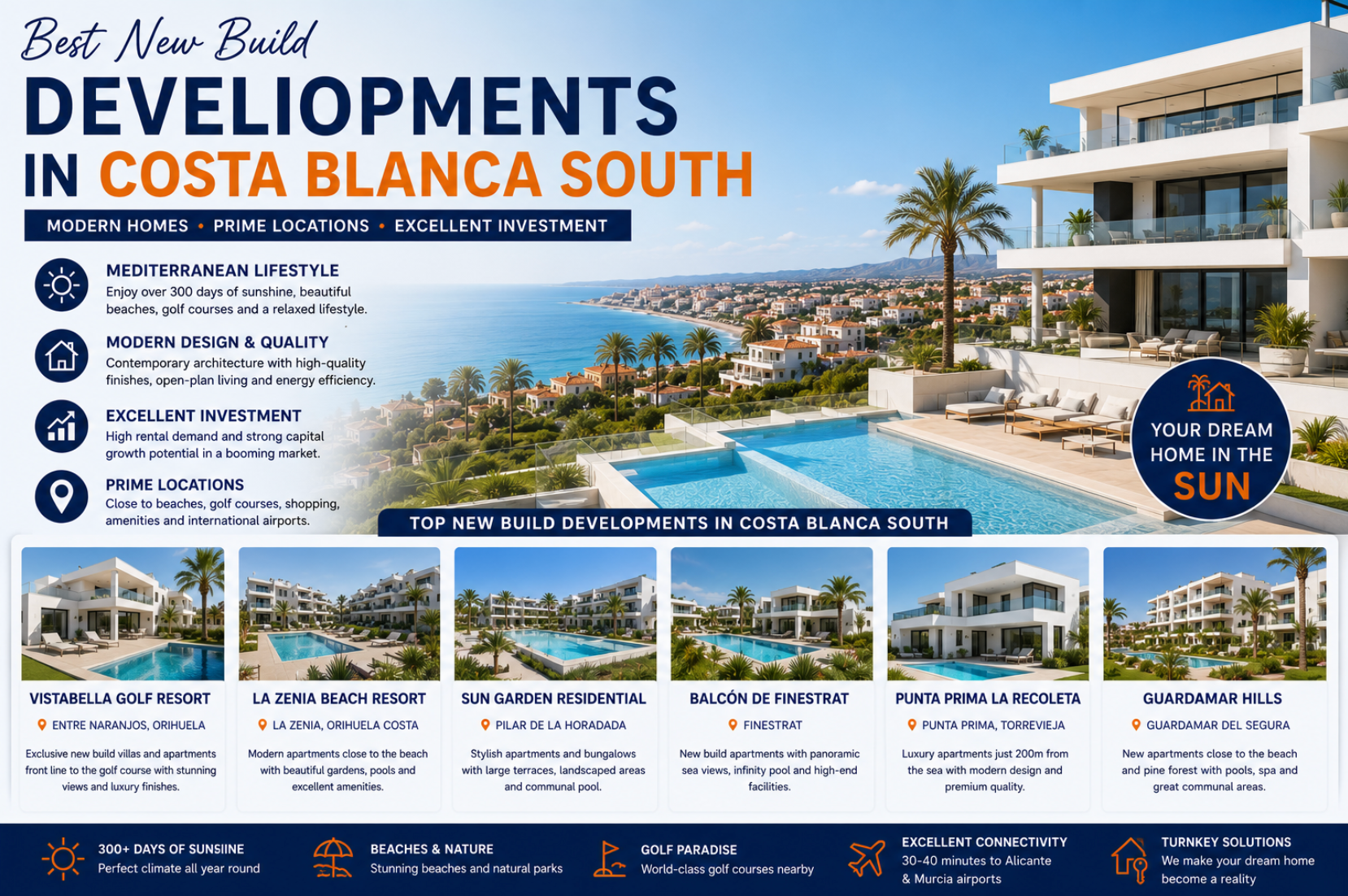
Discover the Best New Build Developments in Costa Blanca South
The Costa Blanca South has evolved into one of Europe’s most coveted destinations for contemporary coastal living. With its luminous Mediterranean light, an enviable year-round climate, and a tapestry of beaches, golf resorts, marinas, and nature reserves, the region blends lifestyle, leisure, and long-term value in a way few places can rival. Today’s new build developments here reflect a refined standard of design and craftsmanship: energy-efficient villas with private pools, boutique apartment residences with sweeping terraces, and thoughtfully planned communities that place wellness, convenience, and connectivity at the forefront.
Whether you are seeking a primary residence, a seasonal retreat, or an investment property with robust short- and long-term rental potential, the Costa Blanca South presents a sophisticated portfolio spanning sea-view penthouses, frontline golf homes, and serene low-rise enclaves near protected dunes and salt lakes. This guide explores the region’s key micro-locations, the defining features of the latest projects, market dynamics, legal safeguards, and the practical steps that transform intention into exceptional ownership.
For an up-to-date look at availability, pricing, and on-market opportunities, explore curated listings in Costa Blanca South and connect the insights from this guide with real-time data. The following sections will help you understand not only where and what to buy—but why the region’s newest developments are setting a fresh benchmark for Mediterranean living.
Why Costa Blanca South Is the New Build Capital of the Mediterranean
The Costa Blanca South—stretching broadly from the southern reaches of Alicante city through Guardamar del Segura, Torrevieja, Orihuela Costa, and down toward Pilar de la Horadada—enjoys a remarkable confluence of advantages that directly benefits new build buyers. It starts with climate: more than 300 days of sunshine per year, mild winters, and a pleasantly dry warmth that keeps beach days and golfing on the calendar well into early spring and late autumn.
Proximity and accessibility are equally compelling. The region sits between two international airports that streamline travel for owners and guests: Alicante–Elche Miguel Hernández to the north and Región de Murcia to the south. Motorway connections and well-maintained local roads create smooth links from coastal neighborhoods to golf valleys, retail hubs, healthcare facilities, and bilingual schools. Fiber connectivity and 4G/5G coverage are widely available, making remote work not just possible, but convenient.
Notably, planners and developers have placed a premium on livability. Many of the latest projects emphasize low-rise density, generous terraces and private gardens, communal green spaces, and amenities such as gyms, co-working lounges, spa areas, and heated pools for all-season use. This isn’t incidental design; it reflects a shift toward homes that double as sanctuaries, balancing indoor-outdoor living with smart technology and robust energy performance.
From a financial perspective, Costa Blanca South offers an appealing value proposition compared with other Mediterranean hot spots. While prime addresses command premium prices, the region generally maintains a more attainable entry point than some northern coastal enclaves—without compromising on construction quality or lifestyle features. For investors, that balance supports both capital appreciation and healthy rental yields, especially in communities close to beaches, marinas, and golf courses.
Key Micro-Locations: Where New Builds Shine
Though the Costa Blanca South is cohesive in lifestyle and climate, each area possesses a distinct character and development profile. Understanding these nuances helps align your goals—be they family-friendly amenities, quiet natural settings, or ultra-convenient beachfront access—with the right community.
Guardamar del Segura: Dune-Backed Beaches and Nature Reserves
Guardamar del Segura fuses broad, golden beaches with protected dune systems and pine forests. New builds here often benefit from superior microclimates and unobstructed light, coupled with carefully controlled height limits that preserve the horizon. Expect contemporary low-rise apartments with expansive terraces, townhouses with rooftop solariums, and villas that prioritize privacy and outdoor space.
Developers in Guardamar tend to orient living areas and master suites toward the sun and wind, using architectural brise-soleil, pergolas, and deep balconies to regulate temperature naturally. With the Segura River estuary and natural parks nearby, eco-conscious specifications—like aerothermal heating/cooling, pre-installation for photovoltaics, and high-performance glazing—are standard among leading projects. The area is particularly attractive to nature lovers and families who prioritize walkability to beaches and parks.
Ciudad Quesada & Rojales: Elevated Vistas and Lifestyle Hubs
Ciudad Quesada, part of Rojales, crowns gentle hills that yield panoramic views across the salt lakes of Torrevieja and the Mediterranean beyond. Here, developers frequently offer detached villas with private pools, sleek kitchens, and floodlit outdoor spaces designed for sunset dining. The topography allows for tiered plots that maximize outlook and privacy, while Quesada’s town center provides a vibrant backdrop of international dining, boutiques, and services.
This is an excellent zone for buyers who want a villa lifestyle without sacrificing access to well-established amenities. Golf is integral—La Marquesa Golf is minutes away—and families appreciate the proximity to bilingual schools, medical centers, and supermarkets. Expect sophisticated finishes, premium kitchen appliances, and energy credentials that meet or exceed current Spanish and EU requirements.
Torrevieja: Urban-Coastal Synergy with Marina Appeal
Torrevieja blends coastal living with urban convenience. Its promenades, marinas, cultural venues, and year-round services attract residents seeking a cosmopolitan atmosphere. New build developments frequently cluster in residential pockets within a short stroll or bike ride of the waterfront, retail, and dining. Apartment buildings here might be boutique in scale but rich in features—rooftop pools, indoor wellness areas, and secure underground parking.
One defining virtue of Torrevieja is choice. From compact pied-à-terre apartments designed for lock-and-leave living to upscale penthouses with sea glimpses, the market caters to diverse budgets and lifestyles. Buy-to-let investors value Torrevieja’s steady demand profile, supported by festivals, sports facilities, and a thriving hospital and healthcare network that anchor year-round occupancy.
Orihuela Costa: From La Zenia to Campoamor—Beachlife Meets Golf
Orihuela Costa, home to La Zenia, Cabo Roig, Playa Flamenca, Punta Prima, Villamartín, Campoamor, and surrounds, is among the region’s most dynamic zones for new build purchasing. Its mosaic of beaches features Blue Flag water quality, cliff-top promenades, and coves sheltered from wind—perfect for families and year-round swimmers. At the same time, it’s a golf powerhouse, with Villamartín, Las Ramblas, and Real Club de Golf Campoamor close at hand, and the renowned Las Colinas Golf & Country Club just inland.
Developments often lean into resort-style amenities: lagoon pools, landscaped gardens, padel courts, fully equipped gyms, and community clubhouses with co-working lounges. Apartment residences emphasize large-format tiles, minimalist kitchens with integrated appliances, sliding glass walls to maximize light, and refined bathroom suites. Villas accentuate clean lines, flat roofs with solariums, and interior patios that sculpt natural light. Accessibility is another strength; within minutes you can shift from beach to mall to school to golf course.
Pilar de la Horadada & Torre de la Horadada: Serene Beaches and Village Charm
At the southern edge of the province, Pilar de la Horadada and seaside Torre de la Horadada promise tranquil beaches, a charming marina, and a more intimate, small-town rhythm. New builds here skew toward low-rise scales and contemporary Mediterranean styling—whitewashed exteriors, pergolas, and carefully articulated outdoor areas. Buyers appreciate the comprehensive value: high-quality finishes and energy efficiency at price points frequently below those in more central coastal hubs.
With the Murcia airport approximately a short drive away and swift motorway links, these towns blend seclusion with connectivity. For families and retirees alike, the walking and cycling paths, beach promenades, and friendly plazas enhance everyday living. Investors often identify these enclaves as up-and-coming submarkets with room for steady appreciation.
San Miguel de Salinas & Las Colinas Area: Elevated Green and Golfland
Move inland slightly and the landscape turns to pine-dotted hills and golf fairways. San Miguel de Salinas sits close to Las Colinas Golf & Country Club—an award-winning course and master-planned enclave known for architectural rigor, controlled density, and luxury amenities. Here, new build villas tend to emphasize privacy, plot size, and craftsmanship: natural stone accents, custom cabinetry, landscaped gardens with native species, and advanced home automation.
This micro-location suits buyers who want tranquility without compromising proximity to the coast. The sea is typically a 15–20-minute drive, while everyday conveniences remain at hand. When measured in quality per square meter of living space, these developments often exceed urban-coastal equivalents, especially at mid-to-upper price bands.
Algorfa & La Finca Golf: Resort-Caliber Amenities
La Finca Golf in Algorfa offers a purpose-built, resort-caliber environment with rolling greens, spa facilities, and club dining. New build offerings range from apartments with communal pools to signature villas that line the fairways or enjoy elevated views over the valley. The master plan integrates walking paths, fitness, and clubhouse life, creating a sense of community that resonates particularly well with long-stay residents and avid golfers.
Owners here often cite the stress-reducing effect of waking up to open views and manicured landscapes. That ambience, along with year-round golf and proximity to beaches, ensures a balanced life and supports sustained rental demand.
Design DNA of Today’s New Builds
Design trends in Costa Blanca South are converging around clarity, climate responsiveness, and craftsmanship. Sustainability is not merely a marketing tagline; it’s embedded in the technical fabric of modern homes. Buyers will notice a suite of features that collectively deliver comfort, aesthetics, and long-term cost control.
- Indoor-Outdoor Continuity: Large sliding glass walls, flush thresholds, and expansive terraces extend living areas outdoors. Covered areas mitigate summer heat while allowing winter sunlight to penetrate.
- Light, Line, and Materiality: Architects favor clean lines, neutral palettes, and tactile accents—timber tones, stone cladding, and textured ceramics—that stand the test of time.
- Kitchen-Centric Plans: Open kitchens with islands serve as the daily hub. Integrated appliances, quartz or porcelain worktops, and ample storage are standard in mid-to-high-end homes.
- Wellness Bathrooms: Walk-in rain showers, freestanding tubs (in select villas), heated floors, and anti-fog mirrors enhance daily rituals.
- Acoustic and Thermal Performance: Multi-layer insulation, quality glazing, and thoughtful orientation combat heat gain and traffic noise, yielding quieter, more efficient homes.
- Storage and Utility: Utility rooms, built-in wardrobes, under-stair cupboards, and garage storage respond to real-life needs, especially for year-round residents.
- Private Pools and Solariums: In villa projects, pools and rooftop solariums are almost de rigueur, elevating leisure and entertaining space.
- Communal Amenities with Purpose: Gyms, saunas, heated indoor pools, co-working lounges, package rooms, and electric vehicle charging demonstrate a lifestyle-aware approach to communal design.
Energy Efficiency and Sustainability: What to Expect
European directives and Spanish building regulations have advanced significantly, and developers in Costa Blanca South have responded with a suite of high-performance systems. Buyers should look for identifiable markers of energy-conscious design:
- Aerothermal Heat Pumps: These provide efficient heating, cooling, and domestic hot water by extracting ambient energy from the air. The result: lower operating costs and reduced emissions.
- High-Performance Envelopes: Thermal breaks, triple or quality double glazing, and insulated envelopes reduce heat transfer. Solar control glass improves comfort without darkening interiors.
- Mechanical Ventilation with Heat Recovery (MVHR): While not universal, MVHR is increasingly present in premium projects, maintaining fresh air with minimal energy penalty.
- Photovoltaic (PV) Readiness or Installation: Many villas and some apartment communities integrate PV panels or pre-installation to simplify future upgrades.
- Water Stewardship: Native plantings, drip irrigation, rainwater harvesting (where designed), and efficient fixtures reduce consumption without sacrificing lush aesthetics.
- Lighting and Controls: LED throughout, motion sensors in communal areas, and home automation that optimizes energy use.
In addition to environmental benefits, these systems contribute meaningfully to comfort—stable interior temperatures, better air quality, and quieter rooms—while reinforcing long-term asset value in a market that increasingly rewards efficiency.
Property Types: From Boutique Apartments to Architectural Villas
Matching your lifestyle and investment goals begins with property type. Costa Blanca South accommodates a wide spectrum, each with distinct strengths.
Contemporary Apartments
Modern apartment communities typically offer one- to three-bedroom layouts, open-plan living, large terraces, and amenities that extend well beyond the front door. Rooftop solariums, underground parking, storage rooms (trasteros), and resort-style pools are common. For those seeking lock-and-leave simplicity, apartments minimize maintenance while maximizing amenities and rental appeal.
Upper-floor units and penthouses often command premiums thanks to improved light, views, and privacy. Ground-floor homes appeal to pet owners and families who value private garden areas and direct access to the pool or play spaces.
Townhouses and Semi-Detached Homes
Townhouses strike a balance between autonomy and community. Multi-level living, private terraces, and rooftop solariums meet family needs, while shared pools and landscaped areas build a neighborly atmosphere. Semi-detached configurations typically allow more window exposure, which brightens interiors and enhances cross-ventilation.
Investors often find townhouses compelling: they are easier to manage than standalone villas yet command higher weekly rental rates than many apartments, particularly when located within walking distance of beaches, retail, or golf clubhouses.
Detached Villas
Detached villas are the pinnacle of privacy and customization: private pools, landscaped gardens, off-street or underground parking, and wide openings that absorb coastal light. Architects often employ courtyard strategies, double-height living rooms, and generous master suites with terrace access. For buyers planning long stays or residency, villas provide the comfort and flexibility to host, work from home, and entertain in style.
Plots in hillside locations such as Quesada, San Miguel de Salinas, and the Las Colinas area typically allow for greater architectural drama—split-level designs, floating staircases, and sightlines arranged around framed views of the coast or golf fairways.
Lifestyle Pillars: Beach, Golf, Wellness, and Culture
A home is more than a floor plan; it’s the daily rhythm it supports. New builds in Costa Blanca South are embedded in a lifestyle structure that privileges health, leisure, and community.
- Beach Culture: Blue Flag beaches provide clean, safe waters. Morning swims, sunset walks, beach volleyball, and paddle boarding shape a relaxed coastal tempo.
- Golf Spectrum: With Villamartín, Las Ramblas, Real Club de Golf Campoamor, La Finca, and the award-winning Las Colinas nearby, golfers can play year-round, often within minutes of home.
- Marina Life: Torrevieja and Torre de la Horadada marinas host sailing clubs, regattas, and social events that enrich community life.
- Health and Wellness: From promenades and cycleways to spa-equipped communities and private training studios, the region supports active living. Public and private hospitals and clinics provide reliable care.
- Cuisine and Markets: Local markets brim with produce, seafood, and Valencian specialties. Beachfront chiringuitos, tapas bars, and fine dining map a culinary journey from casual to celebratory.
- Cultural Calendar: Festivals, artisan fairs, and cultural centers in Torrevieja and surrounding municipalities ensure a vibrant year-round program.
Market Dynamics: Value, Demand, and Resilience
The appeal of Costa Blanca South rests on diversified demand. Primary residents from Spain and across Europe, seasonal second-home owners, and tourism-driven tenants collectively create a robust, year-round market. This breadth of demand underpins stability and ensures liquidity across different price bands.
New build pricing varies with micro-location, view corridors, plot size, and amenities. Beach-proximate communities and frontline golf homes predictably lead in price per square meter, while inland enclaves deliver larger footprints for the same or lower investment. Key-ready inventory can be limited in prime addresses, while off-plan purchases often secure better pricing and choice of orientation and finishes.
For investors, short-stay rentals perform strongly in beach and urban-coastal areas with walkability and amenities, and mid- to long-term rentals (three to twelve months) appeal to digital nomads, retirees “testing” the region, and families bridging relocations. A considered strategy often blends summer weekly rentals with shoulder-season monthly stays to optimize occupancy and care for the property.
Buying New Build: Process and Protections
Spain’s legal framework for off-plan and new build purchases has matured to protect buyers. The process feels structured without being cumbersome. Below is a high-level flow that you can tailor with counsel from your lawyer and financial advisor.
1) Define Requirements and Budget
Start with fundamentals: property type, preferred micro-locations, minimum interior and exterior sizes, number of bedrooms/bathrooms, and must-have amenities. Overlay this with a realistic budget that accounts not only for the purchase price but also for taxes, closing costs, furnishings, and a contingency buffer.
2) Shortlist Developments and Conduct Preliminary Reviews
Evaluate developer track record, delivery timelines, and specification sheets. Request floor plans, orientation diagrams, and materials lists. If buying within a community, study the site plan to understand sun patterns, prevailing breezes, pool locations, parking, and potential view lines.
3) Reservation and Due Diligence
When you find the right home, a reservation deposit removes it from the market for a specified period. During this window, your lawyer conducts due diligence, which typically includes:
- Verifying land registry records and the building license.
- Reviewing bank guarantee or insurance arrangements that protect stage payments for off-plan purchases.
- Examining the developer’s compliance with local and national building regulations.
- Clarifying specifications, delivery dates, and penalty clauses.
4) Private Purchase Contract (PPC) and Stage Payments
Post-due diligence, you sign a Private Purchase Contract that sets out price, payment schedule, delivery timeline, and specifications. For off-plan purchases, stage payments are common (for example, a percentage at signing, further payments at construction milestones, and a final balance at completion). Spanish law requires developers to protect these stage payments with bank guarantees or insurance—an essential safeguard.
5) Mortgage Arrangements (If Financing)
Non-residents and residents alike can access Spanish mortgages, subject to credit approval and income verification. Bank appraisals, interest rates (fixed or variable), term lengths, and loan-to-value ratios vary. If you are self-employed or hold income in a foreign currency, start the documentation process early to avoid delays.
6) Snagging, Handover, and Notary
Prior to completion, a snagging inspection catalogs minor issues (paint touch-ups, door alignments, appliance checks) for the builder to rectify. After satisfactory snagging, you proceed to the notary for the transfer of title (escritura). At this point, taxes and fees are paid, keys are handed over, and utility transfers or activations are arranged.
Costs, Taxes, and Ongoing Ownership
Clarity on costs is essential for confident purchasing. New build transactions in the Valencia Community generally include the following (figures are indicative; confirm current rates before committing):
- VAT (IVA) on New Builds: Typically 10% on residential property purchase price.
- Stamp Duty (AJD): Payable on new build purchases; the rate is set by the autonomous community. In the Valencia region, it is often around 1.5% of the value declared in the deeds, though this may vary; verify current rates.
- Notary and Land Registry Fees: Variable, usually a small percentage of the purchase price.
- Legal Fees: For independent legal advice and document review.
- Mortgage Costs (If Applicable): Appraisal, opening fees, and associated bank charges.
Budget, as a rule of thumb, approximately 12–14% on top of the property price for taxes and closing costs for a cash purchase, and slightly more if financing. Post-completion, owners should anticipate:
- Community Fees: Cover maintenance of shared areas, pools, gardens, and amenities; sized to the scale and services of the development.
- Property Tax (IBI): Annual municipal tax based on cadastral value.
- Utilities and Insurance: Electricity, water, broadband, and comprehensive home insurance policies.
- Non-Resident Income Tax (If Applicable): Even if not renting, non-residents may owe a modest imputed income tax; if renting, declare rental income in accordance with Spanish regulations.
Off-Plan vs. Key-Ready: Choosing Your Path
Both routes have distinct advantages. Align your approach with timelines, customization preferences, and risk tolerance.
- Off-Plan:
- Pros: Best choice of units, orientations, and sometimes finishes; phased payments; potential price advantage over key-ready; time to plan furnishings and logistics.
- Considerations: Delivery timelines; reliance on bank guarantees; patience for construction and paperwork milestones.
- Key-Ready:
- Pros: Immediate usage; definitive understanding of light, views, and acoustics; no construction wait.
- Considerations: Less choice; possible premium for readiness; faster timeline to pay balance and complete.
Evaluating a Development: A Practical Checklist
Beyond glossy brochures, due diligence at the micro level helps ensure you select a home that lives well in real life.
- Orientation and Light: Assess sun exposure throughout the day and across seasons. South and southeast orientations often deliver the best year-round balance.
- Privacy: Stand on the terrace and look left, right, and across—do neighboring terraces or windows overlook your prime seating areas?
- Acoustics: Visit at different times (weekday midday, weekend evening). Evaluate road noise, pool echoes, or construction in progress nearby.
- Parking and Storage: Confirm your assigned space dimensions, EV charging readiness, and storage room size.
- Specifications: Scrutinize materials, brand lists for fixtures and appliances, insulation details, and warranty documents.
- Community Rules: Review regulations on rentals, pets, exterior modifications, and use of common spaces.
- Walkability and Access: Map walking times to supermarkets, pharmacies, beaches, restaurants, and public transport.
- Future Development: Ask the town hall or your lawyer about adjacent plots and planned infrastructure that might affect views or noise.
Construction Quality and Warranty Protections
Spanish law requires a 10-year structural warranty (seguro decenal) that covers major structural defects in new builds. Additional warranty layers often include:
- One-year: Finishes (paint, tiling, carpentry fitments).
- Three-year: Habitability issues (waterproofing elements, non-structural systems essential to daily use).
- Manufacturer Warranties: Appliances, air-conditioning units, and smart home devices typically carry their own guarantees.
Review warranty certificates and processes for registering a claim. A thorough snagging inspection, ideally conducted by a professional snagging company or architect, is essential to rectify minor issues quickly after handover.
Smart Home Integration: Comfort, Security, and Efficiency
Smart systems are becoming standard in upper-tier developments and increasingly common across mid-market offerings. Expect pre-installations or full systems for:
- Climate Control: App-based thermostats for aerothermal or ducted A/C, with zoning capabilities.
- Lighting and Blinds: Scene setting, sunrise/sunset automation, and security modes that simulate occupancy.
- Security: Video door entry, motion sensors, perimeter cameras, and integration with monitoring services.
- Water and Energy Monitoring: Real-time dashboards to track usage, spot anomalies, and optimize performance.
- Voice Assistants and Interoperability: Compatibility with leading ecosystems to simplify daily interactions.
While comprehensive automation is appealing, prioritize reliability and support. Systems built on open standards and supported by local technicians help ensure long-term satisfaction.
Furnishing and Interior Styling for Coastal Living
Thoughtful furnishing transforms a beautiful new build into a functional, personal sanctuary. Consider these principles:
- Scale and Proportion: Mediterranean interiors favor flow; choose low-profile sofas, slimline dining tables, and leggy accent chairs to preserve sightlines.
- Materials: Performance fabrics, outdoor-rated textiles for terrace furniture, and resilient rugs that handle sand with grace.
- Color Strategy: Ground spaces with soft whites and warm taupes, then layer in blues, sage greens, or terracotta to echo the coastline and surrounding hills.
- Storage Solutions: Built-ins that hide clutter, hallway consoles with drawers, and ottomans with hidden compartments.
- Lighting Layers: Combine ambient downlights with floor lamps, wall sconces, and table lamps to shift mood from day to evening.
- Outdoor Rooms: Treat terraces as living rooms: weatherproof seating, dining sets, outdoor rugs, lanterns, and planters with native greenery.
Rentability and Yield Considerations
Many owners plan for personal usage combined with strategic rentals. The Costa Blanca South supports both short-stay and mid-term rental models, with demand strongest near beaches, golf, and town centers. To tilt the numbers in your favor:
- Location and Access: Walk-to-beach, walk-to-amenities addresses outperform; proximity to airports bolsters occupancy.
- Amenities and Extras: Pools, gyms, parking, high-speed fiber, and workspace nooks cater to modern travelers.
- Two- and Three-Bedroom Units: Broader appeal to families and small groups.
- Terraces and Views: Outdoor spaces photograph well, boosting listing click-through and nightly rates.
- Interior Durability: Invest in easy-care finishes and replaceable slipcovers; protect walls with premium paint finishes.
- Professional Management: If remote, use reputable local services for check-in, cleaning, and maintenance.
Ensure compliance with local rental regulations and licensing, which can vary by municipality and evolve over time. Your legal advisor can clarify permitted models and requirements for your selected address.
Comparing Coastal and Inland Options
Both coastal and inland zones within Costa Blanca South present advantages. Your preferences for daily rhythm, privacy, and plot size will guide the decision.
- Coastal Living:
- Pros: Walkability to beaches, restaurants, and promenades; strong holiday rental demand; sea breezes and maritime ambience.
- Considerations: Higher price per square meter; more seasonal energy in prime zones.
- Inland Hills and Golfland:
- Pros: Larger living areas and plots; serene settings; panoramic views; often superior value for space and specifications.
- Considerations: Reliance on a short drive for beach days; car-needed lifestyle.
An effective strategy is to shortlist two or three micro-locations and spend structured time in each: morning coffee, grocery runs, afternoon beach or golf, dinner options. The best fit often reveals itself in the patterns of a single day.
Schools, Healthcare, and Everyday Services
A defining strength of the Costa Blanca South is its completeness as a year-round home environment:
- Education: A mix of public, concertado, and private/bilingual schools operates throughout the region. Families can often find English- or multi-language settings within a short drive of most new build communities.
- Healthcare: Public hospitals and private clinics offer comprehensive care. Torrevieja’s healthcare infrastructure, for example, is well regarded and attracts professionals from across the region.
- Retail and Services: Modern shopping centers, local markets, and specialty boutiques deliver a full spectrum of goods. Pharmacies, banks, and postal services are widely distributed.
- Connectivity: Fiber broadband is widely available, and mobile networks are robust—crucial for remote work and digital lifestyles.
Step-by-Step Timeline: From Vision to Keys
To make the buying journey smooth, structure it with clear milestones:
- Week 1–2: Requirements workshop and budget framework.
- Week 2–4: Micro-location study, online previews, and first shortlist.
- Week 4–6: Site visits and model home tours; refine shortlist; initial legal and financing consultations.
- Week 6–8: Reservation on the chosen property; begin due diligence window.
- Week 8–12: Private Purchase Contract; stage payment schedule confirmed; customization selections if available.
- Month 4–12+ (Off-Plan): Construction monitoring; periodic walkthroughs; interior design planning.
- Final Month: Snagging inspection; completion at notary; utility activations; move-in or rental onboarding.
While exact durations vary, planning in phases brings clarity and reduces stress—especially for cross-border buyers balancing logistics in two countries.
Common Mistakes and How to Avoid Them
Even experienced buyers benefit from guardrails. Avoid these pitfalls for a more secure, enjoyable purchase.
- Underestimating Total Costs: Factor taxes, closing fees, furnishings, and a contingency budget to avoid unwelcome surprises.
- Overlooking Orientation: Mediterranean sun angles matter. Tour at different times of day to judge light and shading.
- Ignoring Community Rules: If you plan to rent, verify that short-term rentals are permitted and understand any rules that could affect your strategy.
- Skipping Professional Snagging: Small defects are normal; a professional inspection ensures they are fixed promptly and thoroughly.
- Rushing Furnishings: Wait until you have the keys to confirm exact measurements; custom pieces are best ordered after onsite validation.
- Not Planning for Resale: Choose timeless finishes and flexible layouts that maintain appeal for future buyers.
Financing Focus: Mortgages, Appraisals, and Currency
For buyers using leverage, a proactive approach pays dividends:
- Prequalification: Obtain preliminary approval early to define purchasing power and speed negotiations.
- Appraisal Awareness: Banks will appraise the property; ensure that planned customizations or upgrades are documented and considered.
- Fixed vs Variable: Evaluate rate structures in the context of your risk tolerance and holding horizon.
- Currency Planning: If your income is in a different currency, consider timing of transfers or hedging strategies for larger payments.
Maintain a communications cadence with your bank and lawyer. Off-plan stage payments should be synchronized with financing availability and guaranteed by the developer as required by law.
Legal Essentials and the Role of Your Lawyer
An independent Spanish property lawyer is central to a safe transaction. Expect them to:
- Verify developer credentials, building licenses, and environmental compliance.
- Check that stage payments are protected via bank guarantees or insurance.
- Review the Private Purchase Contract and confirm penalty clauses, delivery dates, and specifications.
- Coordinate notary appointments and translate key documents if needed.
- Advise on taxes, residency considerations, and rental licensing for your municipality.
If you are non-resident, your lawyer can also assist with obtaining an NIE (foreigner identification number), opening bank accounts, and setting up standing orders for utilities and community fees.
Seasonal Living: How the Region Feels Month by Month
Understanding seasonality ensures your chosen micro-location matches your preferred pace year-round:
- Winter (Dec–Feb): Mild temperatures, quiet beaches, ideal for golfers and walkers. Wellness amenities in communities—heated pools, saunas—add value.
- Spring (Mar–May): Blossoming landscapes, comfortable warmth, cultural festivals, and longer daylight hours.
- Summer (Jun–Aug): Peak beach season, vibrant nightlife in coastal hubs, family travel at its height. Bookings for rentals are strongest now.
- Autumn (Sep–Nov): Glorious shoulder season: warm seas, gentle daylight, perfect for hiking, cycling, and terrace dining without crowds.
Owner Profiles: Matching Homes to Lifestyles
Understanding archetypal buyer profiles can clarify fit:
- Telecommuters and Digital Nomads: Seek fiber internet, co-working lounges, quiet interiors, and proximity to gyms and health food options.
- Golf-Centric Owners: Prioritize communities with carts, locker facilities, and tee-time convenience; consider fairway views for daily inspiration.
- Beach Lovers: Value walk-to-sand addresses, outdoor showers, and generous storage for sports gear.
- Families: Need three-bedroom floor plans, secure play zones, proximity to schools and medical services, and extra storage.
- Investors: Target high-demand micro-locations, timeless finishes, and amenities that photograph well and command premium rates.
- Retirees: Favor single-level living, lifts in apartment buildings, wellness amenities, and easy access to everyday services.
Focal Areas to Watch: Emerging and Established Hotspots
While prime addresses in Orihuela Costa and Torrevieja maintain perennial appeal, several submarkets warrant attention for fresh build activity and value:
- Guardamar Peripheries: New low-rise enclaves balancing beach access with tranquil settings.
- Quesada Hillsides: Villas with commanding salt-lake and sea views, emphasizing energy efficiency and architectural poise.
- Pilar / Torre de la Horadada Fringe: Attainable pricing with beaches and marinas a short bike ride away.
- San Miguel / Las Colinas Belt: Elevated villas and design-led clusters near elite golf and extensive greenspace.
- La Finca Golf Zone: Resort infrastructure supporting strong year-round lifestyle with rental upside.
Amenity Deep Dive: What Truly Adds Value
Discerning buyers distinguish between amenities that sparkle in brochures and those that meaningfully enrich daily living. Features with persistent value include:
- Heated Pools or Indoor Spa Zones: Extend usability beyond summer.
- Gym and Wellness Suites: Onsite fitness reduces reliance on external memberships and supports healthy routines.
- Co-Working/Meeting Rooms: Essential for remote workers and practical for owner meetings or small events.
- EV Charging: Increasingly non-negotiable; look for shared stations or private pre-installation in garages.
- Parcel Rooms and Smart Access: Facilitate deliveries and stress-free management of rentals or services.
- Landscaped Gardens with Native Planting: Sustainable beauty with lower water and maintenance demands.
Inspection Strategy: Seeing Beyond the Show Home
Show homes are staged to impress; your task is to translate the intent into the lived experience of the specific unit you are considering.
- Visit the Actual Plot or Unit: Stand on your terrace, check distances to pool, parking, and any active construction.
- Measure Critical Spaces: Sofa wall, TV wall, dining clearances, bed and wardrobe positions, terrace furniture footprints.
- Check Services: Water pressure, electrical panel capacity, data points in living areas and bedrooms.
- Test Acoustics: Close doors and windows; listen for transmission through walls and floors.
- Sun Mapping: Use a sun-tracking app or simple observation to confirm shade needs and potential for heat buildup.
Fitting Out for Rentals: Durability Meets Desire
Rental-ready interiors require a pragmatic, guest-pleasing approach:
- Sleep Quality: Invest in quality mattresses and blackout curtains or blinds.
- Kitchen Readiness: Stock with durable cookware, sharp knives, glassware, and tableware for the advertised occupancy.
- Storage and Cleaning: Owner’s lockable storage; vacuum, mop, and cleaning supplies; easy-launder linens and towels with backups.
- Welcome and Instructions: Clear guides for appliances, climate control, recycling, and local recommendations.
- Photography: Professional images captured at golden hour highlight terraces, views, and amenity spaces.
Sustainability in the Community: Beyond the Front Door
The green credentials of a development extend well beyond individual units. Consider how the master plan advances sustainability:
- Mobility: Bike storage, e-bike charging, and safe cycling routes to beaches and services.
- Water Management: Drought-resilient landscaping, greywater systems where installed, and efficient communal irrigation.
- Waste Reduction: Convenient recycling points and clear signage encourage resident participation.
- Building Maintenance: Proactive maintenance schedules for roofs, facades, and communal systems protect long-term efficiency.
After-Sales Care and Community Integration
Beyond handover, a good development shines in after-sales responsiveness and community cohesion. Look for:
- Clear Defect Reporting Channels: Online portals or dedicated managers to accelerate minor fixes.
- Community Meetings: Transparent administration builds trust and prudent budgeting.
- Resident Networks: Social groups and events that help newcomers integrate quickly.
Owners who invest early in relationships with neighbors and administrators tend to realize a more enjoyable, frictionless residency, with quicker solutions when questions arise.
Making the Shortlist: A Framework for Decision
Use a scoring approach to bring objectivity to your final choices. Rate each development (1–10) against these criteria, then tally:
- Micro-location (beach/golf/proximity to services)
- Orientation and light
- Privacy and acoustics
- Private outdoor space (terrace/garden/solarium)
- Community amenities
- Build specifications and smart features
- Developer reputation and warranty coverage
- Rental potential (if relevant)
- Total cost of ownership
- Intangibles (ambience, architectural elegance)
When two options score similarly, pay attention to your experiential notes—how each place felt at various times of day, the ease of daily routines, and the subtle sense of fit that is hard to quantify but vital to long-term satisfaction.
Curated Areas: What Distinguishes Each in Daily Life
La Zenia
Energetic and convenient, La Zenia places you near a major retail hub, diverse dining, and beaches within walking or short driving distance. New builds emphasize convenience and amenity access, making it a strategic base for vibrant lifestyles and rentals.
Cabo Roig
Known for its palm-lined avenues and elegant coves, Cabo Roig’s upscale ambience attracts discerning buyers. Expect refined apartments and villas, often with superior finishes and terraces that embrace the sea’s glow.
Playa Flamenca
Playa Flamenca blends residential calm with beach ease. New communities here aim for balanced living—amenities without overwhelm, and terraces built to host long, languid meals with friends and family.
Punta Prima
Close to Torrevieja and boasting open waterfront promenades, Punta Prima excels for those who want quick urban access with a resolutely coastal outlook. Developments skew modern-minimalist with airy interiors and horizon-framing windows.
Villamartín
A golf-anchored suburb with a sociable plaza and abundant amenities, Villamartín’s new builds draw golfers and families who enjoy the blend of fairways and services. Townhouses and apartments with generous community pools are common.
Campoamor
Campoamor’s green spaces and coastline align with an elevated lifestyle. Expect carefully landscaped developments, often with broader terraces, and a feeling of scale that suits longer, more relaxed stays.
Timing the Market: When to Buy
Developments release in phases. Early buyers secure the best orientations and prices, while later buyers can sometimes leverage completed show units to judge exact light and views. If buying off-plan, targeting a release just before construction acceleration can strike a balance: ample choice plus visible build momentum.
Seasonally, winter and early spring often provide a calmer environment for decision-making and negotiation, though prime addresses may sell swiftly at any time. Resist letting timing override fit; the best purchase is the one that aligns property attributes and budget with your lifestyle for the next five to ten years.
The Intangibles: Why Costa Blanca South Feels Like Home
Beyond the metrics and checklists lies the essence of coastal life: dawn light glinting off calm seas, the scent of pine along dune paths, convivial evenings on shaded terraces, and the shared rhythms of a community that values wellness and connection. The best new build developments in the region are not just constructions; they’re frameworks for these experiences—architectural canvases on which daily joys are painted.
Buyers often describe an unexpected sense of calm after moving in: fewer logistics, more time outside, simpler routines, and the reassurance that their home functions elegantly throughout the seasons. That is the promise of the Costa Blanca South new build landscape when chosen with care.
Next Steps: From Insight to Action
If the ideas here resonate, the next step is to translate them into a tailored shortlist and site visits. Begin by browsing current opportunities in Costa Blanca South, noting properties that align with your preferred micro-locations, floor plans, and amenities. Prepare a concise brief describing your must-haves and nice-to-haves, and set aside time for an immersive, on-the-ground exploration—ideally over a long weekend that lets you experience morning, afternoon, and evening in your shortlisted areas.
With clear criteria, professional legal counsel, and a careful review of specifications and warranties, you can secure a home that rewards you with beauty, function, and long-term confidence. The Costa Blanca South is ready to welcome you—sunlit, sophisticated, and superbly livable.