





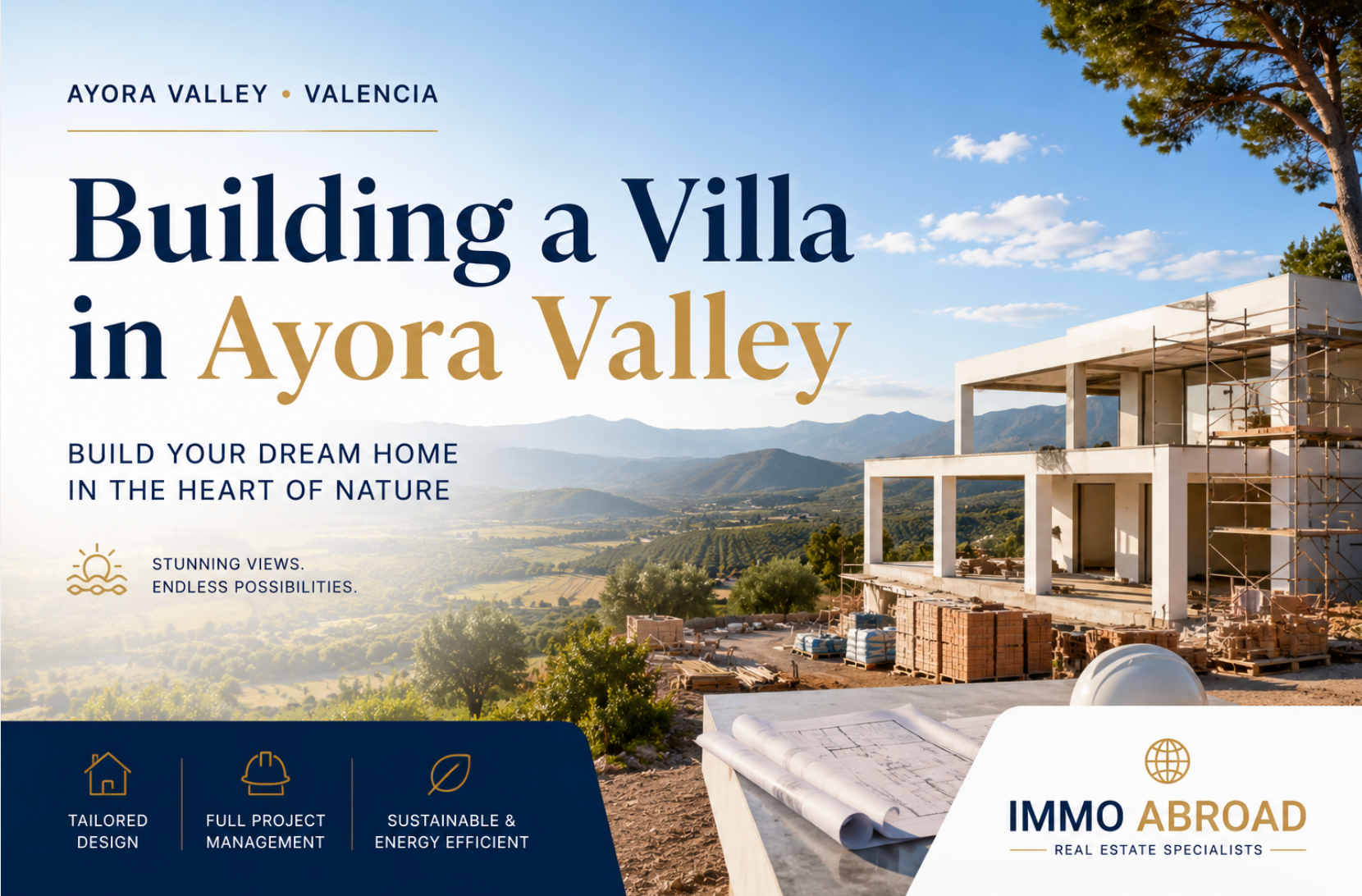
Why Building a Villa in Ayora Is a Remarkable Decision
Building a villa is more than a real estate project; it is a long-term expression of lifestyle, comfort, and identity. Choosing the right location defines the outcome as much as design and construction quality. In this context, Ayora stands out as one of the most compelling destinations in the Valencian Community for those seeking privacy, nature, and authenticity without losing access to essential services. Nestled within the wider Valle de Ayora–Cofrentes, the town offers an alluring blend of dramatic landscapes, agricultural heritage, and Mediterranean charm shaped by centuries of history.
Whether you are drawn by the serenity of almond and olive groves, the rugged beauty of surrounding sierras, or the cultural rhythms of rural Spanish life, building a villa in Ayora allows you to take advantage of generous plots, expansive views, and a pace of life that encourages thoughtful, elegant architecture. From a tasteful countryside retreat to a family home with sophisticated indoor–outdoor living, Ayora supports designs that honor tradition while embracing innovation—passive cooling strategies, contemporary materials, and renewable energy systems are all welcome here.
This comprehensive guide walks you through every stage of the journey: identifying the ideal plot, mastering the administrative process, collaborating with architects and engineers, planning for costs, and creating a villa that not only looks beautiful, but also performs well year-round. It explores climate-sensitive design, landscape strategies, water management, regulatory requirements, and the subtleties of building in the province of Valencia. Consider it a roadmap and a creative companion, focused on quality, foresight, and local wisdom—so the villa you envision in Ayora is executed with precision and grace.
Ayora: Setting, Character, and Lifestyle
To build wisely, you must first understand where you are building. Ayora lies inland from the Valencian coast, at an elevation that moderates the Mediterranean climate with nuanced continental traits. Summers are warm and dry, often hot in mid-afternoon, while evenings cool pleasantly. Winters are crisp and can bring chilly nights, occasional frost, and a distinctly seasonal rhythm that contrasts with the milder seaside. This diurnal temperature swing is one of the defining elements of comfort planning for any new home in the area.
The town itself is known for its medieval castle, honey festival, and traditional whitewashed architecture entwined with terracotta tones, stone walls, and organic courtyards. The region’s agricultural mosaic—almonds, olives, vineyards, and pine woodland—offers a textural canvas for villas that integrate landscape as an extension of living space. Here, you will find sweeping valley views, gently rolling terrains, and secluded pockets of woodland that are perfect for a villa designed around framed vistas, sunlight, and microclimate management.
Infrastructure is solid for a rural setting. You can expect decent road access, access to trades, suppliers based in the wider region, and proximity to larger towns for comprehensive services. The balance between tranquility and accessibility makes Ayora particularly appealing for second homes, retirement residences, and long-term family bases. Daily life is enriched by local markets, seasonal produce, small-town camaraderie, and a genuine connection to nature—hiking, cycling, and exploring historic sites are part of the living experience.
Land, Zoning, and the Planning Context in the Valencian Community
In Spain, and specifically in the Valencian Community, land classification underpins what you can build, how much you can build, and the procedures needed for approval. While the full legal framework is extensive, a clear overview will help you navigate your options and set realistic expectations early on.
Common Land Classifications
- Suelo Urbano (Urban Land): Plots typically within consolidated town boundaries or areas with existing infrastructure (roads, electricity, water, sewage). Building on suelo urbano is usually the most straightforward, with defined rules for buildability, height, setbacks, and use.
- Suelo Urbanizable (Developable Land): Land earmarked for eventual development but not yet fully urbanized. It may require partial urbanization works or planning instruments to be in place before building. Timelines and obligations can be different from urbano, and development costs may be higher.
- Suelo No Urbanizable (Rústico/Rural Land): Rural land where building can be highly restricted. In some cases, it is possible to build single-family homes with strict criteria: minimum plot sizes, agricultural use justifications, landscape integration, and lower buildable ratios. Regulations may vary by municipality and depend on the PGOU (Plan General de Ordenación Urbana) or similar local planning instruments.
Ayora’s town hall (ayuntamiento) enforces local planning regulations that articulate building volumes, permitted uses, heritage protections, minimum setbacks, and environmental considerations. Always verify the specific classification and permitted parameters at the municipal level before purchase—this is fundamental due diligence. The rules for building on rural land can be very different from those in consolidated urban areas, and they often hinge on preserving landscape character and ensuring minimal environmental impact.
Primary Regulatory References
- Local PGOU or Planning Norms: Define urban parameters, land use, and densities. You will rely on these for exact building envelopes, heights, coverage ratios, and permissible typologies.
- Código Técnico de la Edificación (CTE): Spain’s national building code establishes performance requirements for structure, fire, energy efficiency, noise, and more. Your architect’s project is designed to comply with the applicable sections of the CTE.
- Valencian Regional Regulations: Including environmental protection norms, building oversight procedures, and heritage guidelines specific to the region.
Remember: the PGOU or equivalent can evolve. Work with a qualified architect and legal advisor to ensure the information is current. Consider requesting a “certificado urbanístico” from the municipality to confirm zoning facts.
How to Find and Evaluate the Right Plot
Choosing the plot is as strategic as choosing the design. A well-located, well-oriented plot will result in a villa that is more comfortable, energy-efficient, and future-proof. Ayora’s terrain is diverse—flatter agricultural plots near valley floors, gently sloped sites that offer broader views, and hillier land closer to forested edges.
Key Criteria for Plot Selection
- Orientation and Sunpath: For Mediterranean climates with a continental touch, southern exposure is valuable in winter, while thoughtful shading is essential in summer. West facades can overheat late in the day—plan protective design measures (vegetation screens, deep overhangs, adjustable louvers).
- Topography: A mild slope can enhance views and drainage, though it may increase construction costs for retaining walls or stepped foundations. Flat plots are often simpler to build on but may require careful water management in heavy rains.
- Access and Infrastructure: Assess road access and safety for construction vehicles, as well as future daily use. Check for existing utility connections (electricity, water mains, sewage, telecom), or plan for alternatives like wells, cisterns, solar PV, and septic systems.
- Soil Conditions: Commission a geotechnical survey before finalizing the design. Soil type influences foundation strategy, cost, and structural design, particularly in areas with expansive clays or rocky subsoil.
- Environmental and Heritage Constraints: In rural zones, you may face restrictions related to protected vegetation, wildlife corridors, or landscape heritage. Verify early to prevent delays or redesigns.
- Noise and Privacy: Factor in proximity to roads, agricultural operations, and neighboring properties. Micro-siting the house on the plot can mitigate many nuisances while enhancing tranquility and views.
- Wind and Microclimate: Valleys can channel breezes; ridgelines can amplify wind exposure. Understand prevailing winds—shade and ventilation strategies can be tuned to the site’s microclimate.
Due Diligence Essentials
- Land Registry (Registro de la Propiedad): Obtain a nota simple to confirm ownership, boundaries, and encumbrances (mortgages, easements, liens).
- Catastro: Cross-check cadastral maps and surface areas with the Land Registry to reconcile differences.
- Boundary Verification: Commission a topographic survey and ensure boundaries are clear to prevent disputes.
- Easements (Servidumbres): Identify rights-of-way, water channels, power lines, or heritage paths that may restrict the buildable area.
- Flood and Fire Risk: Check maps for flood-prone zones and consider forest fire exposure; design defensible space and fire-resilient details.
For those at the exploration phase, you can review current opportunities to acquire plots and properties in Ayora to get a sense of market availability, plot sizes, and pricing in and around the municipality.
Legal and Administrative Pathway: From Paperwork to Permits
The administrative aspect of building in Spain is rigorous—but with a strong team, it is manageable and predictable. The key is sequencing: make sure each step is complete before proceeding to the next, and ensure that decision-makers (you, architect, quantity surveyor, legal advisor) remain coordinated.
Core Participants and Roles
- Architect (Arquitecto): Leads design and technical project, ensures compliance with CTE and local planning rules, and often manages permit submissions. The architect’s project typically includes the Proyecto Básico (for planning approval) and the Proyecto de Ejecución (for construction detail).
- Technical Architect/Quantity Surveyor (Aparejador or Arquitecto Técnico): Oversees cost control, site supervision, and compliance during the build. Plays a key role in health and safety oversight and certification of work stages.
- Structural Engineer (Ingeniero de Estructuras): Designs the structural system per CTE and seismic/wind considerations, often integrated with the architectural team.
- Geotechnical Engineer: Provides a soil report (estudio geotécnico) informing foundations and drainage strategies.
- Lawyer (Abogado): Advises on purchases, contractual protections, and any specific administrative challenges, especially valuable for non-residents.
- Contractor (Constructor): Delivers the building works. Selection is crucial—opt for demonstrated experience, transparent budgeting, and solid references in the region.
Permits and Approvals
- Licencia Urbanística/Licencia de Obra Mayor: Required for new builds. Submission typically includes the Proyecto Básico y de Ejecución, relevant forms, fees, and proof of compliance with local codes.
- Visado Colegial: Architectural projects often need the professional association’s (Colegio de Arquitectos) visa, confirming that a licensed professional is responsible for the design.
- ICIO (Impuesto sobre Construcciones, Instalaciones y Obras): A municipal tax on building works, typically calculated as a percentage of the construction budget declared for the permit.
- Waste Management Plan: Construction and demolition waste must comply with regulations and permits may require a plan outlining waste handling and recycling.
- Utilities: Separate applications and contracts for temporary construction power and water supply may be needed; plan these early to avoid start delays.
Key Documents for Property Ownership and Building
- NIE (Número de Identificación de Extranjero): Required for foreign buyers undertaking property transactions or contracts.
- Insurance: Builders’ liability insurance and, upon completion, the Seguro Decenal (ten-year structural warranty insurance) are common requirements for new residential buildings.
- Final Certificates: On completion, the architect issues the Certificado Final de Obra, and you will need to register the new build in the Land Registry and obtain an occupancy certificate (Cédula de Habitabilidad or equivalent documentation as required locally).
Bear in mind that local municipalities within the Valencia province may have nuanced differences in submission formats, fee calculations, and processing times. Your architect’s familiarity with Ayora’s town hall procedures can smooth the experience significantly.
Crafting the Vision: Design Strategy and Architectural Language
A successful villa in Ayora synthesizes landscape, climate, and lifestyle. Begin with a clear brief: How many bedrooms? Will the home be used year-round? Do you need spaces for remote work? Will the villa be a gathering point for extended family? Are you planning a pool, a guest house, or an annex for staff? These questions shape both the plan and the budget.
Stylistic Pathways: Traditional, Contemporary, or Hybrid
- Traditional Mediterranean: Whitewashed facades, terracotta tiles, shaded arcades, and courtyards. These elements, time-tested in similar climates, are conducive to passive comfort and are well-suited to Ayora’s context.
- Contemporary Minimalism: Clean lines, large openings, seamless inside–outside transitions, and modern materials. With careful shading and high-performance glazing, the modern palette can be energy-efficient and context-sensitive.
- Hybrid Approach: Combine local stone or clay flooring with modern fenestration, integrated pergolas, and green roofs. You can honor regional materials while presenting a crisp, up-to-date architectural statement.
Spatial Planning Principles
- Daylight and Orientation: Position living areas to capture south and southeast light; use porches and pergolas to filter summer sun while inviting winter light deeper into interiors.
- Wind and Ventilation: Cross-ventilation is crucial. Position openings to harness valley breezes; integrate stack ventilation through double-height spaces or discrete roof lanterns.
- Program Zoning: Separate quieter bedroom wings from active living zones. Consider a service spine for utilities that keeps mechanical spaces consolidated for efficiency.
- Outdoor Rooms: Treat terraces, loggias, and patios as true rooms—furnished, shaded, and equipped with lighting and heat sources for shoulder seasons.
- Adaptability: Plan multipurpose rooms to future-proof the villa. Spaces that can transform from an office to a guest suite will preserve value over decades.
Climate-Responsive Design for Ayora’s Conditions
Climate is not an obstacle; it is an asset when you design with it in mind. Ayora’s summers can be hot, but dry air and evening breezes make passive cooling strategies exceptionally effective. Winters require thoughtful insulation, air tightness, and solar gain management.
Thermal Mass and Envelope Strategy
- Thermal Mass: Materials like stone, concrete, and adobe absorb heat during the day and release it at night, smoothing temperature swings. Pair with night-time ventilation to purge heat.
- Insulation and Air Tightness: High-quality insulation in roof and walls, with careful detailing to avoid thermal bridges, helps maintain comfort with lower energy input. Night drafts should be manageable via controlled openings, not via leaky envelopes.
- High-Performance Glazing: Use selective solar control glass and deep reveals. Combine overhangs with adjustable screens for west facades.
Shading, Courtyards, and Microclimates
- Courtyards: Classic Mediterranean feature. They create protected microclimates and can act as cooling reservoirs at night.
- Pergolas and Vines: Seasonal, living shade. Deciduous vines allow winter sun while shading in summer.
- Porches and Loggias: Transition spaces that facilitate outdoor living for most of the year, reducing reliance on mechanical cooling.
Ventilation and Night Flushing
- Stack Effect: High-level openings allow hot air to escape. Couple with secure, shaded ground-level openings to encourage night flushing.
- Insect Screens and Security: Integrate screens and safe ventilation strategies so windows can remain open at night without concern.
Winter Comfort
- Solar Gain: Optimize south-facing fenestration for winter sun, protected with overhangs to prevent summer overheating.
- Efficient Heating: Air-source heat pumps, underfloor heating, and careful zoning allow precise control with modest consumption.
- Fireplace or Stove: A high-efficiency unit adds ambiance and backup heat for the coldest nights.
Structure and Materials: Durability, Aesthetics, and Performance
The structure should be robust, low-maintenance, and harmonious with Ayora’s setting. Material choices influence not only appearance, but also longevity and environmental performance. Evaluate lifecycle impacts and local craft availability.
Structural Systems
- Reinforced Concrete Frame: Common, flexible, and fire-resistant. Works well with thermal mass strategies and can integrate stone or stucco façades.
- Masonry/Block with Slabs: Traditional and familiar to local trades. Offers reliable performance when paired with proper insulation and moisture management.
- Timber or Engineered Wood: Warm aesthetics, speed of assembly, and potential for lower embodied carbon. Requires meticulous detailing for sun, moisture, and pests.
- Hybrid: Combine concrete cores with timber framing for tactile, acoustically warm interiors and robust envelopes.
Exterior Finishes
- Lime Plaster/Stucco: Breathable, time-honored. Lime renders paired with mineral paints can age beautifully and manage moisture effectively.
- Local Stone: Base plinths, garden walls, or full façades with local stone integrate the villa into Ayora’s geology and heritage.
- Terracotta and Ceramic: Roof tiles, brise-soleil panels, or flooring that reference regional materials.
Interior Materials and Tactility
- Natural Stone and Terracotta Flooring: High thermal mass, cooling underfoot in summer, and elegant longevity.
- Timber Ceilings and Joinery: Warmth, acoustic comfort, and a sense of craft—especially effective in living areas and bedrooms.
- Plaster Finishes: Smooth, light-reflective lime plasters with low VOC paints for healthy indoor air quality.
Seismic and Wind Considerations
- CTE Compliance: The structural engineer will design for local seismicity and wind loads. Detailing balconies, canopies, and parapets is critical.
- Connections and Anchorage: Pay close attention to how shading devices and pergolas are fixed to the structure in windy conditions common to valley regions.
Energy, Water, and Utilities: Designing for Autonomy and Reliability
Reliable, efficient, and resilient building services enhance comfort and protect long-term value. In Ayora, a hybrid approach—combining grid connections with on-site generation and storage—often yields the best result.
Electricity and Renewable Energy
- Grid Connection: Confirm proximity and capacity. Costs vary with distance and required upgrades.
- Solar Photovoltaics (PV): High solar yield makes PV an obvious choice. Pair with a battery system to cover evening peaks and provide backup.
- Heat Pumps: Air-source heat pumps for heating and cooling are efficient and compatible with underfloor systems; incorporate zoning.
- Smart Controls: Use demand management and monitoring to align consumption with PV generation, reducing reliance on the grid.
Water Supply
- Municipal Water: Convenient where available. Verify pressure and capacity for irrigation and household needs.
- Wells and Boreholes: Possible in some rural zones, subject to permits and sustainability assessments.
- Rainwater Harvesting: Roof collection to cisterns for irrigation, cleaning, or WC flushing within regulations—helps reduce mains demand.
Wastewater and Drainage
- Sewer Connection: In urban areas, connection is standard; confirm nearest point and capacity.
- Septic or Compact Treatment Systems: For rural plots, modern compact treatment plants can meet regulatory standards and reduce maintenance.
- Stormwater Management: Swales, permeable paving, and landscape basins reduce runoff and promote infiltration.
Telecom and Smart Home
- Fiber or 4G/5G: Check local availability. Antenna placement and boosters can improve reception.
- Home Automation: Integrate lighting, climate, and security for efficient operation and remote monitoring.
- EV Charging: Pre-wire for current and future electric vehicles with load management tied to PV generation.
Landscape, Outdoor Living, and the Pool
In Ayora, the landscape is not a backdrop—it is the stage. Your villa should choreograph movement between interior and exterior, with the land dictating programmatic moments: a breakfast terrace beneath a carob tree, an evening patio facing the setting sun, a shaded pergola for summer lunches, and a quiet reading nook near the pool.
Xeriscaping and Plant Selection
- Drought-Tolerant Species: Lavender, rosemary, sage, thyme, oleander, and olives thrive here. Native species reduce water consumption and maintenance.
- Tree Canopies: Almonds, olives, pines, and carobs create microclimates. Deciduous trees near south façades can provide seasonal shade.
- Gravel Mulches and Drip Irrigation: Conserve moisture and discourage weeds, improving soil health over time.
Terraces, Pergolas, and Outdoor Kitchens
- Layered Terraces: Organize terraces by time of day—east for mornings, west for sunsets, south for winter afternoons.
- Outdoor Kitchen and Dining: Consider a built-in barbecue or wood-fired oven with weather protection and storage.
- Lighting: Warm, low-level lighting enhances ambiance and safety without competing with starlight.
Pools and Water Features
- Regulatory Considerations: Permits are generally required; safety and filtration systems must meet standards.
- Orientation and Wind: Place pools away from wind corridors to reduce evaporation and heat loss.
- Finishes: Lighter pool finishes can increase perceived water clarity and temperature; darker finishes can enhance solar gain.
- Covers and Efficiency: A retractable cover conserves water, reduces debris, and retains heat.
From Concept to Keys: Process and Timeline
While every project is unique, a structured roadmap helps you anticipate milestones, decisions, and resource allocation. In Ayora, local approvals and contractor availability influence timing; clear communication maintains momentum.
Typical Timeline
- Feasibility and Plot Acquisition (1–3 months): Site visits, due diligence, preliminary talks with the municipality, and purchase.
- Concept and Schematic Design (2–3 months): Briefing, sketches, options, budget alignment.
- Technical Design and Permitting (3–6 months): Proyecto Básico y de Ejecución, engineering integration, permit submission, and approvals.
- Tender and Contractor Selection (1–2 months): Bid packages, clarifications, contract negotiation.
- Construction (10–16 months): Groundworks, structure, enclosure, fit-out, commissioning.
- Handover and Registration (1–2 months): Final certificates, connection formalities, and occupancy.
Seasonal realities—like the push to enclose before winter or scheduling earthworks in drier months—can improve efficiency. Build schedules may flex to accommodate supply timelines for bespoke materials or specialized trades.
Tendering and Contracts
- Fixed-Price (Lump Sum): Predictable cost if scope is well defined; variations require clear change control.
- Cost-Plus: Transparency with actual costs, suitable for complex projects; requires rigorous oversight to avoid overruns.
- Hybrid: Fixed price for core works with provisional sums for items that need later selection.
Site Management and Oversight
- Weekly Meetings: Keep decisions moving. Maintain minutes with actions and responsibilities.
- Quality Control Plan: Mock-ups for key finishes; documented approvals before rolling out.
- Health and Safety: Comply with regulations through designated coordinators. Ensure site is secure and risks are assessed.
Budgeting, Cost Components, and Value Engineering
Budget clarity is empowerment. It supports better design decisions and prevents surprises. In Ayora, construction costs vary with design ambition, materials, and contractor market conditions. Early alignment of scope and budget is critical.
Main Budget Categories
- Land: Plot purchase price, due diligence, notary and registry fees, and purchase taxes (varying by property and transaction type).
- Design and Engineering Fees: Architect, technical architect, structural engineer, geotechnical report, topographic survey, energy modeling if applicable.
- Permits and Municipal Taxes: ICIO and other local fees.
- Construction Costs: Earthworks, structure, façade, roofing, windows, interior finishes, mechanical/electrical/plumbing systems, pool, exterior works, landscaping.
- Contingency: Typically 8–12% of construction cost, depending on project complexity.
- Furnishings and Equipment: Kitchens, wardrobes, furniture, window treatments, appliances.
- Professional Inspections and Insurances: Site testing, quality control labs, builders’ insurance, and decennial insurance where applicable.
Cost Sensitivities
- Complex Topography: More retaining walls and specialized foundations increase cost.
- Glazing Ratio: Large openings are beautiful but require higher-spec frames and glass to meet energy targets.
- Bespoke Elements: Custom joinery, specialty stone, and artisanal finishes elevate quality and price.
- Mechanical Systems: High-performance systems cost more upfront but reduce operating expenses and may boost long-term value.
Value Engineering Without Compromise
- Prioritize the Envelope: Invest in insulation, air tightness, and shading for comfort and energy efficiency.
- Phase Non-Essentials: Pre-wire and pre-plumb for future expansions instead of compromising core quality.
- Local Materials: Source stone, ceramics, and carpentry from regional suppliers to balance cost with craftsmanship.
Financing Your Build and Managing Cash Flow
Financing a villa involves upfront planning and disciplined cash flow management. Many owners combine personal funds with a construction mortgage and release stage payments as certified by the technical team.
Mortgage Considerations
- LTV (Loan-to-Value): Banks assess the appraised value of the completed home and land. Non-residents may face different LTV thresholds than residents.
- Construction Loans: Funds are released via work certifications (certificaciones de obra) validated by the technical architect; this ensures alignment of payments with progress.
- Interest and Fees: Factor in arrangement fees, valuation fees, and legal costs. Compare fixed versus variable rates in light of your risk tolerance.
Cash Flow Strategy
- Stage Payments: Tie payments to verifiable milestones—foundation, structure, enclosure, first fix, second fix, finishes, commissioning.
- Retentions: Hold a percentage of payments until completion and snagging are satisfactorily resolved.
- Contingency Reserve: Maintain a reserve to absorb unforeseen issues without disrupting critical path activities.
Sustainability Standards and Performance Targets
Building responsibly is not only good practice—it yields a more comfortable home with lower running costs. In Ayora’s climate, passive design can significantly reduce energy demand, enabling a path to near net-zero performance without sacrificing elegance.
Energy Efficiency and Certification
- Energy Performance Certificate (EPC): Required in Spain; aim for top-tier ratings through envelope performance, efficient systems, and on-site renewables.
- Passive House Principles: While originally tuned to cooler climates, adapted Passivhaus strategies—solar control, ventilation with heat recovery, superb insulation—can perform exceptionally in Ayora when combined with dynamic shading.
- Commissioning and Testing: Blower-door tests and thermal imaging help verify air tightness and highlight areas for improvement.
Water Stewardship
- Efficient Irrigation: Drip systems, mulching, and soil conditioning dramatically cut water use.
- Greywater Use: Where permitted, reuse for irrigation can reduce demand on mains or storage.
- Permeable Surfaces: Encourage natural recharge and control runoff during intense rain events.
Materials and Embodied Carbon
- Low-Carbon Choices: Engineered timber, recycled aggregates, and lime-based plasters can reduce embodied emissions.
- Local Sourcing: Reduces transport emissions and supports regional craftspeople.
Risk Management: Legal, Technical, and Neighbor Relations
Great projects anticipate and manage risk. Clarity, documentation, and respectful communication minimize friction and delays.
Legal and Boundary Issues
- Encumbrances: Verify mortgages, liens, and easements early via nota simple and legal counsel.
- Boundary Disputes: Settle with surveys and, where necessary, negotiated boundary agreements before building.
- Right-of-Way and Access: Confirm legal vehicular access; ensure construction traffic arrangements respect neighbors and roads.
Technical Risks
- Soil Surprises: Mitigated by thorough geotechnical investigation and contingency budgets.
- Supply Chain Disruptions: Place long-lead orders early; identify alternates for critical finishes.
- Weather Impacts: Plan earthworks and roofing to avoid peak rain; protect materials on-site.
Community and Neighbor Relations
- Communication: Notify neighbors of key noisy phases; respect working hours and site cleanliness.
- Landscape Integration: Maintain sightlines and vegetative buffers to enhance mutual privacy and goodwill.
Working With Local Professionals
Your team determines outcomes. Prioritize experience, transparency, and chemistry. Ideally, your architect has previously worked with Ayora’s planning office and is comfortable translating your vision into compliant, buildable design.
Selecting the Architect and Technical Team
- Portfolio and References: Review similar projects in climate and scale; check client experiences and post-occupancy satisfaction.
- Communication Style: Clear, proactive, and collaborative. The best outcomes arise when the client’s values meet the architect’s craft.
- Technical Rigor: Detail-oriented professionals prevent cost creep and rework through accurate documents and site supervision.
Choosing the Contractor
- Track Record: Request a tour of completed villas; ask about defects liability and responsiveness to snags.
- Resourcing: Confirm availability of skilled trades and site management for your timeline.
- Financial Stability: A robust contractor is less likely to stumble under material price fluctuations.
When it comes to identifying plots, properties, or development opportunities, coordinating your search with a trusted partner is invaluable. You can begin by exploring availability in Ayora and, as your plans crystallize, align the short list of sites with your architect’s feasibility insights. At IMMO ABROAD, our focus is to support you through each stage clearly and professionally, ensuring your decisions are informed and your project path is well-structured.
Living Well After Handover: Operations, Maintenance, and Comfort
Completion is the beginning of a new phase: enjoying the home, maintaining systems, and adapting spaces as life evolves. A well-documented handover sets the stage for effortless living.
Operational Documentation
- O&M Manuals: Collect all operation and maintenance manuals, warranties, and as-built drawings in digital and hard copy.
- Maintenance Schedule: Create seasonal routines for HVAC filters, irrigation checks, pool treatment, and façade/roof inspections.
- Spare Materials: Keep a reserve of tiles, paint, and stone for future repairs; label clearly.
Security and Smart Monitoring
- Integrated Systems: Cameras, sensors, and smart locks improve peace of mind; ensure GDPR-compliant data handling.
- Remote Control: Manage climate, lighting, irrigation, and alarms remotely, particularly useful for second-home owners.
Annual Costs and Administration
- IBI (Property Tax): Payable annually to the municipality.
- Waste Collection Fees: Typically modest; verify schedules and recycling guidelines.
- Insurance: Home, contents, and specialized coverage for pools or outbuildings as needed.
Community Integration
- Local Participation: Engage with markets, festivals, and volunteer activities to build relationships and deepen your connection to place.
- Language and Etiquette: Even basic Spanish pleasantries support positive neighborly bonds and smooth daily interactions.
Three Design Scenarios for Ayora Villas
Translating principles into practice, these hypothetical scenarios illustrate diverse priorities and how they play out in Ayora’s setting.
Scenario 1: A Family Villa on a Gently Sloping Plot
This four-bedroom villa prioritizes flexible living, with a central courtyard that organizes wings for sleeping, living, and service. The slope allows for split-level terraces: a kitchen garden above, a pool terrace aligned with the living spaces below. Terracotta floors and lime plaster walls marry with high-performance glazing in deep reveals. Overhangs are tuned to the sun, and pergolas support deciduous vines to moderate summer glare.
Systems include underfloor heating via an air-source heat pump, ceiling fans for low-energy cooling, and a 10 kWp PV array with battery storage. Rainwater harvesting irrigates the kitchen garden and ornamental beds. A gravel driveway with planted edges reduces heat island effects. The façade blends stone plinths at the base, anchoring the house to the slope, with smooth lime plaster above for timeless elegance.
Scenario 2: A Contemporary Retreat on a Ridge with Panoramic Views
Minimalist in expression, this three-bedroom retreat composes long horizontal planes with floor-to-ceiling glazing overlooking the valley. Given the exposure, dynamic shading is essential: external louvers, adjustable brise-soleil, and deep roof overhangs at living spaces. The plan is compact, promoting efficiency, while an independent guest suite doubles as a studio. The palette includes exposed concrete for thermal mass, timber ceilings to soften acoustics, and polished concrete floors with area rugs for seasonal comfort.
Mechanical systems emphasize simplicity: high-spec glazing, automated shading tied to sun sensors, and night-flush ventilation supported by a whole-house fan. A green roof at the private wing enhances insulation and biodiversity. Landscape design uses native shrubs, wind-hardy trees, and stone retaining gardens to anchor the house in its site.
Scenario 3: A Rustic-Chic Villa on a Former Almond Grove
Here, the architecture nods to traditional farmhouses: whitewashed walls, clay tiles, and a deep, shaded porch that wraps the south and west façades. Interiors balance authenticity with contemporary amenities—hand-made tiles in wet areas, custom joinery in local timber, and energy-efficient appliances. The pool sits amid existing almond trees, and a gravel court connects outbuildings where a workshop and small studio provide creative space.
Water strategy prioritizes resilience: a rainwater cistern supplies irrigation and external washing, while drought-tolerant planting reduces consumption. A wood-burning stove complemented by underfloor heating creates cozy winter evenings. The design’s charm lies in its restraint—materials and forms are kept simple, with craftsmanship and proportions doing the heavy lifting.
Frequently Asked Questions About Building in Ayora
How long does it typically take to get a building permit?
Timelines vary, but for a well-prepared submission of a single-family villa, you might anticipate several months from application to approval, depending on municipal workload and the complexity of your design.
Can I build on rural land (rústico) near Ayora?
It may be possible under strict conditions. Minimum plot sizes, agricultural integration, landscape impact assessments, and lower buildable ratios typically apply. Always verify with the municipality and consult an architect early.
What are the most effective strategies for summer comfort without heavy air conditioning?
Passive design: deep overhangs, pergolas, cross-ventilation, night flushing, and thermal mass. Complement with ceiling fans, high-performance glazing, and smart shading controls.
What structural systems work best in Ayora?
Concrete frames and masonry are common and durable. Timber and hybrid systems are feasible with local expertise and careful detailing. Choose based on performance targets, budget, and material preference.
How do I budget for exterior works and landscaping?
Allocate a meaningful portion—often 10–20% of build cost—for terraces, paths, walls, planting, irrigation, and lighting. Exterior spaces are central to living in Ayora.
Is rainwater harvesting worthwhile?
Yes. While annual rainfall is moderate and seasonal, cisterns for irrigation and external use reduce mains dependency and support landscape resilience.
What renewable energy solutions are most common?
Solar PV with battery storage is widespread and effective. Air-source heat pumps for heating and cooling further reduce operational emissions and costs.
Are pools allowed everywhere?
Pools generally require permits and must comply with safety and environmental regulations. Suitability and requirements depend on the plot’s zoning and municipal rules.
Do I need a decennial insurance (Seguro Decenal)?
For new builds, a ten-year structural warranty is standard and provides essential protection. Consult your technical team regarding requirements and policy scope.
What are common pitfalls to avoid?
Insufficient due diligence on zoning and boundaries, underestimating site access complexity, neglecting passive design strategies, and making late scope changes without reviewing cost and schedule impacts.
Can I live in the property during construction phases?
For new builds, this is uncommon and generally impractical. It can interfere with site safety, workflow, and quality control. Plan to move in after handover.
How do I future-proof the villa?
Pre-wire for solar expansion and EV charging, design flexible rooms, choose durable materials, and ensure the building envelope exceeds minimum standards for insulation and air tightness.
What about internet and telecom in rural plots?
Check fiber availability; if limited, 4G/5G solutions with external antennas can deliver robust service. Coordinate early for remote work needs.
How do I ensure quality control during building?
Engage an attentive architect and technical architect for routine site visits, establish a quality plan, approve mock-ups, and keep clear records of decisions and changes.
Are there heritage restrictions in Ayora?
Within historic zones or near protected sites, additional guidelines may apply. Beyond town centers, rural heritage and landscape protections can influence design. Verify at the feasibility stage.
Step-by-Step Checklist to Build a Villa in Ayora
- Define Your Brief: Lifestyle, size, budget, style, outdoor priorities.
- Explore Plots: Shortlist candidate sites in Ayora and coordinate early feasibility checks.
- Conduct Due Diligence: Nota simple, catastro, surveys, zoning certificate, utility checks.
- Assemble Your Team: Architect, technical architect, engineers, legal advisor.
- Concept Design: Site strategy, massing, orientation, exterior rooms.
- Technical Design: Structural systems, envelope details, MEP strategies, energy modeling if appropriate.
- Permits and Fees: Submit for licencia, pay ICIO, arrange temporary services.
- Tender and Contract: Solicit bids, evaluate, negotiate, and sign.
- Construction: Groundworks, structure, enclosure, systems, finishes—monitored weekly.
- Commissioning: Test systems, address snags, train the owner on operations.
- Completion and Registration: Final certificates, occupancy documentation, registry updates.
- Move-In and Maintenance: Establish schedules, service contracts, and enjoy your villa.
Design Details That Elevate Daily Living
High-end comfort is the result of many thoughtful decisions that work together seamlessly. Focus on details that deliver lasting impact.
Lighting Strategy
- Layered Lighting: Ambient, task, and accent lighting orchestrated by room and time of day.
- Warm Temperatures: 2700–3000K for living areas to create evening calm; cooler for task areas if needed.
- Exterior Lighting: Soft, shielded fixtures preserve darkness and frame landscape features.
Acoustic Comfort
- Absorptive Surfaces: Timber ceilings, rugs, and fabric panels reduce echo in large spaces.
- Room Separation: Thoughtful placement of bedrooms away from noisy zones.
Kitchen and Pantry
- Prep and Cleanup Flow: An ancillary pantry keeps counters clear; locate near outdoor dining for effortless service.
- Natural Ventilation: Operable windows near cooktops assist extraction and comfort.
Bathrooms
- Daylight and Privacy: High windows and courtyards allow glare-free daylight with privacy.
- Durable Finishes: Porcelain, stone, and lime plasters perform well in humid areas with proper detailing.
Storage and Utility
- Dedicated Utility Rooms: Laundry with exterior access; mechanical rooms centrally located for efficiency.
- Built-Ins: Custom wardrobes, bench seating with storage, and concealed cabinetry maintain visual calm.
Pool and Wellness Suites: Designing for Year-Round Enjoyment
Consider how you will use water and wellness features across seasons. In Ayora’s climate, a well-sited pool becomes a focal point from spring to early autumn, while wellness spaces enhance winter enjoyment.
Pool Enhancements
- Heating Options: Heat pump pool heaters extend the season; solar thermal panels can supplement.
- Automation: Smart chemical dosing and robotic cleaners reduce maintenance effort.
- Shaded Lounging: Integrate pergolas or retractable sails for mid-day comfort.
Wellness Spaces
- Sauna or Steam Room: Pair with an outdoor shower court; consider insulated, moisture-managed construction.
- Gym with Natural Light: Orient towards morning sun to energize workout routines.
- Meditation Nooks: Simple, quiet corners overlooking landscape features—olive groves, stone walls, or water.
Craft and Construction Quality: What to Look For on Site
Understanding a few technical markers helps you gauge the health of your project as it progresses.
Envelope Integrity
- Thermal Breaks: Window frames with proper thermal breaks and continuous insulation around openings.
- Moisture Barriers: Correct placement and sealing at walls, roofs, and slab edges; capillary breaks at foundations.
- Air Tightness Detailing: Tapes and gaskets well-applied at junctions; service penetrations sealed properly.
Structural Execution
- Reinforcement Placement: Correct covers and spacing; documented inspections before pours.
- Anchorage and Fixings: Shading devices and railings with robust anchors and corrosion-resistant hardware.
Services and Systems
- MEP Coordination: Ducts and pipes routed without compromising structure or envelope performance.
- Commissioning Protocols: Pressure tests for plumbing, electrical checks, and HVAC balancing.
Insurance, Warranties, and Handover Safeguards
Protecting your investment goes beyond construction quality. Appropriate insurances and warranties deliver long-term confidence.
Before and During Construction
- Contractor Insurance: Validate liability and coverage appropriate to project scope.
- Site Security: Prevent theft and damage with robust fencing, lighting, and secure storage.
Post-Completion
- Structural Warranty: The ten-year structural warranty (Seguro Decenal) offers vital protection.
- Defects Liability Period: Ensure your contract stipulates snagging response times and responsibilities.
- Manufacturer Warranties: Track for all major systems—heat pumps, inverters, appliances, and pool equipment.
Integrating Art, Craft, and Local Heritage
A villa in Ayora can be a canvas for regional craft traditions. Collaborate with artisans to embed character into your home—pieces that speak to place and handwork.
Artisan Opportunities
- Ceramic Tiles: Hand-glazed accents for niches, bathrooms, or fireplace surrounds.
- Stone Masonry: Dry-stone walls in gardens, stone bas-reliefs, or carved thresholds.
- Joinery: Custom doors, shutters, and cabinetry in local species, finished with natural oils.
Curating the Interior
- Color Palette: Earth and mineral tones harmonize with Ayora’s landscapes; bright accents can echo floral seasons.
- Textiles: Natural fibers—linen, wool, cotton—improve acoustics and feel cooling in summer.
- Lighting as Sculpture: Statement pendants and sconces act as both function and art.
Resilience Planning: Designing for the Unexpected
Resilience is the quiet strength of a home. In Ayora, prepare for heat waves, cold snaps, and occasional strong winds with strategies that keep you comfortable and safe.
Passive First, Active Second
- Thermal Buffering: Well-insulated envelope reduces reliance on active systems.
- Backup Power: A modest battery reserve paired with PV can bridge short outages.
- Water Storage: Cisterns support landscape survival during dry periods.
Fire and Weather Readiness
- Defensible Space: Maintain a zone around the house with low-fuel planting and regular pruning.
- Roof and Gutter Maintenance: Clear debris, use ember-resistant screens, and specify non-combustible roof finishes.
- Storm Management: Secure outdoor furniture and shading structures during extreme winds.
Navigating Culture, Language, and Long-Term Belonging
Building a villa is also building a life in a place. Cultural fluency enriches daily experiences in Ayora and eases interactions with professionals and neighbors.
Working Language
- Spanish Basics: Knowing key phrases accelerates rapport. Many professionals are bilingual, but even simple Spanish is appreciated.
- Documentation: Official documents are typically in Spanish; ensure you understand content via bilingual professionals.
Seasonal Rhythm
- Summer Pace: Plan site activities mindful of heat; accept that midday breaks are part of life.
- Festivals and Events: Engage with local celebrations to feel the pulse of the community.
The Business of Building: Contracts, Variations, and Records
Professional rigor is the hallmark of a smooth project. Treat your villa like a boutique development—with the documentation to match.
Contract Essentials
- Scope and Drawings: The contract should reference the complete set of drawings and specifications.
- Program and Milestones: Define realistic dates and penalties/bonuses tied to punctuality and quality.
- Payment Schedule: Align with certified progress; retain a portion until final acceptance.
Managing Variations
- Change Control: Written variation orders with cost/time impact assessed before approval.
- Decision Log: Track decisions to maintain clarity across the team.
Record Keeping
- Site Diaries: Capture daily progress, weather, workforce, and deliveries.
- Photo Records: Document concealed works (e.g., insulation coverage, waterproofing) before they are closed.
Interior Architecture: Crafting Atmosphere
The interior should be as thoughtfully engineered as the structure. In Ayora, daylight is abundant; balance brightness with softness for enduring comfort.
Daylight Modeling
- Glare Control: Light shelves, deep reveals, and soft finishes diffuse light evenly.
- Window Placement: Orient for task lighting in kitchens and studies; frame views strategically.
Thermal Comfort Inside
- Underfloor Heating/Cooling: Even temperatures with minimal noise and visual impact.
- Ceiling Fans: Low-energy comfort enhancement; pair with natural ventilation.
Material Harmonies
- Palette Consistency: Repeat key materials to create coherence, vary textures for richness.
- Durability: Family-friendly finishes that age gracefully with use.
Kitchen Gardens, Orchards, and Productive Landscapes
Ayora’s agricultural heritage invites you to integrate productive planting. A kitchen garden and small orchard enrich daily life and tie you to the land’s cycles.
Designing the Productive Garden
- Aspect and Access: Place near the kitchen; ensure convenient water and tool storage.
- Raised Beds and Mulch: Improve soil structure, reduce weeds, and conserve moisture.
- Composting: Create nutrient cycles with organic waste; manage odors and pests carefully.
Perennial Choices
- Fruit Trees: Almonds, figs, pomegranates, and olives suit the climate.
- Herb Borders: Rosemary, thyme, oregano, and sage double as ornament and utility.
Artful Outdoor Structures: Sheds, Greenhouses, and Pavilions
Secondary structures extend the usability and character of your villa. Approached thoughtfully, they can be affordable statements of utility and beauty.
Garden Sheds and Workshops
- Materiality: Timber cladding with stone bases, clay tile or metal roofs; keep forms modest and well-detailed.
- Ventilation and Light: Operable windows and skylights improve usability for crafts and hobbies.
Greenhouses and Cold Frames
- Orientation: Maximize winter sun while managing summer heat with shading and vents.
- Water and Power: Integrate irrigation and outlets for tools and lights.
Garden Pavilions
- Shaded Retreats: Position to capture breezes; finish with natural materials that blend into plantings.
- Multi-Use: Yoga, reading, small gatherings—simple design, profound impact.
Compliance and Testing: Ensuring Performance Matches Design
Performance verification is how you know your villa will live as intended. A short list of tests and checks protects quality.
Envelope and Systems Testing
- Blower Door Test: Validate air tightness and identify leaks before finishes conceal issues.
- Thermography: Confirm insulation continuity and locate thermal bridges.
- Water Tests: Shower enclosures, flat roofs, and terraces tested for leaks.
Commissioning Protocols
- HVAC Balancing: Optimize comfort and noise levels.
- Controls Calibration: Ensure sensors and timers function per design intent.
- Owner Training: Walkthroughs for systems, maintenance tasks, and emergency procedures.
The Emotional Arc of a Build: Managing Expectations and Enjoying the Process
Every custom build has highs and lows. Anticipating the emotional journey can help you stay centered and make better choices.
Early Optimism and Design Discovery
- Exploration: Embrace options, but commit progressively to avoid decision fatigue.
- Reality Checks: Use cost plans and program reviews to keep the dream grounded.
Mid-Project Doldrums
- Structure Stage: The house looks skeletal; trust the process and focus on milestones.
- Coordination: Keep communication open—clarify changes quickly and document decisions.
Finishing Surge
- Details Matter: Be present for key mock-ups and finish approvals.
- Snagging: Methodically list and verify corrective actions before final payments.
A Vision Realized: Why Ayora Rewards Thoughtful Builders
Ayora rewards those who design with care, respect the land, and plan decisively. Its landscapes invite architecture with presence yet humility—homes that are porous to light and air, anchored with stone and timber, and set among xeric gardens and terraces that modulate climate naturally. When you align design intelligence with local knowledge and a skilled team, your villa will be more than a house—it will be a seasonally adaptive retreat, a convivial setting for family and friends, and a legacy asset attuned to its environment.
As you take the next steps—refining your brief, exploring plots, assembling your team—remember that each decision is an opportunity to shape how the villa will live. With clear objectives, a resilient budget, and an embrace of Ayora’s climatic gifts, you can create a place of enduring beauty and comfort.
If you are at the beginning of the journey and wish to orient yourself with what’s available, you can start by browsing opportunities in Ayora. From there, pairing the right site with an experienced architectural team will set the course for a villa that fulfills its promise—timeless, efficient, and deeply connected to its setting. At IMMO ABROAD, we are ready to assist you in making each phase clear, coordinated, and rewarding.