



Understanding 'Post' in Spain: A Deep Dive into the Spanish Postal System
The postal system is a fundamental part of any country’s infrastructure, facilitating communication, commerce, and daily living. When moving to or doing business in another country, navigating their postal system is essential. In this extensive guide, we will explore everything there is to know about 'post' in Spain—locally referred to as Correos—and meticulously compare its services, regulations, and best practices to the familiar postal landscape of the Netherlands. Whether you’re planning to relocate, start a business, or simply gain a comprehensive understanding for personal or professional purposes, this article will guide you through every nuance of postal life in Spain, strictly from the vantage point of expert knowledge, as presented by IMMO ABROAD.
The Structure and History of the Spanish Postal System
To appreciate how the Spanish post operates today, it’s important to know its roots. The Spanish postal system, known officially as Correos y Telégrafos (Correos), boasts a rich history dating back to the reign of the Catholic Monarchs in the 15th century. Correos has evolved into a modern state-run entity, playing a pivotal role in Spanish society and economy.
The company’s infrastructure includes thousands of post offices, distribution centers, sorting hubs, and a vast network of postal carriers. This allows for both domestic and international mail and parcel distribution. While deeply traditional in some elements, Correos has embraced innovation, introducing digital services, e-commerce facilitate, and integrated logistics.
- Historic milestones: Introduction of postage stamps in the mid-19th century; adoption of mechanization and automation in the 20th century; digital transformation in the 21st century.
- Brand identity: The iconic yellow and blue branding, instantly recognizable throughout Spain.
- Public service role: Acts as more than a mail service—also handles banking, government paperwork, and national lottery sales across its network.
Key Differences Between Spanish and Dutch Postal Systems
Comparing the Spanish postal system with the Dutch model illuminates several important contrasts that affect efficiency, service delivery, and customer expectations. Here are some of the most notable differences:
- Operations: Spain relies predominantly on a centralized, state-run system (Correos), while the Netherlands employs a more liberalized system with multiple private operators like PostNL.
- Service standards: Delivery times in Spain, especially to remote or rural areas, can be notably slower compared to the Netherlands, which is renowned for its rapid and highly efficient processes.
- Technology: The Netherlands embraced digitization early, integrating comprehensive track-and-trace systems and online postal tools, while Spain has only recently caught up in these domains.
- Parcel lockers and pickup points: While common in the Netherlands, self-service lockers and alternative pickup options are less prevalent in Spain, although Correos is investing in expanding these services.
- Postal codes: Both countries use postal codes, yet Spain’s system is larger and usually requires more precise address information, especially in rural regions.
- Customer Service Approach: Direct, efficient, and technology-driven in the Netherlands; traditionally more bureaucratic and paperwork-driven in Spain, though this is slowly changing.
Essential Services Offered by Correos in Spain
Correos covers a broad range of postal and auxiliary services addressing the needs of individuals, businesses, and government agencies:
- Standard Mail (Carta Ordinaria): Domestic and international letter delivery, with options for registered and express mail. Spanish standard mail is usually delivered within 2-4 days locally.
- Parcels (Paquetería): Different parcel services adapted for size, speed, and value, such as Paq Estándar, Paq Premium, and international shipping options.
- Certified mail (Carta Certificada): Offers proof of mailing, tracking, and a signature upon delivery—often used for legal or important documents.
- Value-added services: Money orders, postal banking, notary services, and government document exchanges.
- E-commerce logistics: Advanced fulfillment and last-mile delivery services catering to Spain's growing online shopping sector.
- Digital Solutions: E-letters (electronic notification of physical mail), online postage purchasing, and scheduling for home pickups.
- Special delivery services: Same-day and next-day options in select urban centers; international express logistics for urgent consignments.
The Anatomy of an Address in Spain
Accurate addressing is fundamental in Spain’s postal system. Spanish addresses follow a unique format that may confuse newcomers, especially those familiar with Dutch layouts.
- Components: Name, street name and number, floor or apartment (optional), postcode, municipality, and province.
- Example:
Don Juan Pérez
Calle Mayor, 45, 3ºB
28015 Madrid
Madrid - Postcodes: Always five digits; the first two correspond to the province.
- Rural nuances: Rural locations may use descriptive address lines (e.g., Finca Las Rosas, Polígono 7, Parcela 24), making clear, detailed addressing even more critical.
- Differences with the Netherlands: Dutch addresses emphasize postal codes and house numbers, facilitating automated deliveries; in Spain, the system is more focused on street-level detail, making manual sorting more common in rural areas.
Receiving Mail and Parcels in Spain: Practical Realities
Understanding the logistics of receiving mail in Spain is essential, particularly for foreigners and expatriates. The process is generally straightforward in urban areas, but unique challenges exist in rural and remote regions.
In Urban Areas
Urban residents typically receive mail directly at their physical address. Apartment dwellers should ensure their names are clearly displayed on mailboxes. Multi-unit buildings (pisos) may require additional address specifications, such as floor (piso) or apartment (puerta) details.
In Rural Areas
Many rural properties do not have a distinct street address, especially in the countryside or mountain zones. In these cases, two primary solutions are used:
- Community mailboxes: Centralized boxes at the entrance to villages or urbanizations.
- Poste restante: Collecting mail directly at the local post office; the sender must specify the name of the addressee and the office’s location.
Some remote areas may only receive mail intermittently (e.g., 2-3 times per week), unlike the Netherlands, where daily deliveries are the norm even in the countryside.
For Businesses
Businesses can register for additional services, such as special business address rental, PO Boxes (apartados de correos), and bulk mail sorting to streamline correspondence.
Sending Mail in Spain: From Letter to International Parcel
Sending mail from Spain is a straightforward process, but it differs slightly from Dutch customs, especially regarding documentation, weight, and declaration standards.
Domestic Mail
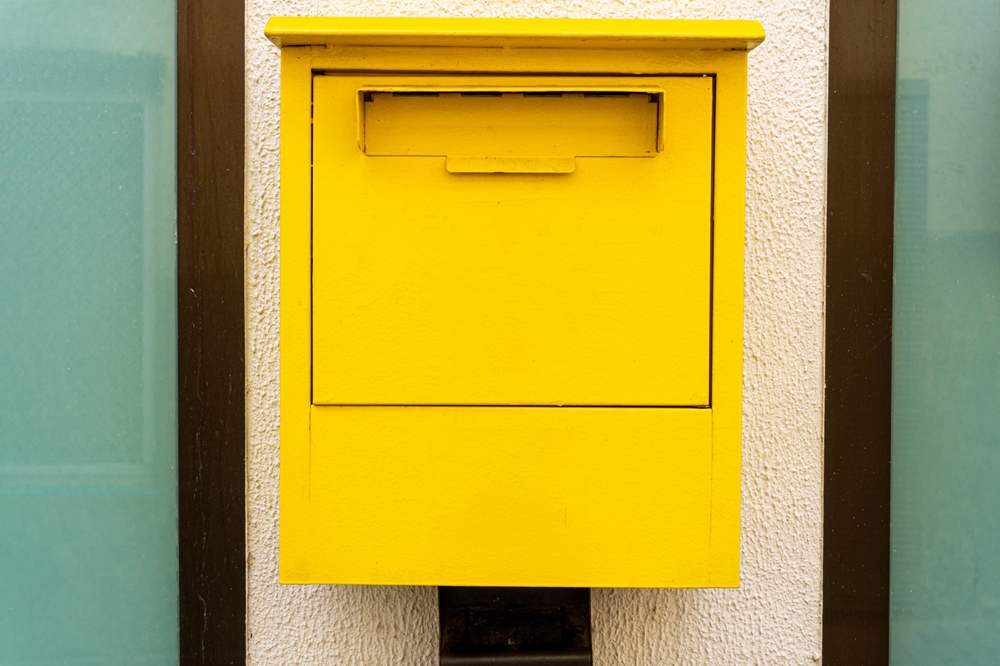
- For a simple letter, affix the correct postage (available at Correos, kiosks, or online), drop in any yellow post box or hand over at a Correos counter.
- For important or valuable items, opt for certified (certificado) or insured (asegurado) mail, retaining all receipts and tracking codes.
International Mail
- International shipments require customs declarations (CN22/CN23). Certain items—e.g., food, liquids, electronics—are subject to additional scrutiny or restrictions.
- There are designated counters in most main post offices for international mail, with staff able to provide guidance on best practices, documentation, and estimated delivery times.
Packaging and Labeling
- Packing materials can be purchased at Correos offices. Ensuring items are securely packaged is essential, particularly for international or fragile shipments.
- All information should be clear, legible, and—where possible—machine-readable.
Postal Rates and Pricing Structures
Understanding postage costs is vital for budgeting, whether for personal correspondence or business operations.
Domestically
- As of the latest rates, a standard domestic letter up to 20g costs approximately €0.78.
- Heavier items incur incremental charges, with multiples for registered, express, or insured services.
- Pricing can vary slightly by region and service options (e.g., urgent vs. standard).
Internationally
- International postage (Europe) starts from roughly €1.60 for up to 20g, with surcharges for further destinations and greater weights.
- Declared and insured shipments are strictly regulated and priced according to value tiers.
Parcel Pricing
- Parcels (both national and international) are priced by weight, dimensions, and declared value.
- There are special business rates (gabinete empresas) and mode-of-transport options (air, sea, land) for large-volume users.
Compared to the Netherlands, Spain’s rates are generally competitive, though differences emerge based on speed, insurance, and destination. Spanish postal rates have remained largely stable, with modest regular increases to match inflation and operational costs.
Tracking and Tracing Shipments in Spain
Modern consumers and businesses expect detailed, real-time tracking of their mail and parcels. Correos offers several tracking and status-update tools:
- Tracking codes: All registered, certified, and parcel shipments are provided with an alphanumeric code that can be entered on Correos’ official portals or app.
- Status notifications: Email and SMS notifications are available for certain service types, updating you as the package moves through the system.
- Proof of delivery: An electronic or paper signature is collected from the recipient for certified mail and parcels, stored in the system as official proof.
- Mobile app: The Correos app (available in Spanish and select other languages) allows for easy tracking, shipping, and pickup scheduling. Digital receipts and shipment histories are stored for handy reference.
While Correos has made great strides in tracking technology, some elements—especially at handover or international transfer points—may not offer the seamless, minute-by-minute updates familiar to Dutch users. This is continuously improving as infrastructure is upgraded.
Handling Missed Deliveries and Redelivery Options
It is common to miss a delivery, especially in cities or during working hours. Correos has established protocols for such occasions:
- If you are absent, a delivery slip is left, allowing you to reschedule delivery online or via phone, or to collect your item at the local office (whose address is usually detailed on the slip).
- Items are typically held for 15 days before being returned to sender.
- Specific high-value or time-sensitive cargos (e.g., legal summons) require in-person pickup with identification (DNI/NIE/passport).
- Redelivery scheduling can be managed online for convenience, particularly in urban areas.
In contrast, many Dutch operators offer a wider range of pickup points and automated solutions. Spain is investing in expanding similar locker solutions (CityPaq) and is expected to continue this modernization.
Mailbox Etiquette and Practical Tips for Residents
Mailbox organization and etiquette are unique in every country. Knowing Spanish mailbox customs can prevent confusion or missed deliveries.
- Name clarity: Always ensure your full official name(s) are attached to your mailbox. Nicknames, initials, or partial names may lead to misdelivered or returned items.
- Mailbox placement: In many urbanizaciones (gated communities) and apartment blocks, mailboxes are in the entrance hall. For rural homes, mailboxes are often grouped at the start of a lane or property entrance.
- Parcel security: For parcels that do not fit into standard boxes, you may be left a slip to collect from the nearest post office.
- Post office etiquette: Correos offices often operate a numbered ticketing system. Take a ticket on arrival and wait to be called. This process is strictly followed and respected in most locations.
- Language tips: Correos staff in major cities often speak basic English; however, learning essential Spanish postal vocabulary is helpful, especially in rural areas.
Post Office Services Beyond Mail
The Spanish postal office does more than handle mail and parcels. Correos is renowned for its broad range of public and private services that extend well beyond basic deliveries:
- Bill payments: Utility, tax, and municipal fines can often be paid at local post offices.
- Financial services: Savings accounts, money transfers, and simple banking functions are available, particularly in regions where bank branches are closing.
- Identification verification: Notarization, DNI/NIE application support, and government document handling.
- Telecommunication services: Correos historically handled telegraphy and still manages certain digital notification systems today.
- E-commerce return handling: With Spain’s burgeoning online retail sector, post offices serve as collection and return points for major online merchants, creating synergy between bricks-and-mortar and digital commerce.
Whereas the Dutch system has largely separated postal and banking services, Spain maintains these multi-use centers, especially valuable in smaller towns without full financial infrastructure.
Seasonal and Regional Nuances in Spanish Postal Operations
Regional variations are a hallmark of Spanish postal life, influenced by Spain’s diverse geography, climate, and cultural traditions.
- Festive periods: During Christmas (Navidad) and regional fiestas, postal volumes spike and delivery times can extend, particularly in regions with strong local celebrations (e.g., Semana Santa in Andalusia, Fallas in Valencia).
- Summer slowdown: In August, many businesses and even some Correos points reduce hours due to annual holidays (vacaciones), potentially slowing mail and parcel delivery nationwide.
- Islands and remote areas: The Canary and Balearic Islands, as well as mountainous inland regions, experience unique logistical hurdles. Correos operates sea and air routes but deliveries are less frequent, making advanced planning for important shipments essential.
- Urban vs. rural: Delivery frequency, speed, and even the availability of some services may differ dramatically between major cities like Madrid or Barcelona and sparsely populated rural provinces.
Understanding these regional variances is crucial for accurate expectation-setting and planning, especially if you are relocating from the highly standardized Dutch environment.
Legal and Regulatory Frameworks Affecting Post in Spain
Postal operations in Spain are governed by a comprehensive body of national and EU law. Familiarity with the most important rules is useful for anyone sending or receiving mail in the country.
Key Legislation
- Ley Postal: The Spanish Postal Law defines the rights, obligations, and responsibilities of postal operators and the public.
- Consumer rights: Guaranteed baseline standards for lost, delayed, or mishandled items, including compensation structures for certain service failures (especially on certified mail).
- EU directives: Spain adheres to pan-European postal harmonization, ensuring basic comparability with Dutch and other European systems in terms of cross-border mail handling, customs, and data protection.
- Customs regulations: Non-EU shipments are subject to VAT, duties, and specific declaration standards. It is your responsibility to ensure goods are legal and properly described.
- Prohibited items: Lists are published and regularly updated. Common prohibitions include cash, certain foodstuff, weapons, and hazardous materials. Compare carefully before sending seemingly innocuous items.
- Privacy and security: Mail is confidential, with strict protections in place. Tampering with mail is a criminal offense. Correos staff are extensively vetted and professionally trained.
Comparison to Dutch Regulation
The Dutch regulatory framework is similarly robust but often features accelerated complaint mechanisms and broader privatization, leading to more operator choice at the consumer level. In Spain, Correos remains the primary post operator, ensuring nationwide coverage and uniform legal standards.
Adapting to Spanish Post: Tips for New Residents and Businesses
If you are planning a move to Spain, or setting up a business that will rely on Spanish postal solutions, consider these actionable strategies:
- Double-check your address: Provide every possible detail and check your street name, number, floor, and ZIP code for errors.
- Introduce yourself at the local Correos office: A friendly conversation with the staff can help smooth over any future issues or ambiguities—especially in smaller towns.
- Consider a PO Box: For maximum security and privacy, especially if you split time between countries or travel frequently.
- Monitor seasonal schedules: Adjust shipments and receptions around Spanish national and regional holidays to avoid disruption.
- Embrace digital tools: Use Correos’ online systems for tracking, scheduling pickups, and receiving alerts.
- Educate customers and partners: If running a business, brief Dutch or other foreign partners about realistic Spanish delivery times and address conventions.
- Prepare customs documentation thoroughly: For non-EU shipments, incomplete or inaccurate paperwork is a leading cause of delays or returns.
- Store receipts and tracking codes: Keep meticulous records in case of issues or a need to verify delivery.
E-commerce and the Spanish Post: A New Era of Fulfillment
The e-commerce revolution has dramatically reshaped postal operations worldwide. Spain, like the Netherlands, has witnessed explosive growth in online shopping, transforming the role of Correos from mail carrier to logistics powerhouse.
- Integrated solutions for sellers: Correos now offers warehousing, fulfillment, and direct integration with major platforms, reducing time-to-market and maximizing delivery efficiency.
- Returns and exchanges: User-friendly, QR code-driven returns allow online shoppers to drop parcels at any Correos outlet without paperwork—mirroring developments in the Dutch market.
- Marketplace partnerships: Correos collaborates directly with leading e-commerce platforms, streamlining shipping processes and managing high-volume, high-frequency shipments across the Iberian Peninsula and globally.
- Customer expectations: As Spaniards become accustomed to faster deliveries, Correos is piloting new fast-shipping and weekend delivery services.
- Rural e-commerce challenge: Delivering online orders to the “España vacía”—Spain’s vast, low-density rural regions—remains an operational challenge, but creative solutions such as mobile post vans and temporary parcel points are being trialled.
Businesses planning to target Spanish consumers should structure their online checkout processes to collect detailed address data, display clear delivery expectations, and utilize all available track-and-trace functions.
Postal Innovations: Digitization and Sustainability
The Spanish post’s ongoing transformation is focused on digitization and ecological sustainability—trends that are reshaping everything from daily sorting to long-term planning.
Digital Transformation
- Digital signatures and notifications: Electronic proof of delivery and paperless notifications are common for business and government correspondence.
- Home pickup scheduling: Residential and business senders can arrange online for postmen/vehicles to collect parcels and letters directly from their premises.
- AI sorting and logistics: Automation and artificial intelligence are improving routing, reducing errors, and optimizing staffing.
Sustainability Measures
- Fleet electrification: Correos is rolling out electric delivery vans and bikes in city centers to reduce emissions.
- Eco-friendly packaging: Recycled and biodegradable packaging materials are now available at many Correos counters.
- Paperless operations: Digital receipts, e-invoicing, and online payments reduce environmental impact.
For eco-conscious consumers and businesses, Spain’s green post movement makes it easier to conduct sustainable correspondence and shipping.
Customer Service and Dealing with Complaints
Good customer service is integral to trust in any national postal system. Correos provides several channels for assistance:
- In-person support: Local post offices remain the frontline for most queries. Larger offices may have multilingual staff.
- Telephone helpline: Available nationwide, with some services in English or French for international callers.
- Digital support: Email and online forms permit queries, complaints, or claims, with case management and reference numbers for oversight.
- Complaint procedures: There are established mechanisms for lost, delayed, or damaged mail. Keep all reference numbers and evidence; claims on certified mail are typically processed within 30 days.
- Compensation: For certain failures, standard compensation is mandated by law and automatically processed following investigation.
Spanish customer service culture can feel slower or more process-driven than that in the Netherlands. Persistence and thorough documentation are very helpful if you need to recover lost mail or seek financial redress.
The Role of IMMO ABROAD: Postal Expertise for Expats and Businesses
IMMO ABROAD recognizes the pivotal role that the Spanish postal system plays in the daily life of expatriates and entrepreneurs. Our dedicated advisors field frequent questions about receiving mail at new homes, registering for utilities, sending paperwork internationally, and managing cross-border packages.
- We provide tailored guidance on setting up post-domicile, organizing mail redirection during migration, and arranging for PO Boxes when property is under renovation or not yet occupied.
- We educate clients in best practices for Spanish postal etiquette, address formalities, and critical seasonal or regional nuances that can affect mail and document delivery.
- For business owners, our team shares up-to-date regulatory insight and facilitates reliable logistics set-up for e-commerce, import/export, and correspondence-based transactions.
Our commitment is to ensure that your move to or business operation in Spain is seamless from day one—including something as crucial, yet often overlooked, as your postal setup.
The Future of Spanish Postal Services
Looking forward, Spain’s postal sector faces unprecedented transformation as digital disruption, consumer expectations, and sustainability imperatives reshape its core business.
- Digital identity and secure communications: Growth in secure, electronic document delivery is expected for banking, health, and government correspondence.
- Expansion of delivery options: Investment in CityPaq parcel locker networks and multi-operator partnerships will bring Spain closer to the Dutch standard of ultra-convenient, multi-point delivery.
- Enhanced international services: As Spain’s economy globalizes, Correos is deepening ties with international networks to improve tracking and reduce barriers to cross-border trade.
- Rural outreach: Innovative last-mile solutions—drones, mobile post offices, and community partnerships—are on the agenda to better serve remote communities.
- Commitment to green delivery: Eco-initiatives will remain a strategic focus, aligning postal transport, packaging, and facility management with Spain’s broader sustainability framework.
For residents and businesses alike, staying informed and flexible will be key to successfully navigating the evolving Spanish postal landscape.
Final Considerations: Spanish Post vs Dutch Post
In conclusion, navigating the Spanish postal system does require adaptation, especially if you are accustomed to Dutch methods and standards. While both systems are highly reliable, they differ in delivery frequency, address conventions, bureaucracy, and technological integration.
- In Spain, always provide the most complete possible address and have patience for occasional delays, especially around local holidays and in rural areas.
- Embrace the multi-service nature of Correos—it is more than just post, and often a vital lifeline in smaller communities.
- Digitization, sustainability, and customer expectations are driving rapid improvement and innovation in Spanish postal life.
With the right knowledge, and support from experts such as IMMO ABROAD, you can make the most of the Spanish postal system—with confidence, efficiency, and peace of mind as you establish your life or business in Spain.
Frequently Asked Questions (FAQs) on Post in Spain
- Can I use my Dutch stamps in Spain?
No. Stamps are country-specific. Only Spanish Correos stamps are recognized for mail sent within or from Spain.
- How long does a letter take to arrive from the Netherlands to Spain?
Typically between 3 and 7 working days, though this can vary with processing times, holidays, and local conditions.
- What do I do if my name is not on my Spanish mailbox?
Ensure you or your landlord updates the name tag immediately. Correos will not deliver to unnamed or incorrectly named boxes.
- What is ‘apartado de correos’?
A secure PO Box service at your local Correos office—a practical solution for frequent travelers or those in remote housing.
- I missed a parcel delivery—how do I get my package?
Use the delivery slip to reschedule or visit the indicated Correos office with identification to collect your item.
- Are there parcel lockers in Spain?
Yes—Correos’ CityPaq network is expanding, providing 24/7 pickup options, especially in major cities.
- Can I track my parcel sent within Spain?
Absolutely. All registered, certified, and tracked parcels include an online tracking code.
- Does Correos handle customs formalities for imports?
Correos acts as a customs intermediary for most international mail, but you are responsible for any required declarations and paying duties or taxes.
- How can I ensure timely delivery at Christmas?
Send all important items early—ideally at least two weeks before Christmas. Seasonal surges slow delivery across Spain.
- Can I receive parcels from outside the EU in Spain?
Yes, but allow extra time for customs, and be prepared to provide identification and payment for any applicable fees.
Your Pathway to Postal Success in Spain
The Spanish postal system, with all its tradition and modern promise, stands ready to serve new residents, entrepreneurs, and global citizens. By understanding its structure, embracing its digital transformation, and respecting its unique customs, you are equipped to fully participate in Spanish society—communicating, trading, and connecting with confidence.
A reliable postal address is the cornerstone of your new life in Spain. With the guidance of seasoned experts like those at IMMO ABROAD, you can ensure seamless correspondence and never miss a critical delivery—be it a personal letter, a legal document, or a vital business parcel.
Welcome to the Spanish post! Unleash the full potential of your new address, and let your mail connect you to every corner of this vibrant country—and far beyond.