





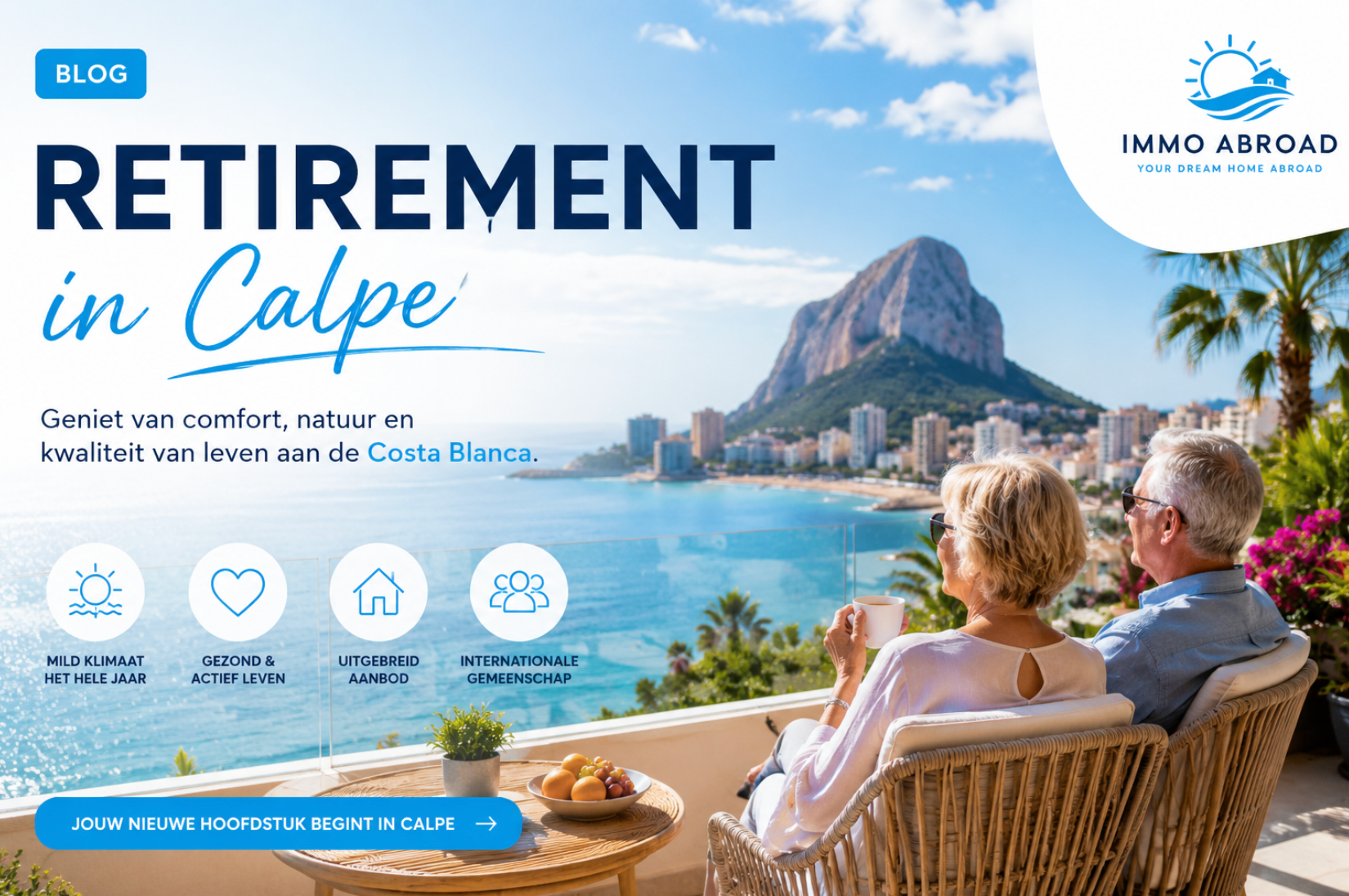
Why Calpe Is a Standout Choice for Retirement on Spain’s Costa Blanca
Retirement is about more than simply closing one chapter and opening another. It is a carefully considered transition into a lifestyle that rewards everything you have invested in your career, your family and your sense of self. Calpe, on Spain’s radiant Costa Blanca, has become a beacon for retirees seeking a sophisticated, sun-soaked life with excellent amenities, sea views and year-round vitality. Set between Alicante and Valencia on the Mediterranean, Calpe combines pristine beaches, a characterful old town, world-class dining, accessible healthcare and a buoyant property market—making it an elegant yet practical base for a secure, comfortable and fulfilling retirement.
Under the watchful silhouette of the Peñón de Ifach—a striking limestone outcrop that defines the skyline—Calpe delivers the best of coastal Spain in a compact, exceptionally liveable package. With a climate that offers over 300 days of sunshine, a choice of urban or hillside neighbourhoods, a friendly international community and an infrastructure designed for modern living, the town is engineered for long stays and permanent relocation. From tranquil morning walks on a palm-lined promenade to an afternoon of sailing, followed by tapas in the old town and a soothing sea breeze at dusk, retirement in Calpe feels poised, effortless and refreshingly human-scale.
For those planning the big move, this guide offers a comprehensive exploration of life in Calpe—spanning lifestyle, property, healthcare, costs, residency and daily logistics—together with practical checklists and insights to help you make confident, informed decisions. Where relevant, you will find prudent caveats and recommendations to verify current regulations or market data, ensuring your plans remain up to date and robust. Whether you are months away from purchasing your dream apartment overlooking the Mediterranean, or you are still researching the ideal neighbourhood, the following pages will help you turn a vision of retirement in Calpe into an attainable, beautifully paced reality.
Where Calpe Sits—and Why Its Setting Matters
Calpe (Calp in Valencian) is located on the northern stretch of Spain’s Costa Blanca in the province of Alicante, within the Marina Alta region. Its position is strategic: close enough to larger cities and airports for smooth travel, yet far enough to preserve a calmer coastal rhythm reminiscent of a classic Mediterranean town. The natural harbour, two main sandy beaches (Playa del Arenal-Bol and Playa de la Fossa/Levante), residential hillsides and a well-tended historic centre give Calpe a coherent, navigable layout that retirees appreciate.
Key locational advantages include:
- Excellent connectivity: The AP-7 motorway and the N-332 coastal road provide swift access to Alicante and Valencia. Calpe has a station on the regional TRAM network, connecting northwards and southwards along the coast. Coach services run to major hubs and airports.
- Proximity to airports: Alicante-Elche Miguel Hernández Airport is typically around an hour to an hour and a quarter by road, and Valencia Airport is roughly an hour and a half, depending on traffic and routing.
- Diverse topography: Choose beachfront living, marina-adjacent areas, town-centre convenience or panoramic hillside estates with private pools. The mix accommodates varied preferences, mobility needs and budgets.
- Regional amenities: The broader Marina Alta area hosts respected healthcare facilities, golf clubs, marinas, cycling routes, hiking trails and inland wine valleys—enriching your leisure options beyond Calpe’s immediate borders.
Crucially, Calpe offers a fine balance: it is vibrant without being overwhelming, well-developed without sacrificing authenticity, and international without losing its Spanish soul. This equilibrium is what many retirees are seeking: familiarity and comfort paired with a genuine sense of place.
Climate and Natural Beauty: A Microclimate for Wellbeing
Climate is central to retirement planning, and Calpe’s is among the most attractive in Europe. Expect over 300 days of sunshine per year, mild winters and warm summers tempered by sea breezes. Winter daytime temperatures often sit comfortably in the mid-teens to high-teens Celsius, while summer days commonly range from the mid-20s to low-30s, with cooler evenings that invite al fresco dining. Rainfall tends to be modest and seasonal.
The Peñón de Ifach, the photogenic limestone monolith rising to over 300 metres, is more than a landmark; it is a natural park with marked trails, botanic variety and vantage points over the Bay of Calpe. The rock, along with the salt flats (Salinas) frequented by flamingos, forms the backdrop to daily life in town. Promenades are flat and well-maintained, supporting mobility for retirees of varied fitness levels. The seafront paths and the ecological walk that extends along the coastline are ideal for low-impact exercise with stress-lowering views.
This blend of sun, sea and scenery does more than delight the senses. For many retirees, the climate contributes meaningfully to joint health, mood and overall activity levels. Gardeners enjoy year-round cultivation; walkers, swimmers and cyclists can maintain consistent routines. Everyday wellness becomes easy and natural in a place designed by nature to support it.
Everyday Lifestyle: Beaches, Dining, Culture and Wellness
Retirement in Calpe shines in the details of daily life. Beyond the postcard seascapes lie rituals and amenities that transform a good move into a great one—morning markets, friendly cafés, top-notch dining and community-driven activities tailored for all ages.
Beaches, Promenades and Seafront Rituals
Calpe’s two main beaches, Arenal-Bol and La Fossa, feature broad swathes of golden sand lapped by inviting waters. Both are flanked by wide promenades dotted with cafés, ice-cream parlours and restaurants. Accessibility features, seasonal lifeguards and gently shelving shorelines appeal to retirees and visiting family members alike. In peak summer, the seafront is lively; during shoulder seasons, the promenades take on a serene call to slow living—perfect for sunrise strolls and sunset reflections.
For a quieter maritime outlook, the small coves and rocky inlets near the Peñón or towards the outskirts offer snorkelling, fishing and reading spots. The marina provides opportunities for sailing, diving and boat excursions. The port area is also known for its seafood eateries, where the daily catch takes centre stage.
Gastronomy, Markets and the Pleasure of Slow Food
Calpe caters to both casual and discerning palates. Traditional rice dishes—think arroz a banda or seafood paella—share space with contemporary Mediterranean cuisine. A thriving restaurant scene celebrates local produce: fish from the bay, citrus, almonds and wines from nearby inland valleys. Weekly markets sell fresh fruit, vegetables, cheese, charcuterie and flowers, turning grocery shopping into a leisurely social occasion.
Dining options range from beachfront terraces serving classic tapas to fine dining rooms delivering tasting menus. As a retiree, it is easy to shape a routine around seasonal gastronomy: leisurely market mornings, a late lunch under the palms, and inventive dinners with visiting friends. Many establishments also cater to dietary preferences, offering gluten-free or vegetarian options—a small but meaningful detail for long-term comfort.
Festivals, Culture and Community
Calpe’s calendar is filled with fiestas and cultural events reflecting Valencian and Spanish traditions. From spectacular costume parades to summer concerts and artisan fairs, there is a feeling that something is always around the corner. Seasonal celebrations—such as fires on the beach for the midsummer solstice—bring the community together. Art programmes, museum exhibits and open-air film evenings add cultural polish to coastal living.
For those who prefer organised social life, there are clubs and associations dedicated to walking, bowls, bridge, arts, volunteering, yoga and language exchange. These groups are invaluable touchpoints for new arrivals: they provide structure, friendship and the chance to explore the region in good company.
Sport, Fitness and Wellbeing Routines
Active retirement is the norm in Calpe. The town’s flat promenades, cycle-friendly avenues and swimming-friendly beaches encourage gentle daily movement. Fitness centres, yoga and Pilates studios provide structured classes; water sports centres offer kayaking, paddle boarding and diving. Inland, the walking routes and cycling climbs of the Marina Alta region are celebrated by enthusiasts, while golf courses within easy driving time broaden the athletic repertoire.
Wellbeing services are extensive: spas, massage therapists, physiotherapists and osteopaths help maintain mobility and comfort. The combination of professional support with everyday active living creates a virtuous circle that keeps you feeling energised and engaged.
Neighbourhoods and Property Styles: Finding Your Place in Calpe
One of Calpe’s strengths is the variety of living environments it offers. Whether you dream of waking to the sound of surf, prefer a townhouse a short walk from cafés, or crave a panoramic hillside villa with a pool, Calpe delivers. Understanding the broad character of each zone helps you identify the right match for your pace, budget and lifestyle.
Beachfront Living: Arenal-Bol and La Fossa (Levante)
These two beach zones form the twin pillars of Calpe’s seafront life. Expect mid- and high-rise apartment buildings with terraces angled towards the sea, soundproofed glazing, lifts and, in many cases, onsite pools or concierge services. Accessibility tends to be strong here: flat terrain, immediate access to supermarkets, pharmacies, cafés and bus stops. Retirees prioritising convenience and car-light living are naturally drawn to this setting.
Properties range from compact studios to expansive penthouses; many are lock-up-and-leave, with security and minimal maintenance. Those who love an early-morning swim and an evening promenade will find this environment particularly attractive. In high summer the beaches are lively, which some enjoy as a seasonal energy boost. In shoulder months, the seaside settles into a calm, elegant routine.
Hillside Villas: Maryvilla, Cometa, Empedrola, Cucarres and Surrounds
Calpe’s residential hillsides create a private, scenic counterpart to the bustling seafront. Here, villas with terraced gardens, pools and wraparound views offer space, tranquillity and a close connection to nature. Urbanisations like Maryvilla, Cometa, Empedrola and Cucarres are popular for their perspectives over sea, town and mountains. Expect detached homes of varied architectural styles—Mediterranean classic to minimalist contemporary—on plots that afford privacy.
This is an excellent solution for retirees who want space for visiting family, pets and hobbies, or who envisage long, sociable lunches on the terrace. When selecting a hillside property, consider gradients (driveway steepness), steps, driveway turning radius and proximity to amenities. Many homes have been updated with lifts, level-access entries and smart-home features that reduce day-to-day effort.
Near-Town Residential Areas: Ortenbach, La Vallesa, Calpe Park and Others
For those seeking the sweet spot between beach life and hillside privacy, near-town residential pockets are compelling. Streets with detached or semi-detached homes sit close to supermarkets, cafés and clinics, often within a five- to fifteen-minute drive of the sea. Plots may be smaller than on the hillsides, but the trade-off is practical proximity—ideal if you value quick errands and short taxi rides. These zones often attract year-round residents and a sociable neighbourhood feel.
Architectural Landmarks and Seafront Icons
Calpe nurtures a distinctive architectural identity, blending characteristic white-washed Mediterranean forms with modern and mid-century statements. Along the seafront, you will find residences designed to maximise glass and light; towards the edges of town, striking projects with geometric forms or earthy textures add variety. While collectors may target specific landmark buildings, many retirees simply enjoy living in a place that respects good design—an every-day aesthetic pleasure.
Gated Communities and New-Build Developments
New-build villas and apartment complexes continue to emerge around Calpe, emphasising energy efficiency, contemporary aesthetics and amenities such as pools, landscaped gardens, gyms and underground parking. These properties frequently feature double glazing, thermal insulation, ducted air-conditioning and sometimes underfloor heating, creating a comfortable environment year-round. For retirees who want a fresh, turnkey home aligned with modern sustainability standards, new-builds can be an intelligent choice.
Understanding the Property Market: Prices, Trends and Expectations
Calpe’s property market combines international demand with a steady foundation of year-round residents. Prices vary by distance to the sea, views, building quality and plot characteristics. Seafront apartments with direct beach access and unobstructed views command a premium; hillside villas with panoramic vistas and privacy are consistently sought after.
Market dynamics can shift with broader economic conditions and regulatory changes. As a guiding perspective:
- Seafront apartments: Premium pricing reflects position and view. Expect higher values for buildings with recent refurbishments, energy upgrades and desirable amenities.
- Near-beach and town-centre apartments: Competitive and often efficient layouts, especially in well-located, mid-rise blocks. Ideal for lock-up-and-leave lifestyles.
- Detached villas: Pricing depends on plot size, orientation, view, pool, accessibility and the scope of recent renovations. Upgraded kitchens, bathrooms, electrics, roofs, windows and climate systems can add significant value and reduce ongoing maintenance overheads.
- New-build homes: Typically carry a premium that reflects modern efficiency, warranties and contemporary design. Consider long-term utility savings and comfort when assessing overall value.
Because data changes over time, it is wise to obtain a tailored, current appraisal of local price bands for your preferred property type and zone. An on-the-ground perspective helps you distinguish between aspirational asking prices and genuine market value, and to recognise opportunities that align with your budget and timescale.
Buyer Profiles and Property Matches
Many retirees begin with a vision—perhaps an apartment overlooking the sea, or a villa with olive trees and a generous terrace. The following buyer portraits are illustrative, highlighting typical preferences and their best-matched property types in Calpe:
- The seaside minimalist: Values walkability, a car-free routine and daily sea swims. Prioritises a modern apartment with lift access, soundproofing and a sea-facing balcony. Arenal-Bol or La Fossa zones are ideal.
- The entertainer: Loves hosting family and friends, needs a guest suite and outdoor dining. A hillside villa with a pool, multiple terraces and secure parking suits their plans. Cometa, Empedrola or Maryvilla often tick the boxes.
- The balanced town-and-sea dweller: Wants space but easy access to shops and clinics. A near-town detached or semi-detached home on a level plot with a small pool and garden is often the perfect compromise.
- The new-build enthusiast: Seeks energy efficiency, fresh finishes and smart systems. A contemporary villa or apartment in a new development offers peace of mind and turnkey simplicity.
Resale Versus Off-Plan: Weighing Your Options
Resale homes let you assess the exact views, light and neighbourhood ambience in real time. They may require upgrades, but they also reveal their quirks and charms at first glance. Off-plan or newly completed properties present warranties and efficiency, but the location’s evolving character (as neighbours move in and landscaping matures) will reveal itself over time. When considering off-plan, factor in construction timetables, staged payments, bank guarantees for deposits and the developer’s track record. For resale, budget for surveys, potential refurbishments and energy improvements that align with your comfort goals.
Buying a Home in Calpe: A Step-by-Step Guide
Purchasing property in Spain is straightforward when properly organised. The key is preparation and professional coordination. Below is a practical pathway to guide your journey from browsing to completion and beyond.
1) Clarify Budget, Wish List and Timescale
Define a realistic budget that includes purchase price and associated costs (taxes, notary, registry, legal fees, potential refurbishment). Establish your must-haves (e.g., lift, level access, two bathrooms, sea view) and nice-to-haves. Decide whether you will finance with savings, a mortgage secured in Spain or elsewhere, or a combination. Determine the timescale for moving: immediate relocation, seasonal stays or a staged plan over 12–24 months.
2) Secure an NIE and Open a Bank Account
Foreign buyers require a Número de Identificación de Extranjero (NIE). This identification number is necessary for property transactions, utilities and some financial operations. Opening a Spanish bank account facilitates payments of fees, taxes and utilities. Plan for a non-resident account initially if you are not yet resident. Some buyers appoint a representative via a power of attorney to streamline administrative steps if they are abroad during the process.
3) Property Search and Viewings
Begin with a curated shortlist that reflects your budget and criteria. In-person viewings help you test noise levels, sun exposure, stair counts, lift responsiveness, parking ease and general feel. Consider visiting at different times of day and across both a weekday and a weekend to appreciate daily rhythms. Make notes on any building notices in communal areas and request past community meeting minutes when seriously considering an apartment in a building with a homeowners’ association.
4) Legal Review and Technical Due Diligence
Once you have identified a suitable property, your legal representative should verify title, charges, property boundaries and building licences. For villas, a building survey can assess structure, damp, roof, insulation, pool condition, electrics and plumbing. For apartments, review minutes of the community of owners to check for upcoming special assessments. Thorough due diligence prevents surprises and supports confident negotiation.
5) Reservation and Private Contract
A reservation agreement typically removes the property from the market for a short period while contracts are prepared. A subsequent private purchase contract (often including an arras deposit) sets the terms of sale, completion date and consequences of withdrawal by either party. Deposits are customarily around 10% but can vary. Ensure funds are held securely and that the contract outlines remedies clearly.
6) Taxes, Fees and Completion
On completion at the notary, you will settle purchase taxes and associated fees. For a resale property in the Valencian Community, you generally pay a transfer tax on the purchase price. For new-builds, you pay VAT (IVA) and a stamp duty. Notary and registry fees apply in both cases. Once signed and registered, utilities can be transferred and any direct debits set up through your Spanish bank account. Your legal representative or a gestor can assist with these formalities.
7) After-Sales: Utilities, Insurance and Settling In
Arrange home insurance (buildings and contents as appropriate) and any additional coverage such as glass, accidental damage or legal protection. For villas, schedule pool and garden maintenance; for apartments, ensure your community fees are set to direct debit. Organise internet installation and, if you wish, IPTV or satellite services. Change locks if you prefer, and keep a file of all manuals, guarantees and service contacts for reference.
Understanding Ongoing Costs
Ownership involves regular costs beyond the purchase price:
- IBI (local property tax): Annual municipal tax based on cadastral value.
- Basura (waste tax): Local waste collection fee.
- Community fees: For buildings or urbanisations with shared amenities. Budget varies by services provided (lifts, pools, gardens, security).
- Utilities: Electricity, water, and optionally gas. Modern systems such as aerothermal reduce electricity consumption.
- Insurance and maintenance: Annual premiums, routine checks and any seasonal upkeep (e.g., air-conditioning servicing, pool care).
Renting in Calpe: A Strategic First Step or a Long-Term Choice
Some retirees prefer to rent initially to get to know different neighbourhoods before committing to a purchase. Others enjoy the flexibility of a long-term rental and a low-maintenance lifestyle. In Calpe, rental markets reflect seasonal patterns yet also cater to longer stays.
Long-Term Versus Seasonal Rentals
Calpe sees distinct peaks in summer, when short-stay holiday lets are in demand, especially near the beach. Long-term rentals (typically contracts of 12 months, often renewable) are more readily available outside peak months and in residential areas a little away from the seafront. A long-stay contract may include clauses on maintenance, small repairs, and the handling of utilities. Clarify furnishings, appliance energy ratings, heating/cooling systems and storage before signing.
What to Check Before You Commit
- Energy efficiency and insulation: Look for double glazing and effective climate control—vital for both comfort and utility budgeting.
- Accessibility: Lift access, step counts, parking ease and the condition of communal areas are essential for comfort and safety.
- Neighbourhood sound levels: Visit at different times of day and in different seasons if possible.
- Contract clarity: Ensure responsibilities are explicit for minor repairs, garden/pool care and appliance servicing.
- Internet availability: Fibre or high-speed connectivity is important for media, communications and remote medical consultations.
Cost of Living in Calpe: Building a Realistic Monthly Budget
One of Calpe’s enduring attractions is the favourable balance between quality of life and cost. While exact expenses depend on property type, personal habits and whether you own or rent, the following illustrative budgets help establish expectations for a comfortable, well-appointed retirement.
Sample Budget: Apartment Owner (Seafront or Near-Sea)
Assume a two-bedroom apartment with lift access, sea-facing balcony and community amenities.
- IBI and waste tax (pro-rated monthly): Allow for local variations.
- Community fees: Dependent on services; buildings with multiple lifts, pools and concierges carry higher fees.
- Electricity and water: Moderated by insulation and AC/heat pump use; high-efficiency systems help control bills.
- Internet/telecoms: Fibre packages are competitively priced.
- Home insurance: Buildings (if required) and contents coverage tailored to property value.
- Groceries and dining: Market shopping can be excellent value; occasional fine dining adds pleasurable variety.
- Transport: Fuel, occasional taxis and parking depending on car usage; some owners live comfortably car-light near the seafront.
- Leisure and healthcare extras: Gym or class memberships, private medical top-ups, dental and optical check-ups.
Even allowing for comfortable discretionary spending, many retirees find that life in Calpe is cost-competitive compared to major Northern European cities, particularly given the climate dividend and outdoor lifestyle.
Sample Budget: Villa Owner (Hillside)
Assume a three-bedroom detached villa with pool and garden.
- IBI and waste tax: Typically higher than an apartment due to plot size and property valuation.
- Utilities: Electricity for pool pumps, climate systems and lighting. Solar and aerothermal can tame running costs.
- Maintenance: Pool service, gardening and periodic external painting or roof checks.
- Internet/telecoms: Fibre or 4G/5G depending on exact location.
- Insurance: Buildings and contents scaled to property value; verify pool and outbuilding coverage.
- Transport: A car is typical; factor fuel, insurance and periodic ITV inspections.
- Lifestyle: Groceries, dining, leisure, cultural outings and occasional guests.
Sample Budget: Long-Term Tenant
Assume a two-bedroom apartment on a long-stay contract.
- Rent: Depends on location, view, size and amenities; long-term agreements usually offer better value than peak-season lets.
- Utilities: Paid by the tenant; efficiency of the building influences costs.
- Internet/telecoms: Typically contracted by the tenant.
- Insurance: Contents insurance recommended; the building is covered by the owner’s policy.
- Lifestyle: Groceries, markets, dining and leisure as preferred.
These outlines are intended as frameworks for thought. For precision, gather recent bills from comparable properties and request a breakdown of community fees and local taxes during your property search. This will allow you to craft a personalised, confidence-inspiring financial plan.
Healthcare for Retirees in Calpe: Access, Quality and Peace of Mind
Healthcare access is fundamental to a secure retirement, and Calpe sits within a network of public and private providers that serve residents year-round. Many retirees cite the strength of Spain’s healthcare system and the breadth of local services as key reasons they feel comfortable relocating.
Access Routes to Healthcare
- Public healthcare via residency: Residents typically register with the local health centre and receive a health card, enabling access to the state system. Requirements vary; confirm the current documentation and eligibility based on your status.
- S1 route for certain pensioners: Retirees receiving a state pension from their home country may, depending on bilateral arrangements and current rules, qualify to register for Spanish healthcare via an S1 form. Eligibility, scope and process can evolve; verify the latest guidance before relying on this path.
- Private health insurance: Widely available, with policies that include primary care, diagnostics, specialist consultations, elective procedures and hospital care. Premiums are influenced by age, pre-existing conditions and cover level.
- Pay-as-you-go private care: Many clinics and laboratories offer appointments and tests on a direct payment basis at transparent rates.
Facilities, Specialists and Everyday Care
In and around Calpe you will find primary care centres, dental practices, physiotherapists, opticians, hearing specialists and pharmacies. General hospitals and specialist centres are accessible within a reasonable drive. It is common to blend public and private care—using the public system for primary and urgent needs while accessing private providers for rapid diagnostics or specific specialists.
Pharmacies are knowledgeable and approachable, offering guidance on over-the-counter solutions and prescription management. For peace of mind, some retirees keep a bilingual medical summary and digital copies of prescriptions. Many clinics offer multilingual support, reflecting Calpe’s international resident base.
Proactive Health Routines
The climate makes prevention easy. Daily walking on the promenade, sea swimming in season, stretching, Pilates, gentle cycling and yoga are woven into many retirees’ routines. Combine activity with regular check-ups—dental cleanings, eye tests, hearing screenings and bloodwork—to maintain excellent quality of life. Hydration, sun protection and seasonal wardrobe choices (layers for winter mornings and evenings) complete the practical picture of everyday health in Calpe.
Residency, Visas and Legal Status: Essentials to Plan with Care
Residency and visa requirements vary by nationality, duration of stay and purpose. Regulations may evolve; always verify the latest criteria with official sources or a qualified adviser to ensure you act on current rules.
EU/EEA/Swiss Citizens
Citizens of EU/EEA countries and Switzerland benefit from freedom of movement rights, though registration steps apply for long-term residence. Typically, you will complete local registration, obtain a residence certificate and secure your health coverage status. You will also register on the municipal roll (padrón) in Calpe, supporting access to services and reflecting your presence for municipal planning.
UK and Other Third-Country Nationals
Following changes in recent years, British and other third-country nationals planning to live in Spain for more than 90 days within any rolling 180-day period will generally need a residence visa. Common routes for retirees include:
- Non-lucrative visa: For individuals with sufficient financial means to live in Spain without working. Requires evidence of income/savings and comprehensive health insurance if not otherwise eligible for state healthcare.
- Family reunification: Applicable if joining close family members who are already resident, subject to specific requirements.
- Other residence paths: There are additional visas for particular circumstances. Programmes and eligibility may change over time. If you consider any route that depends on investment thresholds or economic contributions, confirm current status before proceeding.
For those not seeking residency, the Schengen short-stay allowance (90 days in any rolling 180 days) remains relevant. However, this framework does not permit continuous long-term living in Spain. Plan your timeline, travel movements and property usage accordingly.
Local Registration, TIE and Practical Formalities
- Padrón registration: Register with Calpe’s Town Hall to formalise your address. This helps with access to certain services and reflects accurate community statistics.
- TIE (residence card) and/or residence documentation: Obtain the appropriate residence card/documentation once your visa has been approved and you are in Spain, where required.
- Driving licence: Rules governing recognition and exchange can change. Many retirees exchange their home licence for a Spanish licence for convenience and certainty. Spain’s renewal intervals and medical assessments vary with age; confirm current requirements.
- Pet relocation: Pet travel into the EU involves specific veterinary certifications. After arrival, register your pet locally, microchip as needed and establish a relationship with a local vet. Seasonal rules apply to dogs on beaches; check signage and municipal ordinances.
Given periodic regulatory updates, treat this area as one to verify shortly before application. A clean, well-structured dossier and a clear timeline make the process more predictable.
Taxes and Financial Planning for Retirees in Calpe
Thoughtful tax planning protects your retirement income and reduces surprises. Spain distinguishes between residents and non-residents for tax purposes; your obligations will depend on your time in country and where you are tax resident under applicable rules and treaties. The following points are an orientation rather than personalised advice.
Tax Residency and Scope
- Tax residency: Often assessed by days present in Spain during the year, along with ties and centre of vital interests. Exceeding certain thresholds can bring worldwide income within Spanish tax scope.
- Non-resident taxation: If you own property in Spain but are not tax resident, you may be liable for specific non-resident property-related taxes.
Pensions and Double Taxation Treaties
Private and occupational pensions are generally taxable where you are tax resident, subject to any double taxation treaty provisions. Government service pensions may be treated differently. Lump sums, drawdown strategies and annuities can carry specific implications. Review your pension structure with a professional before establishing residency to optimise timing and minimise friction.
Wealth, Property and Local Taxes
- Wealth taxes: Spain and the Valencian Community have had wealth-related tax frameworks with thresholds and allowances that can vary over time. Monitor current rules and regional allowances.
- IBI and waste tax: Local property and waste taxes are predictable annual outlays.
- Community fees: Not a tax, but an ongoing cost to factor into cash flow.
Inheritance and Succession Planning
Spain’s inheritance and gift rules combine state and regional provisions, with allowances and rates that can differ for spouses, descendants and others. Non-Spanish nationals can often opt for the law of their nationality to govern their succession under European rules, typically via a Spanish will that explicitly references this choice. Coordinating your Spanish and home-country wills helps avoid conflict and delay. If you hold significant assets in Spain, plan well ahead with cross-border expertise to simplify the process for your heirs.
Transport, Connectivity and Day-to-Day Logistics
Calpe’s scale makes daily life efficient. Most essentials—supermarkets, pharmacies, clinics, cafés—sit within a short drive or walk, depending on your chosen neighbourhood. When you need to range further, the road network and public transport simplify movement.
Getting Around Locally
- Walking and cycling: Seafront promenades and town pavements are well maintained and largely flat, ideal for regular walks and casual cycling.
- Local buses and regional coaches: Buses connect town zones and nearby municipalities; coaches link Calpe with Alicante, Valencia and airport routes.
- TRAM regional rail: Calpe’s station connects to coastal towns along the line, enabling relaxed, scenic travel.
- Driving: Straightforward, with well-signposted routes. In peak summer, expect heavier traffic near beaches. Secure parking at home is valuable; many apartments include underground spaces.
Internet, TV and Communications
Fibre-optic internet is widely available in urban and many residential areas, with fast speeds supporting video calls, streaming and remote consultations. Mobile coverage is strong around town. Television options range from Spanish terrestrial channels to IPTV services that provide multilingual content. For retirees maintaining ties abroad, robust connectivity makes all the difference—facilitating calls with family, telemedicine, hobby learning and daily entertainment.
Banking and Currency Management
Opening a Spanish bank account streamlines utilities, taxes and community fees. Many banks offer English-language interfaces and dedicated non-resident services. If your pensions or investments are paid in a foreign currency, consider strategies to manage exchange risk: scheduled transfers, rate alerts and multi-currency accounts. Keep thorough records and align your financial flows with your tax and residency plans.
Ageing in Place: Comfort, Safety and Independence at Home
Smart planning ensures your Calpe home will serve you beautifully for many years. Whether you are buying new or upgrading a resale property, focus on features that support comfort, efficiency and independence without compromising aesthetics.
Designing for Ease and Elegance
- Step-free living: Level thresholds, ramps with gentle gradients and wide doorways ease movement. In apartments, reliable lift access is essential.
- Bathrooms: Walk-in showers with non-slip flooring, well-positioned grab bars and thermostatic controls are pleasing to use and reduce risk.
- Kitchens: Ergonomic layouts, pull-out storage and good task lighting balance style and function.
- Climate control: Efficient heating/cooling (e.g., heat pumps), ceiling fans and shading create year-round comfort.
- Lighting and switches: Layered lighting with motion sensors in halls and bathrooms enhances safety at night.
- Security: Quality locks, video entry, smart alarms and, for villas, perimeter lighting offer peace of mind.
Technology and Support Services
Smart-home systems simplify daily routines: app-controlled lighting and climate, leak detectors, remote cameras and even voice assistants. If you spend time away, set automated schedules to protect your home environment. Locally, vetted trades and service providers offer cleaning, laundry, handyman work, gardening and pool care. Many retirees also appreciate meal delivery options and grocery delivery for occasional convenience.
Care Pathways and Planning Ahead
It is prudent to map potential future support early, even if you do not anticipate needing it soon. Options include visiting carers, physiotherapy at home, mobility equipment rental and private nursing services. Build a document folder with emergency contacts, medication lists, insurance details and copies of ID—both digitally and in print. This quiet groundwork ensures that, should a need arise, you and your family can act quickly and calmly.
Safety, Accessibility and Everyday Confidence
Calpe is regarded as a safe, welcoming town. As in all destinations that attract visitors, standard precautions help you feel fully at ease. Keep personal belongings discreet, secure doors and windows when out, and use safes for passports and spare cards. On the beach, take only what you need and keep valuables close.
Public spaces increasingly prioritise accessibility, from ramps on promenades to adapted beach access points during the main season. Look out for local information on accessible bathing support and lifeguard schedules if required. In the event of an emergency, Spain’s unified number is 112. Keep a list of local contacts—doctors, pharmacists, neighbours and building managers—somewhere visible at home.
Sustainable, Energy-Efficient Living: Good for You and the Planet
Spain’s coastal homes increasingly embrace energy efficiency—an investment that returns comfort, resilience and lower running costs. When assessing a property or planning upgrades, consider the following:
- Insulation and glazing: Modern windows and well-insulated walls/roofs stabilise indoor temperatures and reduce noise.
- Efficient systems: Heat pumps (including aerothermal hot water), underfloor heating with zoning and smart thermostats refine comfort while managing usage.
- Solar solutions: Photovoltaic panels with battery storage can materially offset electricity consumption, especially in a home occupied year-round.
- Water management: Drip irrigation, drought-tolerant landscaping and rainwater collection features align with responsible Mediterranean gardening.
- Appliance choices: Energy-rated appliances and LED lighting compound savings over time.
Many retirees find satisfaction in crafting a home that lives lightly yet luxuriously, responsive to the seasons and resilient during occasional extremes. Calpe’s sun makes it a natural laboratory for comfortable, sustainable living.
Building Your Retirement Timeline: From Vision to Arrival
Turning a dream into a date on the calendar benefits from a structured approach. Below is a sample timeline that many retirees adapt to their circumstances.
12–18 Months Before Move
- Define budget, property preferences and must-have features.
- Research residency/visa requirements relevant to your nationality; note documentation needed and lead times.
- Explore healthcare access routes (public, S1 if applicable, or private insurance).
- Begin conversations with financial and tax advisers to map optimal timing and structure.
9–12 Months Before Move
- Shortlist neighbourhoods and property types; schedule an exploratory visit.
- Begin mortgage or financing conversations if relevant.
- Compile documents for visa/residency applications, ensuring translations/apostilles where required.
- Assess home adaptation needs and preferences for long-term comfort.
6–9 Months Before Move
- Conduct focused property viewings; refine your shortlist.
- Obtain an NIE and open a Spanish bank account.
- Advance your healthcare plan (insurance quotes, S1 application if applicable).
- Prepare logistics for pets, vehicles and belongings.
3–6 Months Before Move
- Agree a purchase or long-term rental; progress legal checks.
- Organise utilities and internet installation timing.
- Submit visa/residency applications according to the most current process.
- Plan removals and inventory; sell, donate or store items as needed.
Final 1–3 Months
- Complete property purchase at the notary and register ownership.
- Activate utilities, insurance and community fee direct debits.
- Arrange driving licence exchange if relevant; book medical checks as required.
- Register on the padrón after arrival; complete residence card formalities.
Arrival and First 90 Days
- Meet neighbours, learn local routes and routines.
- Confirm healthcare registrations and introduce yourself to a local GP or clinic.
- Join clubs, classes or language exchanges to build your network.
- Establish a weekly rhythm—market days, preferred cafés, walking routes—that suits your pace.
Illustrative Retirement Scenarios in Calpe
To assist your planning, consider how different priorities play out through the lens of three fictional retirees. Each scenario highlights how Calpe can be tailored to specific goals.
Scenario 1: The Seaside Connoisseurs
Anne and David, 68 and 70, want to simplify. They envision a two-bedroom seafront apartment with a broad terrace, lift access and an easy walk to their favourite bakery and pharmacy. They allocate budget for a modern building with strong insulation and a concierge. Their days mix swims at dawn, book club afternoons and dinners at a local bistro. They retain a small car for countryside trips but rely on walking and taxis for most errands.
They select an apartment in the Arenal-Bol area, impressed by the quality of glazing and the quiet inside, even on lively summer evenings. Their furnishings are minimal and elegant; they invest in a comfortable outdoor sofa, wind-sensitive awnings and herb planters on the terrace. A top-tier internet plan powers video calls with grandchildren and online lectures. Healthcare is arranged via a blend of public access and a private policy for swift specialist visits. They keep a neat binder of local contacts—handyman, electrician, GP—and feel at home within weeks.
Scenario 2: The Villa Hosts
Michael and Priya, 66 and 64, love entertaining family and friends. A three-bedroom villa in Cometa with a flat approach, shaded parking and a single step to enter becomes their canvas. The sea glints from the terrace, where they add an outdoor kitchen and dining pergola. Solar panels with battery storage offset electricity use, and a heat pump manages hot water and climate.
They schedule pool maintenance and gardening weekly, hire a cleaner for a few hours each fortnight and keep a small workshop for DIY projects. They plan coastal and inland excursions for their guests, from market mornings to winery visits and coastal path walks. A local language exchange group ties them into the community; they volunteer at an animal charity on alternate Saturdays. Their yearly health plan includes dental and optical check-ups and a physiotherapy package. The villa supports their sociable nature and offers restorative quiet between visits.
Scenario 3: The Try-Before-You-Buy Approach
Caroline, 63, rents a near-town apartment for 12 months to test rhythms and neighbourhoods. She compares winter sun levels on different balconies, notes traffic patterns and checks which buildings stay pleasantly quiet year-round. She attends several property viewings during this period, sharpening her must-have list: second bathroom for visitors, lift and a south-facing terrace sheltered from the wind.
With a precise brief, she moves decisively on a newly refurbished apartment a short walk from a health centre and a supermarket. She negotiates for some of the staged furniture to remain, saving time and effort. Her first year proves invaluable for building a local circle and understanding how she wants to live day to day. When she finally buys, the property feels inevitable—a vivid match to her carefully observed preferences.
Living Well, Every Day: Calpe’s Intangibles
What transforms a good retirement destination into a great one is often intangible: the way morning light pools on the sea, the easy chat with a neighbour at the lift, the pleasure of a perfectly ripe tomato at the market. Calpe excels in these small, recurrent joys. It is coastal without being chaotic, international while authentically Spanish, compact yet layered with interest. Retirees consistently find that the town lends itself to healthy routines, effortless hospitality and deeply restorative calm.
How IMMO ABROAD Supports Your Retirement Journey in Calpe
An elevated retirement move deserves a meticulously orchestrated process. IMMO ABROAD provides a comprehensive service designed to remove friction, safeguard your interests and deliver a property that truly fits your life. Our approach is personal, proactive and end-to-end.
- Consultative discovery: We begin with a detailed conversation about your lifestyle, budget, timescale and home preferences. We listen carefully so that viewings are targeted and efficient.
- Curated property selection: From beachfront apartments to hillside villas, we assemble a portfolio aligned with your criteria, highlighting merits and practical considerations (accessibility, community fees, expected running costs).
- Viewings with insight: We accompany you to each property, drawing attention to details that matter in retirement—lift reliability, step counts, sun orientation, storage solutions, noise insulation and maintenance history.
- Due diligence coordination: We coordinate with your chosen legal representative, surveyors and notaries, ensuring all checks are thorough and timelines are met. Transparency is constant; you always know where you stand.
- Negotiation and contract support: We steward offers, reservations and private contracts, aligning agreements with your priorities and safeguarding deposits under the proper frameworks.
- Administrative facilitation: We assist with practicalities around NIEs, bank accounts and utility transfers, and we help you prepare a sensible schedule for move-in.
- After-sales care: From arranging internet installation to recommending trusted trades, gardeners and pool specialists, we support a graceful settling-in period.
- Long-term relationship: Your needs may evolve; we remain available to help you adjust—whether that means reconfiguring a home for additional accessibility or exploring a different neighbourhood later on.
Our aim is simple: to ensure that every step towards retirement in Calpe feels composed, informed and distinctly yours. The result is more than a property transaction—it is the confident beginning of a lifestyle you will love.
Frequently Asked Questions About Retiring in Calpe
Is Calpe suitable for year-round living, or is it mainly a summer destination?
Calpe is eminently suitable for year-round living. While summer brings a lively atmosphere, many services operate throughout the year, including healthcare, supermarkets, markets, fitness facilities and cultural programmes. The climate encourages winter outdoor activity, and the town maintains a comfortable resident rhythm in all seasons.
What kind of property is most popular with retirees?
It depends on priorities. Seafront apartments with lift access are favoured by those who want car-light living and immediate beach access. Hillside villas appeal to retirees seeking space, privacy and room for visiting family. Near-town detached homes strike a balance between convenience and tranquillity. New-build homes are increasingly popular for their efficiency and modern design.
How accessible are everyday amenities?
Very accessible. Pharmacies, supermarkets, clinics, cafés and restaurants cluster along the seafront and in the town centre. Many apartment buildings have lift access, and promenades are flat and well maintained. Taxis and local buses add flexibility, and regional transport connects Calpe to neighbouring towns and cities.
How reliable is healthcare access in and around Calpe?
Healthcare access is robust. Primary care, dentists, opticians and pharmacies are available locally, with larger hospitals and specialist centres within a reasonable drive. Many retirees blend public and private care to suit preferences for speed, specialist choice and coverage level.
What should I know about residency and visas?
Rules vary by nationality and can change. EU/EEA/Swiss citizens register for long-term residence under freedom of movement provisions. UK and other third-country nationals generally require a residence visa for stays beyond the 90/180-day rule—commonly the non-lucrative visa for retirees with sufficient means. Confirm current requirements and timelines before applying, and keep your documentation organised.
What taxes apply if I move to Spain full time?
If you become tax resident, Spain may tax you on worldwide income, subject to treaties. Pensions, investment income and property income have specific treatments. If you own property but do not become tax resident, non-resident property-related taxes can apply. Engage a qualified adviser to structure your move in line with current rules and your personal profile.
How expensive is it to live comfortably in Calpe?
Many retirees find Calpe offers an excellent value proposition. Costs depend on housing choice, energy efficiency, lifestyle and whether you maintain a car. Groceries and dining can be very reasonable, markets are excellent, and utility costs can be managed with efficient systems and sensible use. Build your budget from real figures gathered during your search for accuracy.
Is it easy to integrate socially?
Yes. Calpe hosts a friendly, international community with clubs, classes and volunteer opportunities. Language exchanges help you build Spanish (and often some Valencian) at a comfortable pace. Social life ranges from low-key coffee meetups to group hikes, bowls, book clubs and cultural outings.
What about safety and day-to-day security?
Calpe is widely considered safe. Normal precautions apply, particularly in busier summer periods. Quality locks, video entry systems and sensible habits are usually sufficient for everyday peace of mind. Community living and neighbourly awareness contribute to a secure atmosphere.
Can I adapt a resale property to suit ageing-in-place needs?
Absolutely. Many homeowners reconfigure bathrooms for walk-in showers, add ramps or stairlifts, upgrade lighting and install smart-home features. Contractors familiar with these adaptations are readily available. For apartments, coordinate with the community for any changes affecting communal elements.
How do seasonal crowds affect life near the beach?
Summer brings energy and a convivial buzz to the seafront. If you enjoy that atmosphere, it is a seasonal plus. If you prefer a quieter scene, a near-town or hillside home keeps you close to the action but gently insulated from peak-season bustle. Shoulder seasons and winter are serene and deeply enjoyable on the promenades.
Is a car necessary in Calpe?
It depends on location and habits. Seafront and town-centre residents often manage comfortably with walking, occasional taxis and buses, using a car only for excursions. Hillside residents generally appreciate a car for errands and access. Many couples choose to keep one car instead of two, balancing convenience with simplicity.
What is the best time of year to search for property?
Property viewings are productive year-round. Winter and spring allow you to assess insulation and sun paths, while summer highlights cooling and soundproofing. Shoulder seasons present a balanced impression of everyday life. If renting first, begin your search outside the summer peak for the best selection in long-term rentals.
How does IMMO ABROAD help me avoid common pitfalls?
By placing your lifestyle at the centre of the search. IMMO ABROAD identifies properties that meet your practical criteria (access, efficiency, running costs), coordinates rigorous due diligence, clarifies community obligations and manages a transparent process from offer to completion. After purchase, we remain on hand to help you settle with confidence.
Final Thoughts: A Retirement That Feels Like You—In Calpe
Retirement in Calpe distils the essence of Mediterranean living into something refined, attainable and reassuringly grounded. The sea is a constant companion, the climate conspires to keep you well, and daily life is punctuated by small, recurring pleasures: the sizzle of a seafood lunch, a neighbourly wave on the lift, a cooling breeze across your terrace as the sun dips behind the rock. The town’s human scale and considered infrastructure support independence, social connection and effortless hospitality—key ingredients for a long, happy chapter.
Whether your vision leans toward a sunlit apartment steps from the beach or a peaceful villa layered with greenery and views, Calpe offers the quality, variety and stability you need to thrive. With careful planning, clear financials, organised paperwork and the right support, your move can be as elegant as the life that waits for you here. When you are ready to explore properties that truly reflect your aims and aesthetic, IMMO ABROAD is prepared to assist—thoughtfully, professionally and with your best interests at heart. Your next extraordinary chapter by the Mediterranean begins in Calpe.