




Introduction to Spanish Cuisine: A Culinary Journey
Spain is a land of rich traditions, diverse landscapes, and a storied history that is perfectly encapsulated in its unique and vibrant cuisine. The country's culinary offerings are as varied as its cultures, regions, and climates, making Spanish food a flavorful tapestry woven from centuries of tradition and innovation. From the sun-drenched Mediterranean coastlines to the lush forests of the north, every corner of Spain boasts distinctive dishes and ingredients that reflect the country's passion for fresh produce, robust flavors, and time-honored recipes.
In this comprehensive exploration, we present the ten most commonly eaten dishes in Spain—each with its cultural significance, preparation nuances, and fascinating backstory. Whether you are a seasoned traveler, a curious foodie, or someone looking to bring the spirit of Spain into your own kitchen, this guide will provide an in-depth look into what makes Spanish cuisine one of the world's culinary treasures.
1. Paella: The Iconic Rice Dish
Origins and Historical Significance
Paella is undoubtedly one of Spain's most recognized culinary exports. Originating from the region of Valencia, this iconic rice dish is not just a meal, but a symbol of Spanish unity and celebration. The word “paella” refers to the wide, shallow pan in which the dish is traditionally cooked, and over the centuries, paella has become a communal feast enjoyed at gatherings and festivities throughout the country.
Varieties and Regional Differences
- Paella Valenciana: The original recipe with rabbit, chicken, snails, green beans, and occasionally artichokes.
- Seafood Paella (Paella de Mariscos): Uses prawns, mussels, calamari, and white fish.
- Mixed Paella (Paella Mixta): A blend of meats and seafood, often including chicken, rabbit, shellfish, and vegetables.
- Vegetarian Paella (Paella de Verduras): Showcases Spain's freshest produce, including artichokes, peppers, beans, and peas.
Key Ingredients and Preparation
A hallmark of a true paella is the use of Bomba rice, which has unique absorption properties to soak up the flavorsome stock. Saffron lends the distinctive golden hue, while olive oil, tomatoes, peppers, and paprika create a complex base. Paella is traditionally cooked over an open flame, resulting in the beloved crispy bottom layer, known as socarrat.
Paella’s Place in Spanish Life
Eating paella is as much about companionship as it is about flavor. In Spain, preparing paella is often a social event, with friends and families participating in the cooking process. The dish is synonymous with Sunday gatherings, festivals, and communal celebrations, reflecting the Spanish love for conviviality and good food.
2. Tortilla Española: The Quintessential Spanish Omelet
Simple Ingredients, Profound Flavor
The tortilla española, also known as the Spanish omelet, is a staple in Spanish households and a testament to the magic of simple ingredients. The classic recipe calls for just eggs, potatoes, and olive oil, though onions are often added for extra sweetness and depth.
Cooking Traditions and Variations
The method involves slowly frying thinly sliced potatoes (and sometimes onions) in olive oil, then binding them with beaten eggs and cooking the mixture until set. The result is a thick, golden omelet with a creamy, tender interior and a slightly crisp exterior.
- With Onion (Tortilla con Cebolla): Adds sweetness and complexity to the flavor.
- Without Onion (Tortilla sin Cebolla): A matter of heated debate among Spaniards!
- Tortilla de Verduras: Includes vegetables like peppers, spinach, or zucchini.
An All-Purpose Delight
Served warm or at room temperature, tortilla española appears in tapas bars, picnics, and as a midday snack. It is enjoyed in a bocadillo (baguette sandwich), as part of a generous spread of small plates, or simply on its own, showcasing the versatility and enduring popularity of this classic dish.
3. Gazpacho: Cooling Off with Andalusia’s Liquid Salad
The Essence of Andalusian Summers
Gazpacho is Andalucía’s answer to the sizzling Spanish summer. This cold soup is vibrant with fresh vegetables and embodies Spain’s reverence for seasonal produce. Traditionally served in a glass or bowl, it offers refreshment, nutrition, and an explosion of flavors.
Ingredients and Preparation
- Ripe tomatoes
- Cucumber
- Green pepper
- Onion and garlic
- Day-old bread (for body and thickening)
- Sherry vinegar and extra-virgin olive oil
- Salt
All ingredients are blended until silky smooth, then seasoned to taste. The soup is usually chilled and garnished with diced vegetables, croutons, or even a drizzle of olive oil for textural contrast.
Gazpacho Variations
Variations abound, including salmorejo (thicker, creamier, often topped with jamón and boiled egg), and ajoblanco (cold almond and garlic soup). Gazpacho’s health benefits and versatility have helped it attain international acclaim as one of Spain’s most iconic dishes.
4. Jamón Ibérico: Spain’s Finest Cured Ham
Ham as a Culinary Art
Jamón ibérico is the pride of Spanish gastronomy. Produced from black Iberian pigs, this delicate ham is dry-cured and aged for up to four years. The result is a deeply complex, nutty, and savory delicacy with melt-in-the-mouth fat marbled throughout the slice.
The Art of Production
- Jamón Ibérico de Bellota: Pigs are acorn-fed, producing the highest grade.
- Jamón Ibérico de Cebo: Pigs are fed a mix of cereals and acorns.
- Jamón Serrano: A leaner, mountain-cured ham made from white pigs, also much-loved across Spain.
Serving Traditions
Jamón is traditionally sliced paper-thin and served as a tapa, often simply with a glass of fine Spanish wine. The ham is eaten on its own, with bread, or draped over dishes like salmorejo. The experience of enjoying jamón ibérico is as much about appreciating its texture and aroma as its flavor.
Cultural and Economic Impact
The rearing and curing of jamón is more than a tradition; it is a cornerstone of Spanish rural life and a major symbol of the country’s gastronomic heritage. Jamón ibérico is so revered that it frequently appears at weddings, holidays, and national celebrations, standing as a testament to Spain’s artisanal spirit.
5. Patatas Bravas: Spain’s Beloved Tapas Staple
What Are Patatas Bravas?
Few dishes encapsulate the heart of Spanish tapas culture quite like patatas bravas. These crispy-fried potato cubes are liberally doused in a spicy tomato-based sauce, sometimes accompanied by a creamy aioli. With humble origins, patatas bravas have become ubiquitous in bars and eateries across the country.
The Magic is in the Sauce
- Brava Sauce: Usually a mildly spicy blend of tomato, garlic, paprika, chili, and vinegar.
- Aioli: A garlicky mayonnaise sometimes offered as an additional or alternative topping.
The contrast between the hot, crunchy potatoes and the punchy, tangy sauce is irresistible. Each region in Spain has its own take on bravas sauce, ranging from smoky and peppery to creamy and piquant.
Patatas Bravas in Contemporary Cuisine
Patatas bravas have inspired countless creative reinterpretations, from gourmet versions in Michelin-starred kitchens to inventive street food stalls. Still, the classic recipe reigns supreme—simple, satisfying, and perfectly Spanish in its embrace of flavor and conviviality.
6. Pulpo a la Gallega: Galician-Style Octopus
The Taste of Galicia’s Coast
In the windswept region of Galicia, pulpo a la gallega (or pulpo a feira) is a beloved specialty. Traditionally prepared for market fairs, this dish showcases octopus at its tender best, seasoned with coarse salt, paprika, and a generous drizzle of olive oil.
Preparation and Serving
- Octopus is boiled until perfectly tender—a process that demands precise timing and care.
- Once cooked, the tentacles are sliced into thick medallions.
- The pieces are arranged on a wooden board and dusted with sweet or spicy smoked paprika and flaky salt, before being lavishly anointed with high-quality olive oil.
Traditional and Festive Significance
Pulpo a la gallega is inseparable from the region’s ritual gatherings, village feasts, and seafaring traditions. Its roots are deeply embedded in local customs, with generations of cooks perfecting the art of achieving the ideal texture. Even outside Galicia, this dish is adored for its simplicity and the purity of its flavors.
Pairings and Accompaniments
The classic accompaniment is boiled potatoes (cachelos), whose mild flavor allows the octopus and paprika to shine. Pulpo a la gallega is often enjoyed with a crisp local white wine, rounding out a culinary experience that is both humble and profound.
7. Croquetas: Spain’s Indulgent Fried Croquettes
Origin and Popularity
Croquetas are one of Spain’s most cherished comfort foods. While their origins trace back to French cuisine, Spanish croquettes have evolved into a foundational tapa, served in countless bars and restaurants. What sets them apart is their creamy, bechamel-based filling, which is then breaded and deep-fried to golden perfection.
Classic Fillings
- Croquetas de Jamón: The most traditional, featuring finely chopped cured ham.
- Croquetas de Pollo: Chicken-filled, often using leftovers from stews or roasts.
- Croquetas de Bacalao: Salt cod, a favorite especially during Lent.
- Vegetarian Croquettes: Include mushroom, spinach, or cheese.
Making the Perfect Croqueta
The secret to outstanding croquetas lies in the silky-smooth filling. Cooks prepare a thick bechamel sauce, enrich it with savory inclusions, then cool and shape it into cylinders or balls. Each croqueta is coated in breadcrumbs before frying, yielding a crisp exterior that gives way to a luscious, creamy center.
Croquetas Today
Today, croquetas are an essential component of the Spanish tapas experience. Whether enjoyed as an appetizer, a side dish, or a midnight snack, croquetas speak to Spain’s ability to elevate simple ingredients to new heights of comfort, flavor, and delight.
8. Churros con Chocolate: Spain’s Irresistible Sweet Treat
A National Obsession
Churros con chocolate are Spain’s answer to the ultimate indulgence. Often enjoyed for breakfast or as an afternoon treat, churros are crispy, ridged dough sticks, freshly fried and dusted with sugar. They are traditionally dipped into a cup of thick, velvety hot chocolate, creating a sinful harmony of crispness and richness.
The Anatomy of the Perfect Churro
Churro dough is made from water, flour, a pinch of salt, and a splash of olive oil, piped through a star-shaped nozzle and fried until golden. Spanish hot chocolate is unlike its drinkable counterparts elsewhere; it is thick—almost pudding-like—so that churros can be dipped and coated luxuriously.
Tradition and Modernity
Churros con chocolate are inseparable from Spanish cultural rituals. In Madrid and other cities, people flock to churrerías after late-night gatherings or to start their mornings. Today, inventive twists can be found—stuffed churros, gourmet dipping sauces—but the traditional pairing remains an iconic symbol of Spanish indulgence.
9. Bocadillo: The Art of the Spanish Sandwich
Spain’s Everyday Staple
The bocadillo is much more than a simple sandwich; it is a fixture of Spanish dining, from quick lunches to hearty picnic fare. Made with a crusty baguette-style loaf, bocadillos can be filled with an endless array of ingredients, each reflecting local preferences and available produce.
Popular Fillings
- Bocadillo de Jamón: Cured ham, sometimes paired with tomato and olive oil.
- Bocadillo de Tortilla: Spanish omelet, for a classic vegetarian option.
- Bocadillo de Calamares: Fried squid rings, a Madrid specialty.
- Bocadillo de Chorizo, atún (tuna), or Queso (cheese): Local favorites that vary by region.
A Meal for All Occasions
The bocadillo is the perfect example of Spanish practicality, combining convenience with taste. Whether eaten at a sidewalk café, packed for a hike, or enjoyed as a tapas dish, the bocadillo epitomizes how quality ingredients—crusty bread, cured meats, ripe tomatoes—can become a satisfying meal.
A Social and Cultural Phenomenon
Bocadillos reflect the Spanish way of life—unpretentious, social, and rooted in daily rituals. Markets, train stations, and festivals are brimming with variations, each more creative than the last, making the bocadillo an enduring symbol of Spanish culinary ingenuity.
10. Gambas al Ajillo: Sizzling Garlic Shrimps
Flavor in Simplicity
Gambas al ajillo (garlic shrimp) is a testament to the power of simplicity: plump shrimp sautéed in abundant olive oil, perfumed with slivers of garlic, and finished with a hint of chili and parsley. This quintessential tapa hails from southern Spain but is adored nationwide for its bold flavors and universal appeal.
Preparation and Tradition
- Sliced garlic is gently fried in olive oil until golden and fragrant.
- Shrimp are added, along with a touch of dried red chili for gentle heat.
- The dish is cooked rapidly, so the shrimp remain tender and juices marry with the aromatic oil.
- Often, the dish is brought to the table in a sizzling clay dish, accompanied by crusty bread to soak up every drop.
Why Gambas al Ajillo Is a Classic
The dish exemplifies the Spanish approach to food: using the freshest ingredients, handled minimally but with great care. Gambas al ajillo is served in tapas bars across the country and is equally at home as a dinner-party starter or a late-night snack among friends.
The Structure of Spanish Dining: Meals, Rituals, and Social Life
Spain’s Unique Eating Hours
Spanish meal times are governed by tradition and social rhythm. Spaniards typically eat late compared to their European neighbors, with lunch between 2:00 and 4:00 PM and dinner after 9:00 PM. This schedule allows ample time for socializing, relaxation, and the enjoyment of multi-course meals.
Tapas Culture
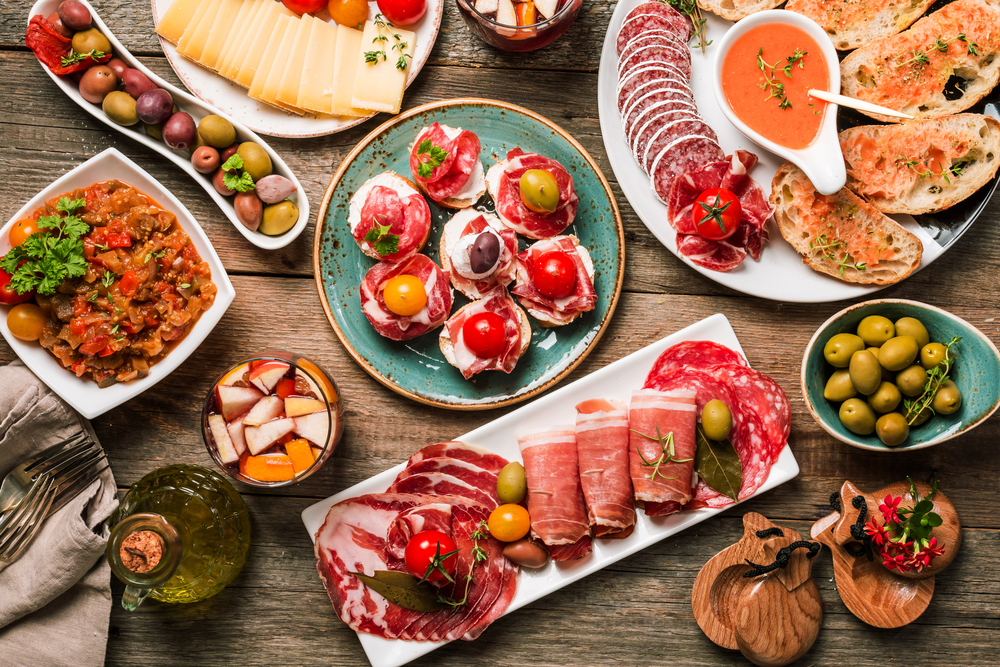
- Tapas: Small dishes meant for sharing and socializing.
- Pinchos (or “pintxos” in Basque Country): Bite-sized snacks, often served on a slice of bread and spiked with a toothpick.
- Menú del Día: Fixed-price menu for lunch, featuring several courses and representing excellent value.
Tapas are both a food format and a social practice, encouraging conviviality and conversation. The act of “ir de tapas” (“going for tapas”) is a cherished pastime, involving hopping from bar to bar and sampling a little from each.
Multi-Course Meals and Family Gatherings
Formal meals in Spain often begin with light starters (ensaladas, embutidos), followed by a main (rice, fish, or meat), and finishing with dessert or coffee. Family gatherings, fiestas, and public holidays revolve around shared tables and ritual dishes, weaving food seamlessly into the social fabric of Spanish life.
Spanish Ingredients: The Pillars of Flavor
Olive Oil: The Heart of Spanish Cooking
Spanish olive oil rivals that of any country for its quality and breadth of flavors. It is central to nearly every Spanish dish, used for frying, dressing, marinating, and finishing. Extra-virgin olive oil brings green, aromatic notes, while more robust varieties offer earthy brininess.
Spices and Aromatics
- Saffron: Cultivated in La Mancha, it is indispensable in paella and gives dishes their golden hue.
- Paprika (Pimentón): Traditionally smoked, giving Spanish dishes a distinct depth and warm, peppery kick.
- Garlic and Onion: Widely used for their robust, aromatic qualities in stews, sautés, and spreads.
- Vinegar: Sherry vinegar adds acidity and brightness to gazpacho, salads, and marinades.
Produce and Proteins
- Tomatoes, Peppers, and Beans: Sun-ripened and essential to sauces, soups, and stews.
- Seafood: From the Atlantic and Mediterranean coasts, seafood is a pillar of the Spanish diet.
- Pork and Cured Meats: Particularly jamón, chorizo (paprika-spiced sausage), and morcilla (blood sausage).
Bread, Cheeses, and Sweets
Crusty bread accompanies nearly every meal, acting as a utensil and flavor-soaker. Spanish cheeses—Manchego from La Mancha, Mahón from Menorca, Cabrales from Asturias—demonstrate the remarkable variety of Spain’s dairy traditions. Sweets like turrón, marzipan, and churros speak to Spain’s Moorish influence and its love for fine pastries.
Regional Cuisines: Spain's Culinary Identity
The North: Hearty Stews and Ocean’s Bounty
In the lush, green north of Spain—Galicia, Asturias, Cantabria, the Basque Country—the gastronomy is defined by Atlantic seafood, cured meats, and robust stews. Dishes like fabada asturiana (bean stew with chorizo and blood sausage) and Basque grilled fish demonstrate the emphasis on pure, fresh flavors.
Catalonia: Mediterranean Vibrance
Catalonia’s cuisine emphasizes vegetables, olive oil, and seafood—reflected in dishes like escalivada (roasted vegetables), suquet de peix (fish stew), and pa amb tomàquet (bread rubbed with tomato, olive oil, and salt).
Andalusia: Moorish Influence and Refreshment
The south brings flavors influenced by centuries of Moorish presence: almonds, citrus, sherry, and spices. From gazpacho to flamenquín (breaded pork rolls), Andalusia’s dishes burst with color and zest, perfectly suited to its hot climate.
Central Spain: Roasts and Mountain Fare
Castile and Madrid are famous for roast meats, garlic soups, and hearty casseroles—prime examples include cochinillo asado (roast suckling pig) and cocido madrileño (chickpea stew with meats and vegetables).
Celebrations and Festivals: Food at the Heart of Spanish Culture
National and Regional Festivals
- La Tomatina: Buñol's famous tomato-throwing festival highlights Spain's playful spirit and love for its produce.
- Semana Santa: Easter week brings traditional sweets such as torrijas (Spanish-style French toast).
- Feria de Abril: Seville’s Spring Fair with abundant servings of tapas, seafood, and rebujito (sherry and soda).
- San Fermín: Running of the Bulls in Pamplona, accompanied by local specialties like pimientos rellenos (stuffed peppers).
Food as Community
Festivals are opportunities for communal cooking and feasting—gigantic paellas, collaborative stews, shared tables. Recipes and techniques are handed down through generations, ensuring the survival and evolution of cherished traditions.
Seasonal Specialties
Each season ushers in its own specialties—winter stews, spring vegetables, summer fruits, and autumnal game. Celebrations and the changing calendar are mirrored in what the Spanish eat, creating a cuisine that is ever-evolving yet deeply rooted in place.
The Modern Spanish Table: Innovation Meets Tradition
Gastronomic Renaissance
Spain is home to adventurous and influential chefs who have brought international acclaim to Spanish gastronomy. While revering tradition, these culinary innovators reinterpret classic dishes, employ molecular techniques, and continually push the boundaries of taste and presentation.
Tasting Menus and Creative Tapas
Modern Spanish restaurants offer tasting menus that showcase local ingredient seasons and creativeplate compositions. Molecular gastronomy, pioneered in Spain, has given rise to “deconstructed” paella, foamed gazpachos, and reinvented tapas. Despite such innovation, even the most avant-garde kitchens remain anchored in the flavors and techniques of their grandmothers.
Sustainability and the Future
Spain's culinary leaders increasingly champion sustainability: responsible fishing, organic farming, waste reduction. This focus on quality and stewardship ensures that the beloved foods of Spain can be enjoyed by generations to come, balancing modern technology with ancient wisdom.
Conclusion: Embracing the Essence of Spanish Gastronomy
The cuisine of Spain is a glorious mosaic, defined by its landscapes and history but, above all, by the joy and togetherness that food brings. The ten dishes explored here—paella, tortilla española, gazpacho, jamón ibérico, patatas bravas, pulpo a la gallega, croquetas, churros con chocolate, bocadillo, and gambas al ajillo—are not merely recipes; they are repositories of culture, identity, and shared memory.
For anyone wanting to experience Spain, understanding its food is the best gateway. Each bite tells a story of place, people, and time, reminding us that the heart of Spanish cuisine is not just in the ingredients or methods, but in the act of gathering around a table, sharing laughter, and celebrating the simple, enduring pleasures of life.
At IMMO ABROAD, we take pride in celebrating the beauty and richness of Spanish culinary culture, encouraging newcomers and seasoned aficionados alike to savor all the country has to offer—one delicious dish at a time.