





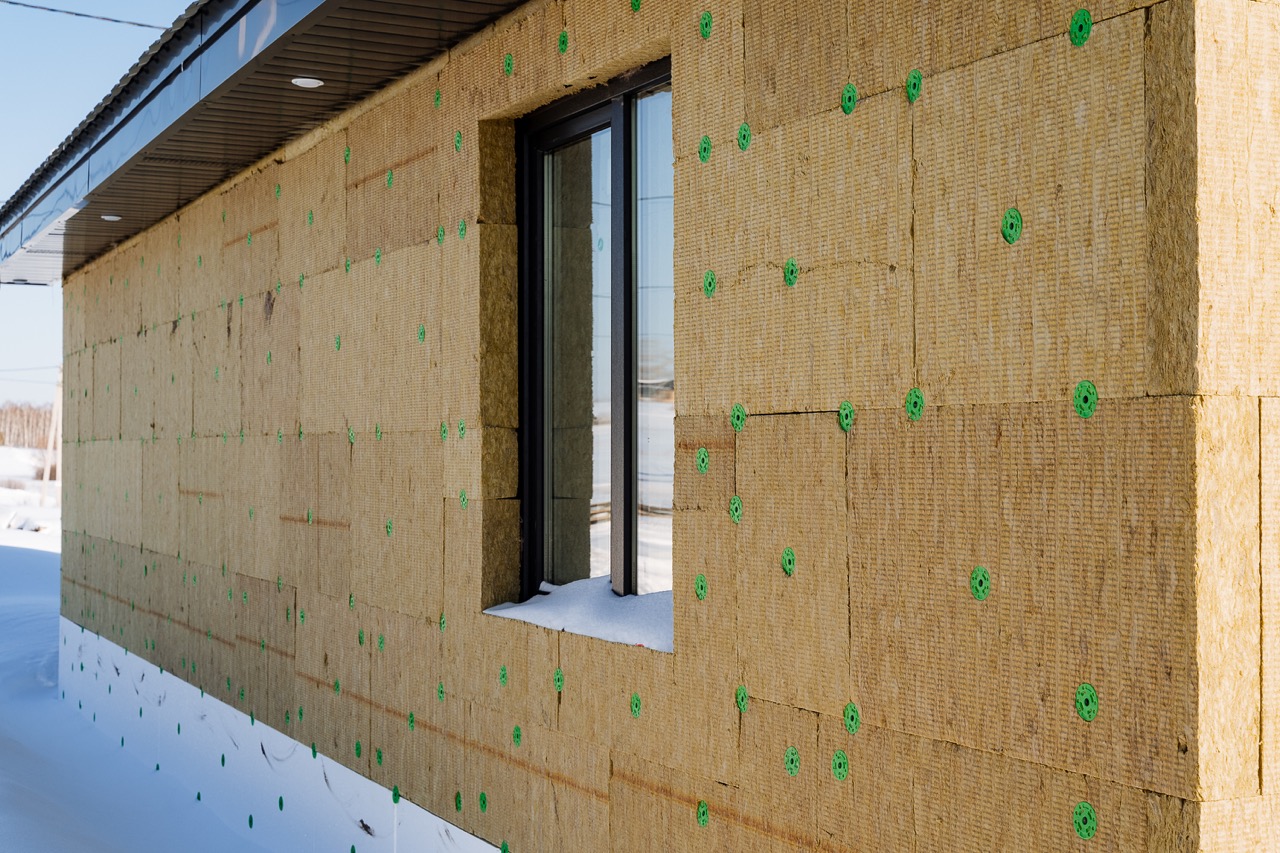
Why Spanish construction often uses only 2–4 cm of insulation – and what the real consequences are
A complete guide to insulation, comfort, and why prefabricated timber frame construction in Spain performs so much better.
1. The reality: traditional Spanish construction has almost no insulation
It sounds unbelievable, but it's true:
Most traditional builders in Spain only use 2 to 4 cm of insulation in the external walls.
In many homes you will find:
2 cm white EPS plates
3 cm XPS
4 cm PUR as a luxury exception
Or even no insulation in older houses
Concrete blocks, bricks, and hollow ceramic blocks have virtually no insulation value. This makes a house physically warm in summer and freezing cold in winter.
This is one of the biggest problems with the Spanish housing stock.
2. Why do Spanish builders use so little insulation?
a) The focus is on construction price, not on quality
Many projects are built for the lowest price.
Insulation = extra costs → so the minimum is used.
b) Misconception: “Spain is warm, so insulation is not necessary.”
This is incorrect. In warm climates, insulation provides protection against heat.
c) Building code (CTE DB-HE) is not strictly monitored
The standard is already low, but many builders don't even meet that standard.
d) Lack of training in modern building physics
Most of the contractors work with traditional techniques which are not modern.
3. The consequences of insufficient insulation
1. Overheating in summer
Thin walls let the heat through as if it were nothing →
The air conditioning is on all day.
2. Cold walls and damp problems in winter
Outside 8–12°C, inside warm, breathable air with moisture → condensation on walls → mould formation.
3. Large temperature differences day & night
On the coast (Alicante, Murcia, Málaga) temperatures often drop 12–18°C in one night.
This causes moisture, mold, and an uncomfortable indoor climate.
4. High energy bills
A poorly insulated house loses up to 70% of the cooled/heated air through the walls.
4. What does the Spanish building code require – and what really happens?
Here's the comparison:
Region / Standard | Legal isolation (CTE) | What builders often actually apply |
🇪🇸 Alicante / Murcia | 6–8 cm | 2–4 cm |
🇪🇸 Valencia | 6–10 cm | 3–5 cm |
🇪🇸 Malaga / Cadiz | 6–8 cm | 2–3 cm |
🇪🇸 Barcelona / Girona | 8–12 cm | 4–6 cm |
🇪🇸 Madrid / inland | 10–14 cm | 6–8 cm |
🇳🇱 Netherlands | 16–24 cm | — |
🇩🇪 Germany | 16–30 cm | — |
Conclusion:
Spain is building as if it were 15 years ago.
The insulation values are two to three times lower than modern European standards.
5. That's why prefabricated timber frame construction is the future of Spain
Prefabricated timber frame construction (such as UrbanRise Eco Homes) uses insulation as the main system, not as a by-product.
Typical UrbanRise wall construction
6.0–6.5 cm installation zone
12.5 mm OSB
Vapor-tight or vapor-controlled foil
16 cm insulation in the main frame (Insulation class A)
12.5 mm OSB outside
6–8 cm wood fiber insulation (Steico Protect type)
Plasterwork or facade finishing
Total insulation package = 22–30 cm
→ 6 to 10 times more than traditional Spanish construction.
Advantages:
No cold bridges
No condensation
No mold
Cool in the summer
Warm in winter
Up to 70% lower energy costs
Proven system (Scandinavia, Canada, Germany, Netherlands)
6. The oldest buildings in the world prove it
Many of the oldest inhabited buildings in:
Japan
Scandinavia
Canada
Alpine region
are based on timber building traditions.
Wood is strong, durable, insulating and adapts to the climate.
The principle behind modern prefabricated construction is old and extremely reliable.
7. Summary – why Spanish construction uses 2–4 cm insulation, and why that is no longer possible
❌ Traditional construction in Spain:
2–4 cm insulation
High energy bill
Moisture problems
Large temperature differences
Low build quality
Modern prefabricated timber frame construction:
22–30 cm insulation
Cool in the summer
Warm in winter
Healthy indoor climate
No condensation or mold
Very low energy costs