




Introduction: The Enigma of the Green Costa Blanca
The Costa Blanca, stretching more than 200 kilometers along the southeastern coast of Spain, is one of Europe’s most cherished destinations for sun-seekers, property buyers, and nature lovers. While the region is famed for its white-sand beaches and azure waters, visitors and residents alike are often struck by another, seemingly paradoxical hallmark: the remarkable greenery that drapes its hills, valleys, and urban landscapes. Yet, in contrast to its lush appearance, the Costa Blanca is officially classified as a region of limited rainfall. This raises a captivating question that inspires both curiosity and admiration: Why is the Costa Blanca so green despite its low rainfall?
In this comprehensive exploration, we will dive into the scientific, historical, ecological, and cultural reasons underpinning the region’s verdant charm. From unique microclimates to innovative human interventions, we uncover the secrets behind the Costa Blanca’s green landscape and what makes it such a desirable place to live or invest in, especially for those who value the rare combination of sun and greenery.
The Geographic Canvas: Positioning the Costa Blanca
Understanding the lushness of the Costa Blanca requires an appreciation of its geography and location. The region forms part of the province of Alicante within the autonomous community of Valencia. It is embraced by the Mediterranean Sea to the east and flanked by rugged mountain ranges to the west, creating a diverse landscape of coastal plains, rolling hills, fertile valleys, and dramatic peaks.
The natural boundaries of the Costa Blanca play a crucial role in determining climate, soil composition, flora, and human patterns of settlement. Particular attention must be paid to the interplay between the sea, the mountains, and the prevailing winds, as these are integral to the region’s meteorological dynamics and resulting green landscapes.
The Mediterranean Climate: Sun-Drenched, Yet Mild
The Costa Blanca’s climate is classified as Mediterranean—characterized by hot summers, mild winters, and, notably, limited precipitation. Average annual rainfall hovers between 300 to 400 millimeters, most of which occurs in the spring and autumn months. Yet, unlike many arid regions defined by similar rainfall levels, the Costa Blanca manages to sustain a thriving array of plant life.
The Mediterranean climate brings more than just sunshine. The temperate winters and early springs foster an extended growing season, allowing vegetation to root deeply and withstand dry spells. Average temperatures rarely plunge below 12°C in winter, while peaks in July and August often touch 30°C. Such symmetry between warm sunshine and moderate cold reduces thermal stress on plants, encouraging diverse growth in both wild and cultivated environments.
The Microclimates of the Costa Blanca
What truly distinguishes the Costa Blanca, however, are its celebrated microclimates. These are localized atmospheric zones where the climate differs subtly or significantly from the surrounding areas. Several elements contribute to this phenomenon:
- Mountain Barriers: Ranges such as the Sierra de Aitana, Sierra de Bernia, and the Montgó act as natural shields, protecting inland and coastal areas from harsh continental winds and creating sheltered pockets where humidity and temperature remain stable.
- Proximity to the Mediterranean Sea: The thermal inertia of the sea moderates temperature extremes and supplies moisture-laden breezes, which cool and hydrate the coastline.
- Elevation Variations: The area’s valleys, such as Valle de Guadalest and Valle del Jalón, capture and channel precious rainfall, storing it in underground aquifers and supporting thriving riverine ecosystems.
Microclimates are responsible for the extraordinary biodiversity of the Costa Blanca, where subtropical palms, pine forests, citrus groves, and wildflowers flourish side by side, even in what would otherwise be considered a semi-arid environment.
The Role of Soil: Fertility Beyond the Surface
Soil composition is a critical piece of this verdant puzzle. The Costa Blanca’s soils are typified by clayey-limestone and loamy types, rich in minerals and possessing excellent drainage properties. This drainage prevents waterlogging—a danger in wetter climates—and helps maintain optimal moisture around the root zones of many Mediterranean plants.
In combination with the practice of terracing in hilly terrain, these soils foster robust agricultural output even on inclines. Olive trees, vines, and carob thrive in seemingly unlikely places, their roots burrowing deep for nutrients and water.
Furthermore, the region’s geology allows the formation of underground aquifers and natural springs, which play a quiet but essential role in feeding vegetation even during surface droughts. The preservation of soil by centuries-old stone walls, combined with mulching from fallen leaves and organic debris, contributes further to moisture retention, keeping much of the Costa Blanca consistently green.
Adapted Vegetation: Nature’s Resilient Survivors
The lushness of the Costa Blanca is not simply a result of excess water, but rather the outcome of evolutionary ingenuity. The region’s native plant species have adapted over millennia to endure long dry spells while making optimal use of the brief rainy periods. This adaptation is visible in several ways:
- Deep-Rooting Trees: Species such as the Aleppo pine, carob, and holm oak feature deep, extensive roots that access subterranean moisture beyond the reach of surface droughts.
- Drought-Resistant Foliage: The almond, olive, and fig trees exhibit small, leathery leaves, reducing transpiration and conserving internal water.
- Sclerophyllous Shrubs: Aromatic plants like rosemary, thyme, and lavender develop tough, waxy leaves that repel direct solar radiation and minimize water loss.
- Ephemeral Blooms: Wildflowers and bulbs time their life cycles to coincide with the rainier months, blooming rapidly and seeding before dry spells return.
The sum of these adaptations is a landscape that turns green and vibrant at the first hint of moisture, holding its color long after rainfall ends due to the remarkable efficiency of its flora.
Irrigation Ingenuity: Ancient Traditions, Modern Methods
While nature sets the groundwork, human ingenuity has amplified the green visage of the Costa Blanca through the centuries. The earliest settlers—Phoenicians, Iberians, Moors, and Romans—introduced advanced agricultural methods adapted to dry climates. Chief among these is irrigation.
The Moors, in particular, left a lasting legacy by constructing acequias (irrigation ditches), wells, and cisterns to harness every drop of seasonal rain. Many of these systems are still operational today, modernized with pumps and pipes but based on ancient designs.
Contemporary infrastructure has refined these principles into high-tech efficiency. Today, drip irrigation—a method developed in the Mediterranean—delivers water directly to the plant roots, dramatically reducing evaporation and waste. Agricultural regions like the Vega Baja exploit digital monitoring and water recycling to achieve intensively green fields despite minimal runoff.
Urban planners and residents also participate, with community green zones, parks, and private gardens often designed to maximize water use efficiency. Rainwater harvesting systems abound, and drought-tolerant landscaping, or xeriscaping, has become a refined art in Costa Blanca’s towns and resorts.
Impact of Agriculture: Orchards, Groves, and Vineyards
The Costa Blanca’s agricultural tapestry tells a story of green against the odds. Fertile bands around river valleys and mountainous terraces play host to sprawling citrus orchards, almond groves, olive plantations, and vineyards. Each contributes not only to the economy but also to the visual vibrancy of the landscape.
Particularly notable are the citrus groves that, in late winter and spring, blaze with the glossy green of orange and lemon trees and the shimmering white of their blossoms. Vines, meanwhile, thread their tendrils across rolling hills, especially in regions like the Jalón Valley—truly a green heartland during the growing season.
Even in summer, when surface water is scarce, the depth and resilience of these root systems sustain a visual impression of abundance. Furthermore, these cultivated plants often act as ecological bridges, supporting wildlife and providing microhabitats that foster biodiversity throughout the region.
Urban Green Spaces: Cities and Towns as Oases
Contrary to many sun-drenched coastal regions plagued by urban sprawl and monotony, cities and towns along the Costa Blanca have made concerted efforts to retain and expand green spaces. Large parks in Alicante, Elche, Benidorm, and Denia stand as urban oases, woven through with palms, pines, and ornamental plants.
Elche is perhaps the most striking example, famous for its Palmeral—the largest palm grove in Europe and a UNESCO World Heritage Site. This green expanse, stretching for hundreds of hectares, is sustained by sophisticated irrigation and urban landscaping that dates back to Moorish times.
Green boulevards, tree-lined promenades, and community gardens are now standard features across municipalities. Such landscaping is supported by local regulations promoting sustainable water use and the preservation of autochthonous greenery, ensuring even the built environment maintains a sweeping palette of greens.
Nature Reserves and Protected Areas: Guardians of the Green
While urban and rural development molds much of the Costa Blanca, significant areas have been preserved as natural parks and reserves, safeguarding both biodiversity and that quintessential greenery.
- Montgó Natural Park: A mountainous sanctuary offering a striking diversity of flora, from lush pine forests on its slopes to wild orchids and aromatic shrubs.
- Serra Gelada Natural Park: Dominated by dramatic cliffs and hidden coves, this zone preserves both Mediterranean woodland and rare botanical species.
- Lagunas de la Mata y Torrevieja: A mosaic of wetlands and salt lakes teeming with reeds, aquatic plants, and migratory birds.
- Font Roja Natural Park: Higher elevations offering pristine holm oak forests and an enviable concentration of endemic plant species.
These protected zones act as ecological reservoirs, serving not only recreation and tourism but also ensuring the survival of plant communities that underpin the region’s green identity. By maintaining critical habitats, these parks play a vital role in combating desertification and protecting valuable water resources.
The Influence of Winter Rains and Dew Formation
One of the most critical yet often overlooked factors in the Costa Blanca's greenery is the pattern of precipitation. While the total annual rainfall is modest, it is the timing and intensity that matters.
The bulk of the Costa Blanca’s rainfall arrives as brief but intense downpours during the spring and autumn transition periods, typically as part of Mediterranean storms known as gotas frías (cold drops). These sporadic rains soak deep into the soil, replenishing aquifers and providing essential moisture to sustain plant growth during the long, dry summer.
Yet, beyond rainfall, dew formation offers a quiet but significant contribution. Clear, cool nights enable water vapor to condense on leaves and ground surfaces, providing a vital micro-irrigation for native plants. Over the course of the dry season, this nocturnal condensation delivers crucial hydration, tipping the balance toward a consistently green landscape.
Biodiversity and Plant Synergy: Working Together for Greenery
Diversity begets resilience. The immense range of native and adapted plant species, both wild and cultivated, works together to reinforce the Costa Blanca’s green character. Mixed forests of pine, oak, and cypress anchor the highlands and slopes, while shrubland—known locally as maquis and garrigue—is studded with sturdy bushes and aromatic herbs.
Understory plants, mosses, and groundcovers help trap humidity and prevent soil erosion, while taller trees provide vital shade, further mitigating transpiration and water loss. The ongoing symbiosis between species—root sharing, wind protection, and allelopathic chemical exchanges—creates a self-reinforcing ecology, all thriving in the lean bounty of the Mediterranean climate.
This diverse plant matrix ensures that even when certain species enter natural dormancy during dry spells, others take up the green mantle, maintaining color and cover throughout the year.
Wildlife’s Role in Landscape Vitality
Birds, insects, and mammals contribute profoundly to the green vibrancy of the Costa Blanca. Birds such as hoopoes, bee-eaters, and finches court wildflowers and shrubs, dispersing seeds over vast distances. Pollinators, including bees, butterflies, and beetles, ensure robust flowering and fruiting.
Small mammals and reptiles, in their quest for food and shelter, disturb the soil, consequently promoting aeration and nutrient cycling. This natural labor, symbiotically intertwined with native vegetation, acts as an invisible engine keeping the landscape lush and vital regardless of variable rainfall.
Sustainable Landscaping Practices in Modern Developments
Recent decades have witnessed a surge in sustainable landscaping and green infrastructure in Costa Blanca’s resorts, villas, and urban extensions. Developers are increasingly turning toward autochthonous (native) plant palettes, integrating rain gardens, green roofs, and permeable surfaces into both residential and commercial projects.
Landscape architects employ elaborate designs that capture even minimal rainfall, direct it to root zones, and facilitate slow percolation rather than fast runoff. Reclaimed water is utilized for irrigating public parks and golf courses, while drought-tolerant grass species and groundcovers are chosen over water-thirsty lawns.
Owners of private gardens emulate traditional Mediterranean landscaping by planting olive, fig, bay, and pomegranate trees alongside vines and aromatic herbs, resulting in green havens requiring only minimal inputs. Where lawn is desired, Mediterranean varieties such as Zoysia and Bermuda grass offer robust, evergreen carpets with extremely low water demand.
Climate Change and the Green Future of the Costa Blanca
The global phenomenon of climate change introduces new variables to the survival and sustainability of the Costa Blanca’s green character. Projections anticipate further decreases in annual rainfall and rising average temperatures.
In response, regional governments and communities are investing in long-term water management strategies, emphasizing aquifer recharge, greywater recycling, and enhanced green belts to counter heat and wind erosion. Indigenous plant restoration projects aim to reinforce natural resilience, with emphasis on reforesting hillsides and reintroducing lost native species.
Increasing awareness among residents and newcomers alike has spawned educational initiatives on sustainable gardening, water conservation, and climate-adaptive landscaping. These measures are essential to safeguarding the uniquely green Costa Blanca for generations to come.
Cultural and Historical Roots of Green Aesthetics
Beyond the science and ecology lies a deep cultural reverence for the color green. In Mediterranean societies, greenery has long symbolized prosperity, health, and a harmonious life. The Costa Blanca’s inhabitants—past and present—have invested immeasurable effort into creating shaded courtyards, water gardens, and tree-lined streets.
The Moorish influence, perhaps the most significant, wove gardens into the very fabric of urban and rural life, with elaborate irrigation, terraced landscapes, and the omnipresent sound of trickling water. Traditional festivals continue to celebrate seasonal blooms, tree planting, and the flowering of fields and groves.
For those purchasing property or visiting the region, this cultural dimension enhances the value and appeal of a lush garden or a panoramic view framed by green hills—as much a sign of home as sun, sand, and sea.
Comparative Perspectives: Mediterranean Green Versus Other Arid Zones
Examining the Costa Blanca’s greenery invites comparisons with other similarly dry but less verdant locales. Regions around the Mediterranean rim, southwestern United States, Middle East, and parts of Australia offer parallel climates—sunny, low-rainfall, and semi-arid.
The Costa Blanca’s distinction lies in its unique meshing of mild winters, moderating sea influences, centuries of water-conscious cultivation, and the particular resilience of local flora. This synergy enables a density and variety of vegetation seldom found in other arid belts, giving the Costa Blanca both a visual exuberance and ecological richness that few can rival.
Property Value and Green Appeal: The Economic Implications
Green landscapes do more than beautify—they raise property values and boost the emotional appeal of homes, resorts, and investment properties. Buyers consistently cite gardens, mature trees, and surrounding natural greenery as key factors in their purchasing decisions.
The Costa Blanca’s reputation as a lush oasis amidst parched southern Spain enhances its status as a premium destination for residential buyers, retirees, and second-home investors. Well-tended gardens, proximity to nature reserves, and sweeping countryside vistas increase both rental income and resale potential.
For existing residents, the environmental services provided by green spaces—cleaner air, shade, lower cooling costs, recreational opportunities, and improved well-being—contribute to a high quality of life, making the Costa Blanca’s “green dividend” a cornerstone of its enduring allure.
Seasonal Variations: How Greenery is Maintained All Year
Unlike many regions where landscape color waxes and wanes with the seasons, the Costa Blanca retains overlain hues of green throughout the calendar year. Evergreens dominate the canopy—pines, cypresses, and palms—while deciduous trees and shrubs awaken in the wet months and rest, rather than shed entirely, during the heat.
Successive blooms and flushes of new growth follow the rhythm of rainfall, temperature, and daylight. Almond and peach trees flower spectacularly in winter, followed by wildflowers in spring, deep foliage in summer, and the mellow tones of autumn vines and acorns. This constant renewal supports the enduring perception of a perpetually green landscape, even at the height of summer.
Community Initiatives: Engaging Locals and Newcomers in Green Projects
Sustaining the Costa Blanca’s green character is not merely a matter of natural phenomena or official policy. Across villages, towns, and cities, grassroots initiatives have emerged to preserve and enhance greenery.
School programs teach children about native plants and water conservation. Neighborhood associations organize tree-planting drives, invasive plant removals, and community gardening workshops. Many urban and rural property owners participate in “adopt-a-tree” projects, ensuring regular maintenance and hydration of street and park trees.
These efforts not only maintain greenery but also foster social bonds, instill civic pride, and connect new arrivals to the region’s traditions and environmental values.
Tourism and the Green Experience: Nature Trails, Parks, and Eco-Activities
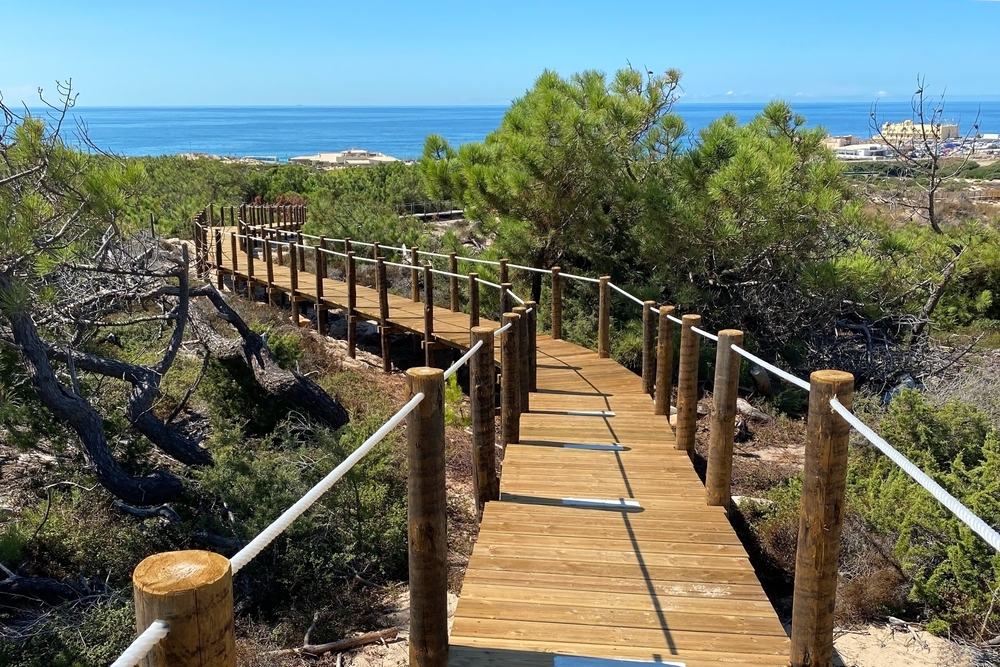
Tourism is a pillar of the Costa Blanca economy, and the region’s green landscapes underpin a growing sector of eco-tourism and outdoor recreation. Well-marked hiking trails climb through pine forests, skirt citrus valleys, and traverse alpine meadows, offering breathtaking views and close encounters with rare Mediterranean plant life.
Guided walks, birdwatching excursions, and botanical tours showcase the unique flora and ingenious adaptation strategies. Resorts, hotels, and spas invest in lush gardens and shaded areas, blending aesthetic beauty with relaxation and health benefits.
From rural “agro-tourism” experiences—where guests participate in olive or grape harvests—to adventure sports set in verdant river canyons, the appeal of the Costa Blanca as a “green destination” creates an economic ripple effect extending well beyond simple sightseeing.
Conclusion: The Synthesis of Nature, Tradition, and Innovation
The Costa Blanca, with its unmistakable green mantle, stands as a compelling testament to the harmony between environmental conditions, natural resilience, and human ingenuity. Despite a climate defined by sunshine and scarce rain, the landscape bursts with life thanks to the interplay of unique microclimates, adaptive flora, creative water management, and a deep-rooted cultural commitment to greenery.
As the region navigates the challenges of climate change and urban growth, the wisdom of ancient traditions and the promise of new technologies offer hope for the continued vitality of this Mediterranean paradise. For those who yearn for the rare blend of lush landscapes and sun-filled skies, the Costa Blanca remains a living, growing jewel—one whose secret lies not in abundance, but in elegant, enduring efficiency.
Frequently Asked Questions: Delving Deeper into the Green Costa Blanca
-
How do plants survive the dry summer months in the Costa Blanca?
Most native plants have evolved to withstand dryness through deep roots, waxy leaves, reduced leaf size, and resting during the hottest periods. Many rely on underground water reservoirs and nighttime dew, remaining green thanks to these adaptations.
-
Is it expensive to maintain a green garden in the Costa Blanca?
Not necessarily. Water-wise landscaping with native plants, mulching, and efficient irrigation systems can create verdant gardens at a fraction of the cost and effort of traditional lawns. Knowledge of local plant species is crucial.
-
Are there restrictions on water use for gardens?
During occasional droughts, local authorities may impose water use restrictions. However, widespread adoption of drip irrigation and rainwater harvesting helps minimize dependence on treated tap water, allowing residents to maintain gardens within the rules.
-
What role does the local government play in preserving green spaces?
Municipalities invest in public parks, enforce building codes that require green areas, and promote the use of drought-resistant species. They also support reforestation and landscape regeneration projects across urban and rural areas.
-
How does the green landscape impact wildlife?
The mosaic of forests, groves, orchards, and gardens creates vital wildlife corridors, supporting birds, insects, mammals, and amphibians. Many migratory bird species rely on the Costa Blanca’s green refuges during their seasonal journeys.
Practical Advice for Homeowners and Property Buyers
For those seeking to embrace the Costa Blanca’s green heritage in their own homes, a few guiding principles can make all the difference:
- Choose native or well-adapted plants for gardens and terraces—these require less water, thrive in local soils, and attract beneficial wildlife.
- Install drip irrigation or rainwater collection systems to maximize every drop, especially during the drier months.
- Group plants with similar water needs to optimize irrigation efficiency.
- Use mulch and groundcovers to conserve soil moisture and prevent evaporation.
- Preserve existing trees—mature trees provide significant environmental and aesthetic value.
- Participate in local green initiatives to foster a sense of stewardship and contribute to community well-being.
By integrating these practices, residents help ensure that the Costa Blanca remains not only an icon of sunshine and seaside living but also a beacon of year-round greenery and sustainability.
The Lasting Allure: A Green Oasis on the Mediterranean
The question at the heart of this discussion—why is the Costa Blanca so green despite little rain—ultimately distills to the land’s unique confluence of natural gifts and human wisdom. It is a region shaped by centuries of adaptation, where olive groves flourish side by side with pinelands, modern irrigation taps into ancient streams, and every blade of grass testifies to careful guardianship.
For buyers, visitors, and nature lovers alike, the enduring green of the Costa Blanca is more than just a feast for the eyes. It offers a promise: of beauty enduring through the seasons, a lifestyle harmoniously aligned with the environment, and a community invested in the legacy of its landscape. The real secret is not abundance but balance—a green revolution in the heart of the Mediterranean, waiting to be discovered and cherished anew.