





Introduction to Verkeersregels in Spanje
Welcome to an in-depth exploration of the Spanish traffic regulations, or verkeersregels in Spanje. If you are planning to visit, reside, or drive throughout Spain, understanding these rules is essential to ensure your safety, compliance with the law, and enjoyment of your travels. Spain, with its diverse landscape, rich culture, and vibrant cities, is best explored by car. However, driving in a foreign country also brings challenges, especially if you are unfamiliar with the local laws and customs. This comprehensive guide will provide you everything you need to know, making your experience smoother and more enjoyable.
Essential Driving Documents and Legal Requirements
Before you even turn the key in Spain, it’s crucial to have the correct documentation at hand. Spanish authorities are strict about the validity and presence of key documents. Always check that you have the following with you when driving:
- A valid driving licence: For EU/EEA citizens, your current licence is accepted. For others, an International Driving Permit (IDP) may be required.
- Proof of insurance: At least third-party liability insurance is mandatory.
- Vehicle registration papers (Permiso de Circulación): These must be original documents, not photocopies.
- ITV certificate: This is the Spanish equivalent of a roadworthiness test, required for all vehicles over four years old.
- Personal identification: A valid passport or official ID card.
Failure to present these documents when asked by the authorities can result in fines or even the impounding of your vehicle. Always ensure that your paperwork is up to date, and carry originals.
General Traffic Rules on Spanish Roads
Spain boasts an extensive road network with well-maintained highways, known as autovías and autopistas. Understanding the general traffic rules is your first step to safe driving.
- Drive on the right-hand side: All traffic in Spain drives on the right and overtakes on the left.
- Seat belts: Mandatory for all passengers in all seats, both front and rear.
- Use of mobile phones: Strictly prohibited while driving, unless you use a hands-free system.
- Indicators: Always use your indicators when overtaking, changing lanes, or turning.
- Vehicle lights: Use dipped headlights in tunnels, and make sure all lights are functioning.
- Roundabouts: Drivers inside the roundabout have priority; always yield to vehicles already circulating.
- Priority to the right: At intersections without signs, vehicles coming from the right have right of way.
These general rules form the foundation of safe driving conduct in Spain. Respecting these basic expectations not only keeps you compliant but also courteous to other road users.
Speed Limits and Enforcement
Spanish authorities rigorously control speed to prevent accidents and maintain safe roads. Speed limits vary according to road type and vehicle. Here’s a breakdown of the key speed limits:
- Urban areas: 50 km/h, unless otherwise indicated by signage.
- Single carriageway rural roads: 90 km/h for cars and motorcycles.
- Dual carriageways (autovías) and motorways (autopistas): 120 km/h for cars and motorcycles.
- Residential zones: 20-30 km/h, often enforced by speed bumps or signage.
Vehicles towing trailers and other heavier vehicles may have reduced limits. Always be attentive to signage, as temporary limits apply in roadwork zones or near schools.
Enforcement relies on fixed speed cameras, mobile radar units, and municipal police checks. Fines are issued for exceeding limits, sometimes even by minimal margins. Foreign drivers are not exempt – unpaid fines may result in vehicle seizure or complications upon re-entering Spain. Pay fines promptly, as early payment can reduce the amount.
Alcohol, Drugs, and Driving in Spain
Spain adopts a zero-tolerance approach to impaired driving. The permissible blood alcohol content (BAC) in Spain is among the strictest in Europe. Here’s what you must know:
- General drivers: BAC limit is 0.5 g/l (0.25mg/l in exhaled air).
- New drivers (less than 2 years’ licence): BAC limit is 0.3 g/l (0.15mg/l in exhaled air).
Police conduct random breathalyzer checks, especially during weekends and holidays. Refusal to submit can have severe consequences, including heavy fines and suspension of your driving licence.
Driving under the influence of drugs is strictly prohibited, with severe penalties, including imprisonment in cases of accidents or repeat offenses. Spain also has increased roadside testing for narcotics. Over-the-counter medications causing drowsiness should be avoided.
Parking Regulations in Spanish Cities
Parking correctly in Spain can be a challenge, especially in busy urban centers. Authorities strictly enforce parking regulations, and illegal parking can result in fines, wheel clamping, or towing.
- Yellow lines: Continuous yellow lines indicate no parking or stopping at any time.
- Blue zones (zona azul): Indicate paid parking. Pay at the nearest meter and display the ticket on your dashboard. Time limits apply.
- Green zones (zona verde): Usually for residents; non-residents may have limited permission to park for short periods.
- Disabled parking: Reserved for vehicles with a valid EU disabled permit.
- No parking signs (prohibido estacionar): Always respect road signs indicating parking restrictions or loading-only areas.
In case your vehicle is towed, signs usually provide the phone number of the municipal deposit. Pay both the fine and release fee to recover your vehicle. Never park where you block entrances, on pedestrian crossings, or in bus/taxi lanes.
Motorway Tolls and Payment Systems
Spanish autopistas (motorways) are either free (autovías) or pay-to-use. Tolls (peaje) are commonplace on major routes and are clearly marked in advance.
- Pay at booths: Cash, major credit cards, and debit cards are widely accepted.
- Electronic toll systems: Some motorways use remote transponders like Via-T. This can speed up passage and is useful for frequent travelers.
- Ticketed systems: Collect a ticket at entry and pay the calculated sum at your exit point.
Always keep the ticket safe until you leave the motorway; losing it can result in the maximum fare being charged. Toll fees vary by region, road, and even time of year.
Overtaking and Lane Discipline
Lane discipline and overtaking rules are pivotal elements of Spanish road safety.
- Keep right: On highways, always drive in the right-hand lane except for overtaking.
- Overtake on the left: Only overtake when it is safe and legal; do not undertake.
- Solid white lines: These indicate overtaking is prohibited.
- Indicating: Always signal your intention clearly and in advance.
- Return safely: Move back to the right lane after overtaking, ensuring ample space from the vehicle passed.
Infringements are treated seriously, especially on mountain roads or in poor weather. The goal is always to maintain traffic flow and avoid sudden maneuvers.
Child Safety Laws and Passenger Regulations
Spain enforces strict rules to protect child passengers. Young passengers must be secured with appropriate safety equipment, and regulations depend on age, height, and weight.
- Children under 135 cm: Must use approved child seats suited to their height and weight and travel in the rear seats.
- Front seat restriction: Children may only sit in the front if all rear seats are occupied by other children under 135cm, and using appropriate restraints.
- Booster seats: Required as children outgrow child seats but remain below 135 cm.
- Approved restraints: Check for an ECE R44/04 or R129 (i-Size) label, indicating compliance with European safety standards.
It is the driver’s responsibility to ensure all passengers are carrying appropriate restraints, and penalties are strictly enforced for non-compliance.
Spanish Road Signs: Meanings and Compliance
Understanding Spanish road signage is vital for your safety and avoidance of penalties. While signs often comply with European conventions, some are unique in their phrasing or symbols.
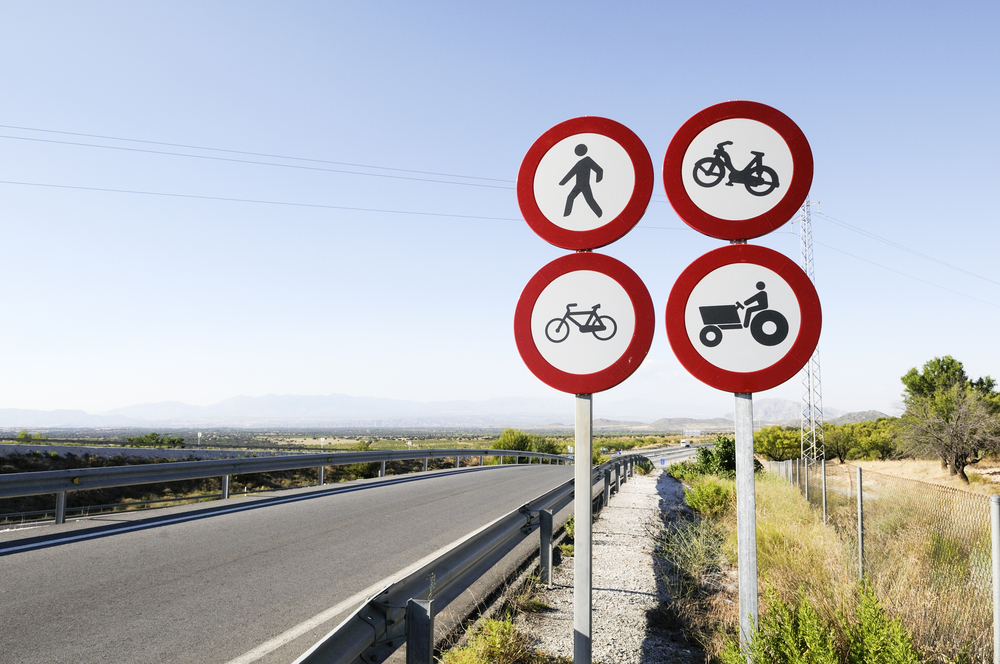
- Regulatory signs: Circular and typically with a red border (entry prohibitions, speed limits).
- Warning signs: Triangular, alerting you to hazards ahead (sharp bends, crossings).
- Information signs: Blue rectangles provide helpful guidance (service stations, directions).
- Temporary signs: Usually orange, indicating construction, detours, or altered traffic flow.
Pay special attention to signs indicating one-way streets, no-entry zones, or seasonal speed restrictions. Local dialects can occasionally replace or supplement Spanish. Ensure you understand terms like "Salida" (exit), "Entrada" (entry), and "Ceda el paso" (give way).
Roundabouts, Intersections, and Junctions
Spanish cities and towns are renowned for their numerous roundabouts (glorietas), designed to manage the traffic flow efficiently. Navigating these requires precision.
- Yield on entry: Priority is always given to vehicles already circulating within the roundabout.
- Lane adherence: Choose the appropriate lane before entry, as indicated by arrows and signs.
- Exiting: Signal your intention to exit and move to the right lane in advance.
- Intersections without signals: Vehicles approaching from the right have priority unless road markings or signs direct otherwise.
Failure to yield or improper lane discipline can result in confusion and, potentially, collisions. Whenever in doubt, slow down, observe thoroughly, and yield if necessary.
Motorbike and Scooter Regulations
Two-wheeled transport is popular in Spain, particularly in urban areas and along the coast. However, rules for motorbikes and scooters are robust to ensure the safety of riders and other road users.
- Helmet use: Compulsory for rider and passenger at all times.
- Protective clothing: High-visibility vests and gloves are strongly recommended, especially outside city limits.
- Passenger age: Children under 12 are not permitted unless the motorbike is designed for more than one person and the child can reach the footrests. Minimum age is 7 when accompanied by a parent or legal guardian.
- Lanes: Motorbikes may use all lanes but must signal overtaking maneuvers clearly.
- Parking: Park only in designated spaces; sidewalk parking is prohibited unless indicated by municipal by-laws.
Noise restrictions apply, especially at night. Always equip your vehicle with functioning lights and brakes and never transport more than one passenger.
Driving in Rural Spain and Mountain Regions
Spanish countryside and mountain roads offer breathtaking scenery but require particular attention and respect for unique conditions.
- Narrow roads and blind bends: Reduce speed, be cautious of agricultural vehicles, cyclists, or wandering livestock.
- Unpaved surfaces: Many country lanes are gravel or dirt; 4x4 vehicles may be advisable for remote routes.
- Altitude and weather: In mountainous regions, sudden weather changes can lead to fog, ice, and steep descents. Use lower gears for descents, and avoid sudden braking.
- Overtaking: Only where clearly visible and legal; never on a bend or where prohibited by road markings.
- Mobile phone coverage: Remote areas may have limited service; prepare by informing others of your route.
Driving slower is not only legal but wise in such regions, ensuring both your safety and that of local residents.
Car Equipment and Emergency Obligations
Spanish law specifies several mandatory items that must be present in your vehicle at all times, regardless of the vehicle’s country of registration:
- Reflective safety vest: For use should you exit your vehicle on any road outside a built-up area following a breakdown or accident.
- Warning triangles: Two triangles are required for Spanish-plated cars. For foreign-registered vehicles, one may suffice, but two is preferable.
- Spare wheel and tools: A spare tire (or tire repair kit) and necessary tools to fit it.
- Headlamp beam deflectors: Required if your car’s headlights are designed for driving on the left-hand side.
- First aid kit: Not mandatory but recommended.
During an emergency, Spanish law requires you to wear your reflective vest before leaving the vehicle and place warning triangles at correct distances behind and, on dual carriageways, in front of your vehicle to alert oncoming traffic. Fines for non-compliance can be immediate and significant.
Rules for Cyclists and Sharing the Road
Cycling enjoys immense popularity in Spain. Sharing the road safely with cyclists is a legal and ethical obligation for all motorists.
- Minimum passing distance: At least 1.5 meters (approx. 5 feet) when overtaking cyclists.
- Speed reduction: Slow down when approaching or passing groups of cyclists, especially on curves or in low-visibility areas.
- Cyclist lanes: Respect dedicated bike lanes and never park in or block them.
- Roundabouts: Cyclists have the same rights as vehicles and may use the entire lane within the roundabout.
Drivers who fail to respect cyclists’ rights face severe penalties. In rural and mountainous areas, exercise even greater caution, as cycling tourists are common, often in large groups.
Dealing with Spanish Police and On-the-Spot Fines
It’s possible that the Spanish police – notably the Guardia Civil de Tráfico – may stop foreign drivers for random inspections or for suspected infringements.
- Be respectful: Address officers politely. Avoid arguments or insults.
- Document checks: Provide your driving licence, vehicle registration, insurance, and ID.
- On-the-spot fines: Foreign drivers may be asked to pay fines immediately. Officers will issue a receipt upon payment. Always ensure this is provided.
- Language barriers: Some officers speak English, but it’s advisable to carry a translated copy of key vehicle documents.
If stopped, remain calm and cooperative. You may appeal fines, but unpaid fines can complicate future visits or result in vehicle immobilization.
Urban LEZs, Environmental Zones, and Restrictions
Major Spanish cities – including Madrid and Barcelona – have implemented Low Emission Zones (LEZs) and certain environmental restrictions to tackle air pollution.
- LEZ sticker (Distintivo Ambiental): Vehicles are categorized by their emission levels. Only eligible vehicles with the correct sticker may enter restricted zones.
- Entry times: Days and times when restrictions apply are indicated via signs and electronic boards around cities.
- Exceptions: Residents, registered delivery services, and public transport may have exemptions. Check the rules applicable to your vehicle before entering.
- Fines: Entering LEZs without the required sticker or permission incurs hefty fines.
Plan accordingly by understanding if your planned route passes through an LEZ, especially when entering Madrid’s “Madrid Central” or Barcelona’s “Zona de Bajas Emisiones.”
Accidents, Breaking Down, and Emergency Procedures
While no one expects to be in an accident or break down, knowing correct procedures in Spain can make a significant difference.
- Stopping safely: Move your vehicle to a safe location if possible.
- Switch on hazard lights and don your reflective vest before leaving your seat.
- Place warning triangles: At least 50 meters behind (and in front, if on dual carriageway) your vehicle.
- Call for assistance: The emergency number is 112, operational throughout Spain for police, fire, or medical help.
- Exchange information: Share names, addresses, insurance details, and vehicle registration with other parties involved.
- Accident report form (parte amistoso de accidente): This standard form, available from insurance companies, is used to document the circumstances.
- Do not admit fault at the scene: Allow insurers and authorities to investigate and determine responsibility.
Police attendance is required if there are injuries, significant damage, or blockages; otherwise, parties often resolve minor incidents independently.
Fuel Stations, Types, and Refueling Protocols
Spanish fuel stations (gasolineras) are generally modern and offer self-service and attended options. Key points to keep in mind include:
- Petrol (gasolina) and diesel (gasoil) variants: Verify compatibility with your vehicle before refueling.
- Payment: Most stations accept debit and credit cards. Pre-payment may be required at unmanned stations, particularly outside major cities.
- LPG and electric charging: More common in urban centers; plan accordingly if driving alternative-fuel vehicles.
- Refueling: It’s illegal to use your mobile phone or leave the engine running during refueling.
Always check fuel grade and signage for correct pump identification. Receipts are provided upon payment.
Seasonal Considerations: Summer and Winter Driving
Seasonal weather defines much of Spain’s driving experience. Here’s what to anticipate:
- Summer: High temperatures can impact engines, brakes, and tire pressure. Carry water, allow for additional travel time, and never leave pets or children in parked cars.
- Winter: In higher altitudes, snow, ice, and fog occur. Carry snow chains if required (especially in the Pyrenees or Sierra Nevada), and check forecasts before travel.
- Spring and autumn: Sudden rains make roads slippery, especially after dry spells. Reduce speed accordingly and maintain safe braking distances.
Spanish authorities provide regular weather and road condition updates, particularly on mountain passes, via electronic signs and dedicated radio frequencies.
Car Hire, Temporary Importation, and Foreign Vehicles
For those hiring vehicles or bringing their own into Spain, specific rules apply:
Car Hire
- Requirements: Minimum age is usually 21-25, with at least one year’s driving experience. Credit card deposit is standard.
- Insurance: Basic cover is included, but consider extra insurance for peace of mind.
Temporary Importation
- Registration: Non-residents may drive foreign-registered vehicles for up to six months per year, after which Spanish registration and taxes apply.
- Insurance: Ensure your policy covers use in Spain and third-party liability.
- Emissions and equipment: Your vehicle must comply with Spanish and EU environmental standards and equipment laws.
If relocating, register and insure your vehicle within stipulated timeframes to avoid fines and impoundment.
Spanish Driving Etiquette and Local Customs
Beyond the letter of the law, Spanish driving culture has its own unique flavor.
- Polite honking: A brief beep may be used as a thank-you or polite warning, but aggressive honking is discouraged.
- Hand gestures: Waving is appreciated for allowing merges or giving way but avoid rude gestures, as they can cause offense (and, rarely, police action).
- Flashing headlights: Often used to signal that you’re giving way or, occasionally, to warn of police checks ahead (though this is technically discouraged).
- Yield to pedestrians: Always yield at zebra crossings – even if pedestrians appear hesitant.
- Patience in traffic jams: Spanish cities can be congested; keep calm and blend in with the local pace.
Embracing local customs enhances the sense of community and can often ease your journey, especially in rural zones where courtesy is highly valued.
Electric and Hybrid Vehicle Rules
Spain is swiftly adopting sustainable mobility. There are additional rules and privileges for drivers of electric and hybrid vehicles:
- Charging stations: Expanding constantly in urban centers and along major highways. Use dedicated apps to locate the nearest charging point.
- LEZ and parking perks: Some city centers offer free or discounted parking, and access to restricted zones with correct stickers or registration.
- Priority lanes: Certain cities permit electric vehicles to use high-occupancy lanes during peak hours, even with only one occupant.
Ensure your vehicle’s emission certification is up to date and the appropriate badges are displayed prominently.
Driving Off-Road and in Remote Terrain
Off-roading is popular, especially in Spain's national parks and rural interiors. Remember:
- National parks and protected areas: Off-road driving is often prohibited except on marked, public tracks.
- Respect nature: Keep noise and speeds low to avoid disturbing wildlife.
- Permits: Some regions require prior authorization for off-road adventures.
- Prepare: Carry water, food, GPS, and notify someone of your itinerary. Mobile coverage can be patchy.
Always check local rules—offenses can result in significant fines and vehicle confiscation.
Penalties, Demerit Points, and Appeals
Spanish traffic law relies on a combination of fines and a demerit points system (sistema de puntos).
- Common offenses: Speeding, mobile phone use, not wearing seat belts, and impaired driving accrue points as well as fines.
- Points system: All drivers start with 12 points; novice drivers have 8. Points are deducted for infractions and, if reduced to zero, the licence is suspended.
- Appealing fines: You have the right to appeal, though this may involve lengthy proceedings and proof of error.
- Foreign drivers: Can still be fined; while no points are applied, repeated offenses can result in temporary bans or car impoundment.
Fines vary according to the severity of the violation and can be paid on the spot or at selected banks and post offices, often with a discount for early payment.
Tips for Safe and Stress-Free Driving in Spain
- Plan ahead: Study your route, check for roadworks, and anticipate tolls and LEZ restrictions.
- Check local rules: Regional laws may vary, especially regarding LEZs and parking.
- Mind the weather: Prepare for sudden changes, especially in mountain areas.
- Refresh your skills: Especially regarding roundabouts, child safety, and speed limits.
- Respect local customs: Enhance your experience by embracing Spain’s unique road culture.
- Be patient: Urban congestion is common; rushing increases risks and stress.
- Maintain your vehicle: Keep tires, lights, and essential equipment in top condition.
These tips, combined with a solid understanding of Spanish regulations, will help ensure a safe, enjoyable driving experience.
Conclusion: Drive Smarter, Safer, and with Confidence
Mastering the verkeersregels in Spanje is an investment in stress-free travel, whether you are a tourist, an expat, or a frequent visitor. From major city highways to quaint village roads, Spain’s traffic laws are designed to keep everyone safe and moving efficiently. By preparing thoroughly, respecting the rules, and adapting to local customs, your journey across this spectacular country will be both memorable and effortless.
Remember, when in doubt regarding any regulation or situation, err on the side of caution: slow down, pay attention to signage, and prioritize the safety of all road users.
IMMO ABROAD wishes you a wonderful, secure, and joyful time exploring Spain by car.